
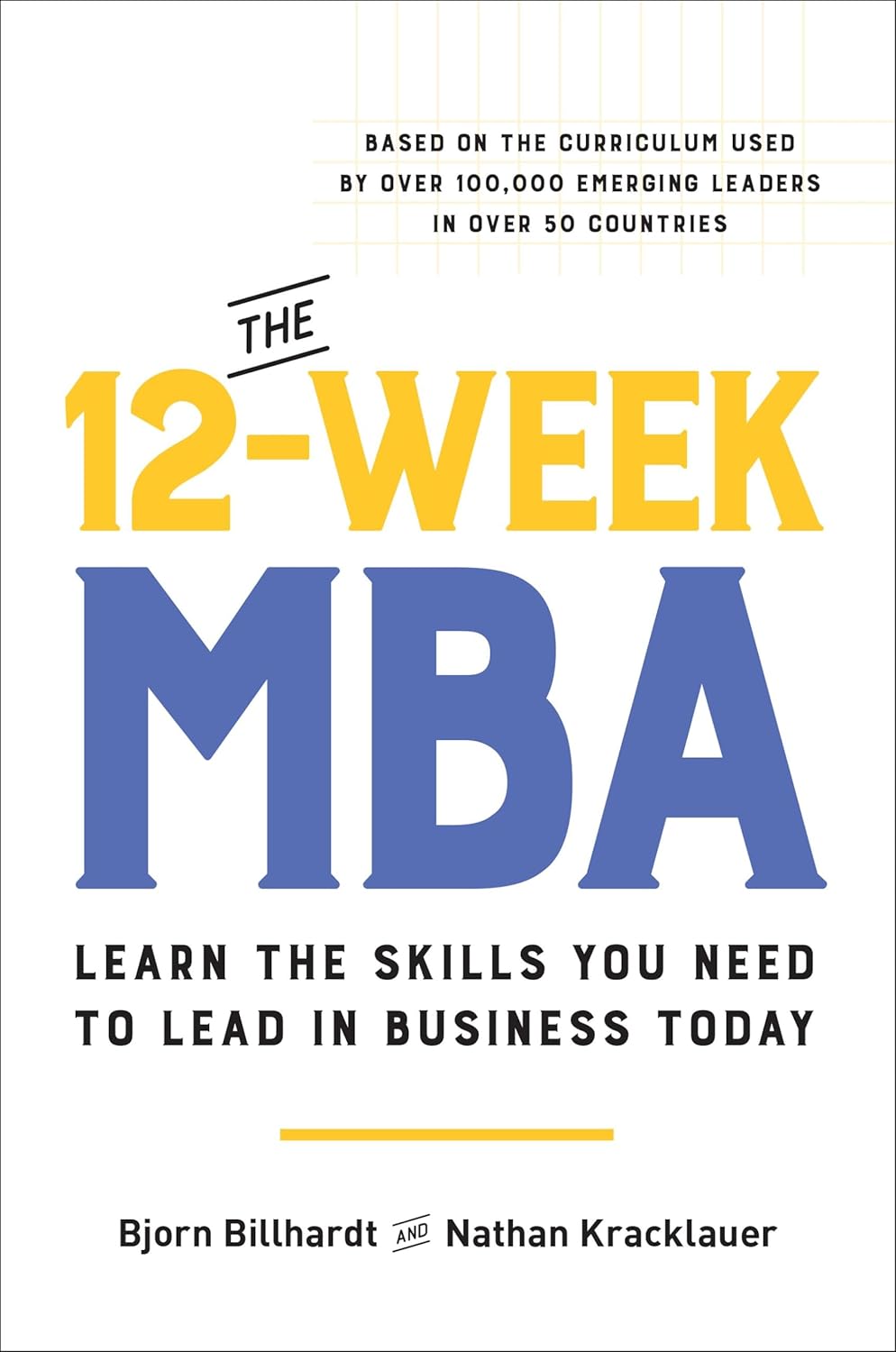
The 12-Week MBA Summary
By Nathan Kracklauer & Bjorn Billhardt
Learn the Skills You Need to Lead in Business Today
Summary preview
Most people hear the letters MBA and think of something expensive, slow, and locked inside elite schools. They picture two years away from work, a mountain of debt, and a lot of theory that may or may not help on Monday morning. The promise of this book is refreshingly different. It says you do not need to disappear into a campus to learn the essentials of business. You can get the core lessons in twelve weeks if you focus on what matters, practice as you go, and think like an operator instead of a tourist. That is the heartbeat of The 12 Week MBA by Nathan Kracklauer & Bjorn Billhardt. The book is built for busy people who want the practical side of business education without the usual cost and ceremony. Maybe you are starting a company. Maybe you manage a team and want a stronger grasp of finance, marketing, and operations. Maybe you work in one function and feel the need to understand the whole machine. The book meets you there. It does not try to impress you with jargon. It tries to make you useful. What makes the approach work is its discipline. Rather than wandering through business topics in a vague way, the book organizes the MBA into a twelve week sprint. Each week has a clear theme and a set of ideas that connect to the others. You move from the broad questions of strategy and value creation into customers, pricing, operations, accounting, finance, leadership, and communication. By the end, you are not just collecting concepts. You are building a map of how businesses actually function and how decisions in one area ripple through the rest. There is also an important attitude running through the whole book. Business is not treated as an abstract puzzle played by spreadsheets and slide decks. It is treated as a living system made of customers, employees, incentives, tradeoffs, and constant uncertainty. You are encouraged to ask basic but powerful questions. Who is the customer really. What problem are we solving. How do we make money. Where are the bottlenecks. What metrics tell the truth. Which decision creates value and which only creates activity. That is why the book feels less like a lecture and more like a field guide. It borrows the spirit of an MBA but strips away the fluff. You are invited to learn just enough of each discipline to speak the language, make better choices, and connect ideas across functions. The result is not a shortcut in the lazy sense. It is a compression of essentials. It says that if you learn the big frameworks, use them right away, and keep your eyes on value, you can gain a working business education far faster than most people think.
Sign up to continue reading
Get access to full book summaries, audio of the summaries, and many more.
Similar Books
Books with a similar vibe—explore more like this.
Smart Startups
Catalina Daniels, James H. Sherman
Tried and True Advice from 18 Harvard Business School Founders
4.2 (8)22 mins

The Brand Benefits Playbook
Allen Weiss, Debbie J. MacInnis
Why Customers Aren't Buying What You're Selling--And What to Do About It
4.8 (803)20 mins
The Science of Scaling
Benjamin Hardy, Blake Erickson
Grow Your Business Bigger and Faster Than You Think Possible
4.8 (22)20 mins
The Heart of Transformation
Michael J. Leckie
Build the Human Capabilities That Change Organizations for Good
4.7 (64)25 mins
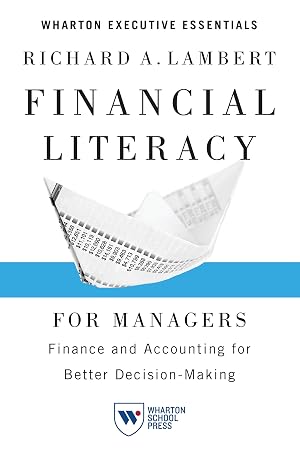
Financial Literacy for Managers
Richard A. Lambert
Finance and Accounting for Better Decision-Making
4.6 (22)22 mins
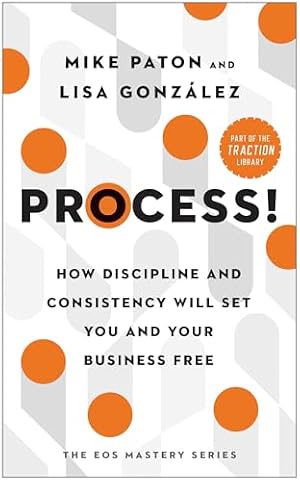
Process!
Mike Paton, Lisa González
How Discipline and Consistency Will Set You and Your Business Free
4.6 (5)23 mins
The Startup Lifecycle
Gregory Shepard
The Definitive Guide to Building a Startup from Idea to Exit
4.5 (346)21 mins
High Growth Handbook
Elad Gil
Scaling Startups from 10 to 10,000 People
4.5 (413)19 mins
7 Principles of Transformational Leadership
Hugh Blane
Create a Mindset of Passion, Innovation, and Growth
4.5 (14)27 mins
The Trusted Learning Advisor
Keith Keating
The Tools, Techniques and Skills You Need to Make L&d a Business Priority
4.5 (3)24 mins