

Introduction
Statistics can sound like a cold subject. It brings to mind formulas, official reports, and experts talking in ways that leave everyone else behind. But this book sets out to do something much more human. It asks how we can use numbers to make sense of a messy world full of uncertainty, disagreement, risk, hope, and fear. The real subject is not mathematics for its own sake. It is judgment. It is how we learn from data without being fooled by it. It is how we become wiser readers of claims about health, crime, money, education, happiness, and our own lives. David Spiegelhalter invites you to see statistics as an art. That word matters. Art suggests skill, care, imagination, and judgment. It means there is no mechanical recipe that always gives the right answer. Data do not speak by themselves. People decide what to count, how to measure it, what comparisons to make, and what story to tell. Good statistical work means being open about those choices and honest about uncertainty. It means resisting easy certainty and learning to say not only what the numbers seem to show, but also how much trust we should place in them. At the heart of the book is a simple but powerful idea. We are surrounded by claims based on data, yet many of those claims are confusing or misleading because the numbers are presented without context. A risk sounds frightening until you learn how rare the event is to begin with. A dramatic difference between two groups may vanish when you look at the absolute numbers. A pattern may look persuasive while actually being little more than chance. The book teaches you to pause, ask basic questions, and look for the reference point that makes a number meaningful. Along the way, you are shown how statisticians think. They worry about bias, variation, randomness, and hidden influences. They compare groups fairly. They use models to simplify reality while knowing that reality is always more complicated than any model. They test ideas, update beliefs, and communicate findings in ways that ordinary people can understand. For example, when discussing medical screening, public risk, or social trends, the emphasis is not on showing off technical tricks. It is on helping you see why some conclusions deserve confidence and others deserve caution. What makes the journey so appealing is its voice. The tone is calm, curious, and quietly witty. Big ideas are explained in plain language, and difficult topics are broken into manageable pieces. By the end, the aim is not to turn you into a professional statistician. It is to help you become a sharper citizen of a data soaked age, someone who can look at a number and ask, with healthy curiosity, what exactly is going on here.
Sign up to continue reading
Get access to full book summaries, audio of the summaries, and many more.
Similar Books
Books with a similar vibe—explore more like this.
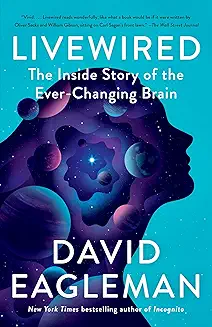
Livewired
David Eagleman
The inside story of the Ever-changing brain
4.8 (544)28 mins
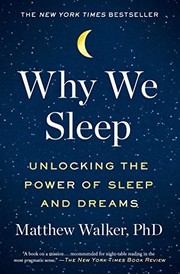
Why We Sleep
Matthew Walker
Unlocking the Power of Sleep and Dreams
4.8 (1560)17 mins
The God Equation
Michio Kaku
The Quest for a Theory of Everything
4.7 (409)28 mins
The Extended Mind
Annie Murphy Paul
The Power of Thinking Outside the Brain
4.7 (971)30 mins
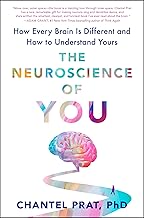
The Neuroscience of You
Chantel Prat
How every brain is different and how to understand yours
4.7 (679)20 mins
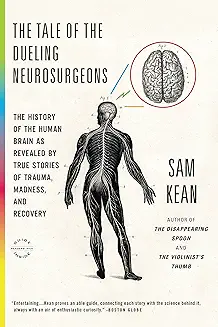
The Tale of the Dueling Neurosurgeons
Sam Kean
The History of the Human Brain as Revealed by True Stories of Trauma, Madness, and Recovery
4.6 (471)35 mins
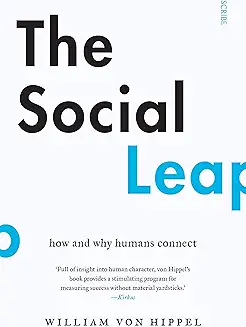
The Social Leap
William von Hippel
The New Evolutionary Science of Who We Are, Where We Come From, and What Makes Us Happy
4.6 (434)28 mins
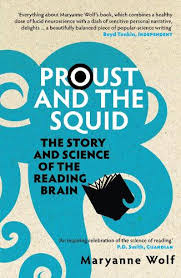
Proust and the Squid
Maryanne Wolf
The Story and Science of the Reading Brain
4.6 (213)29 mins
The Talent Code
Daniel Coyle
Greatness Isn't Born. It's Grown. Here's How.
4.6 (667)36 mins

Deadliest Enemy
Michael T. Osterholm and Mark Olshaker
Our War Against Killer Germs
4.6 (572)37 mins