
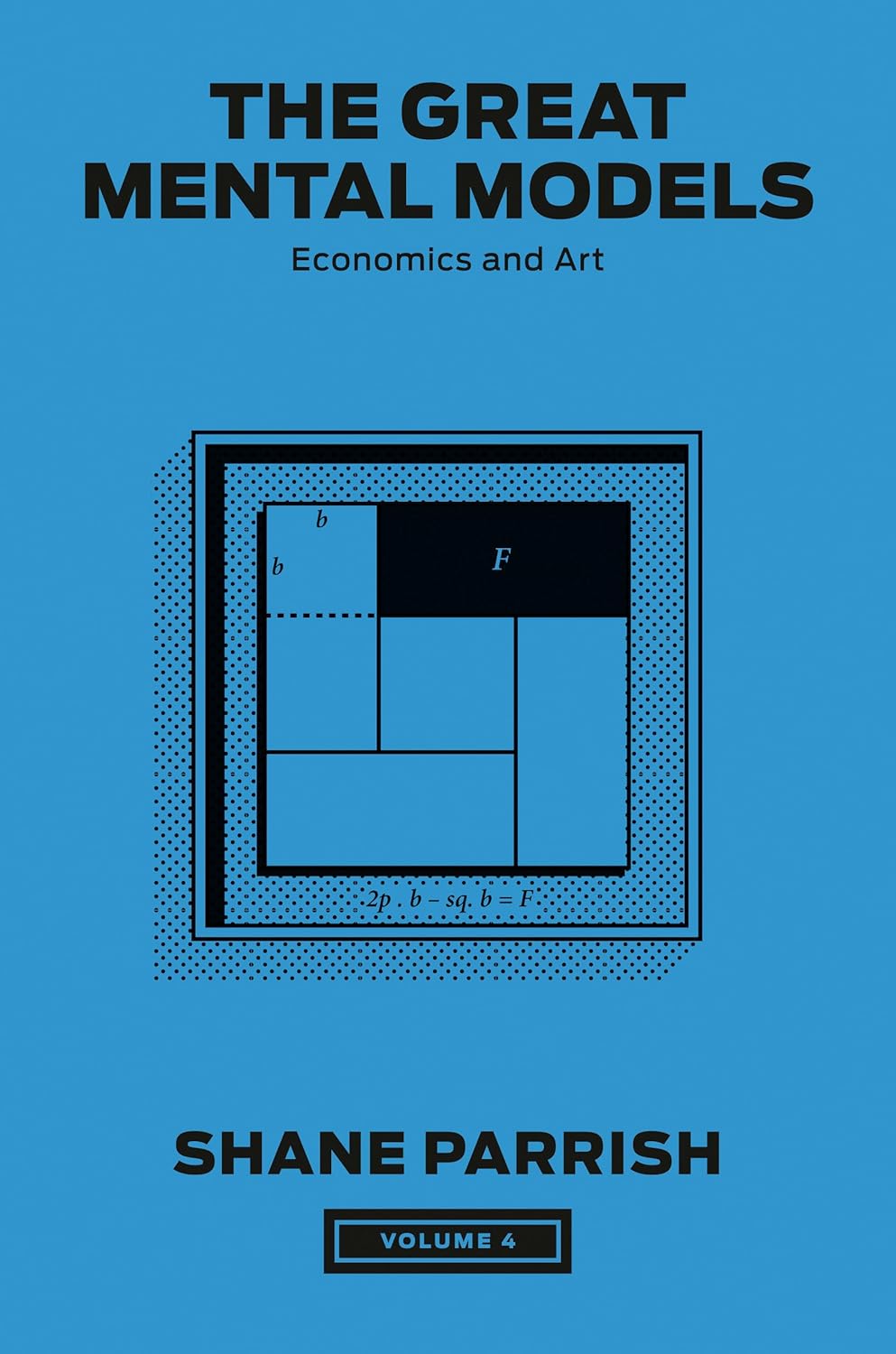
The Great Mental Models, Volume 4 Summary
By Shane Parrish, Rhiannon Beaubien
Economics and Art
Summary preview
Most of us move through life using a handful of habits, hunches, and half tested beliefs. Sometimes they serve us well. Sometimes they quietly lead us into trouble. The promise of mental models is simple. If you can see the hidden patterns beneath events, choices, and outcomes, you can think more clearly and live more wisely. That is the work this book takes up. In The Great Mental Models, Volume 4, Shane Parrish and Rhiannon Beaubien turn from broad disciplines and big frameworks toward something closer to the ground. They ask how we understand ourselves, how we make choices, and why our minds so often trick us. The book is about the inner machinery of judgment. It explores what shapes behavior, what makes some decisions reliable and others reckless, and how our own blind spots can become the biggest obstacle between us and a good life. The focus is psychology and the human mind, but not in a dry textbook way. The ideas are practical. They are meant to help you notice what is happening in real time when emotions flare, when social pressure rises, when temptation appears, or when certainty feels too easy. What makes this volume especially useful is that it does not treat thinking as a neat, clean process. It recognizes that reason competes with impulse, memory is imperfect, confidence can be misleading, and context changes everything. You are not a machine that simply inputs facts and outputs conclusions. You are a living person shaped by incentives, habits, stress, identity, stories, and other people. If you want better results, you need to understand that whole system. The book walks through a set of mental models that explain recurring features of human behavior. Some show why we copy others even when we should not. Some reveal why we protect our self image at the expense of truth. Others explain why immediate rewards overpower long term interests, why we fear losses more than we value gains, and why what is easy to recall often feels more true than what is actually most likely. These are not obscure curiosities. They are the background forces in everyday life. What ties everything together is a spirit of realism and responsibility. You cannot remove bias, emotion, or uncertainty from life. But you can get better at spotting them, naming them, and reducing the damage they do. You can create distance between stimulus and response. You can build better environments, better defaults, and better questions. And over time, you can become the kind of person who is not so easily fooled by appearances, by crowds, or by your own first reaction. That is the invitation this book extends. Learn how your mind works, not so you can admire the complexity, but so you can make better moves when it matters.
Sign up to continue reading
Get access to full book summaries, audio of the summaries, and many more.
Similar Books
Books with a similar vibe—explore more like this.
Playful
Cas Holman
How Play Shifts Our Thinking and Sparks Creativity
4.5 (13)20 mins
The Creative Brain
Anna Abraham
Myths and Truths
4.1 (190)23 mins

The Song of Roland
Anonymous
Enter a World of Medieval Heroism, Where Honor Reigns Supreme
4.9 (3)20 mins
Why We Sleep
Matthew Walker
Unlocking the Power of Sleep and Dreams
4.8 (1560)17 mins
Alice in Wonderland
Lewis Carroll
Follow Alice down a rabbit hole of whimsical, witty absurdity.
4.8 (5)24 mins

Othello
William Shakespeare
Love, Betrayal, and the Fall of a Hero
4.8 (14)22 mins
Humor Me
Christopher Duffy
How Laughing More Can Make You Present, Creative, Connected, and Happy
4.7 (28)23 mins
The Talent Code
Daniel Coyle
Greatness Isn't Born. It's Grown. Here's How.
4.6 (667)36 mins

Frankenstein
Mary Shelley
The Modern Prometheus
4.6 (419)24 mins
Ultralearning
Scott H. Young
Accelerate Your Career, Master Hard Tasks and Outsmart the Competition
4.6 (328)35 mins