
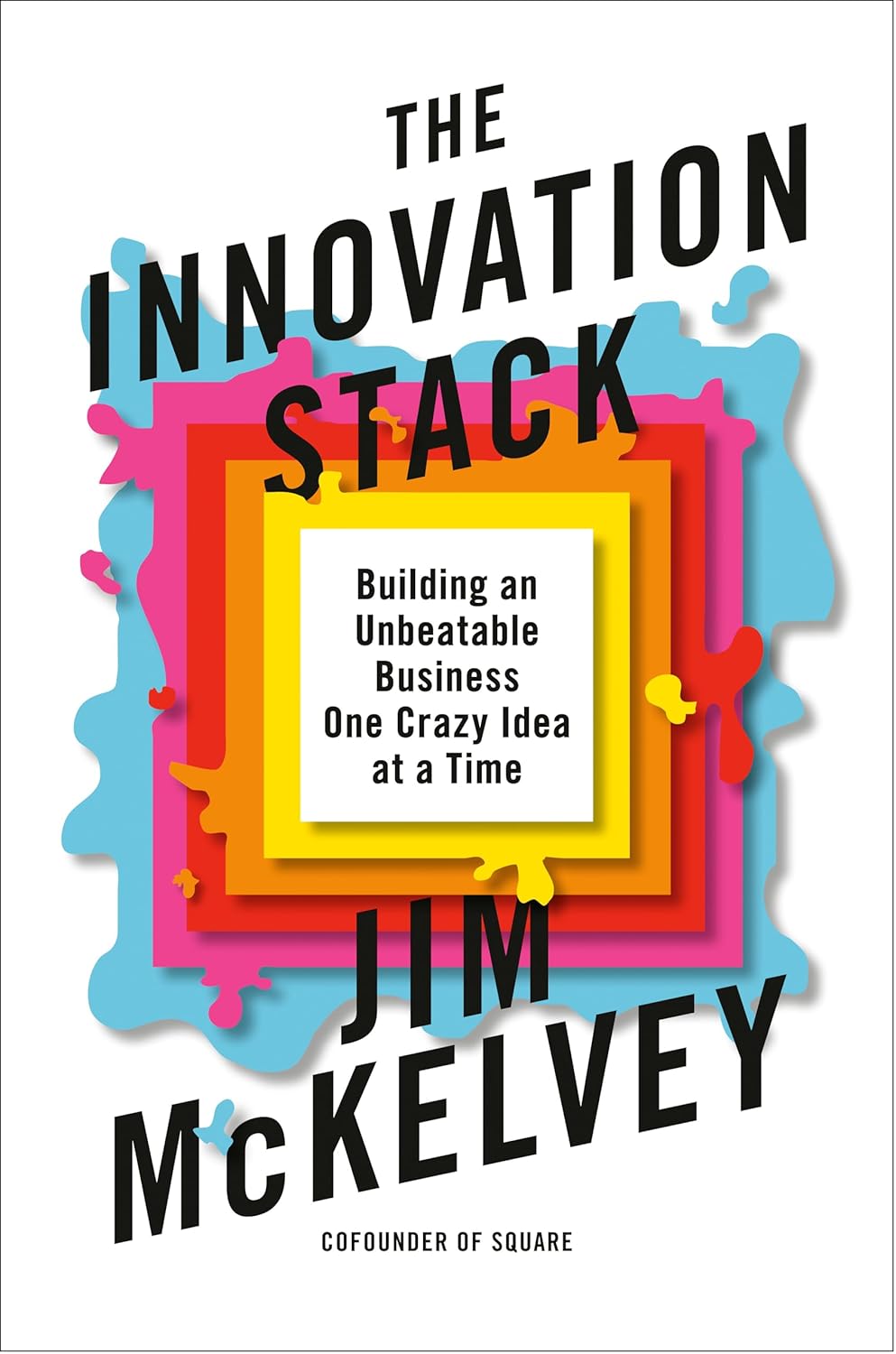
The Innovation Stack Summary
By Jim McKelvey
Building an Unbeatable Business One Crazy Idea at a Time
Summary preview
Most business books tell you how to plan. This one tells you what to do when planning breaks. It is a story about what happens when a new company does not win by doing one clever thing better than everyone else, but by building a whole chain of changes that work together so tightly that bigger rivals cannot copy them piece by piece. That chain is the innovation stack. The heart of the book is the origin of Square, the little startup that let tiny merchants accept card payments with a phone and a tiny white reader. On the surface, that sounds simple. It was not. The existing payment industry was old, rigid, and full of hidden rules. Banks, card networks, hardware makers, regulators, and risk models all assumed a certain kind of seller and a certain kind of transaction. If you wanted to sell to a large retailer, the system understood you. If you were a glassblower at a craft fair trying to sell one vase, the system barely knew you existed. The market had a giant blind spot. That blind spot mattered because it exposed a truth that runs through the whole book. Real innovation often starts with a customer everyone else ignores. It begins not with a grand theory but with an urgent practical problem. A friend cannot make a sale because he cannot accept a credit card. You try to solve that one problem. Then you discover that fixing it means breaking and remaking a dozen assumptions buried inside an industry. One answer demands another, and then another. Before long, you are not offering a product. You are constructing a system of interlocking inventions. That is the main idea. A true innovation stack is not a single breakthrough. It is a layered set of novel solutions, each created to solve the new problems caused by the previous one. The reason this matters is that conventional competition usually works by imitation. Big companies wait, spot a good idea, and copy it using their scale. But if what made you successful is not one idea but twenty deeply connected ones, copying becomes much harder. A rival can reproduce the visible feature and still miss the machine underneath. Jim McKelvey tells this story with the energy of a founder who lived through confusion, near disaster, absurd obstacles, and occasional luck. He reaches beyond payments into history and business, drawing lessons from figures like Henry Ford and from companies that changed industries by attacking neglected customers. The book is part startup memoir, part argument about competition, and part warning against the false comfort of strategy by spreadsheet. It asks you to look where others are not looking, to take broken systems seriously, and to understand that when incumbents are trapped by their own success, a newcomer can beat them by inventing not one thing, but a stack.
Sign up to continue reading
Get access to full book summaries, audio of the summaries, and many more.
Similar Books
Books with a similar vibe—explore more like this.

Girl Code
Cara Alwill Leyba
Secrets to Sanity and Success for the Female Entrepreneur
4.9 (4)21 mins

The Brand Benefits Playbook
Allen Weiss, Debbie J. MacInnis
Why Customers Aren't Buying What You're Selling--And What to Do About It
4.8 (803)20 mins

The Science of Scaling
Benjamin Hardy, Blake Erickson
Grow Your Business Bigger and Faster Than You Think Possible
4.8 (22)20 mins

The Fixer
Bradley Tusk
Saving Startups from Death by Politics
4.8 (5)32 mins

No One Succeeds Alone
Robert Reffkin
Learn Everything You Can from Everyone You Can
4.8 (9)23 mins
The Toyota Way
The Toyota Way
14 Management Principles from the World's Greatest Manufacturer
4.7 (661)21 mins
The Obstacle is the Way
Ryan Holiday
The Timeless Art of Turning Trials into Triumph
4.7 (959)30 mins
Startup Seed Funding for the Rest of Us
Mike Belsito
How to Raise $1 Million for Your Startup – Even Outside of Silicon Valley
4.7 (27)29 mins

Steve Jobs#
Walter Isaacson
The penetrating biography of Steve Jobs.
4.7 (29)39 mins
Clockwork
Mike Michalowicz
Design Your Business to Run Itself
4.7 (46)29 mins