
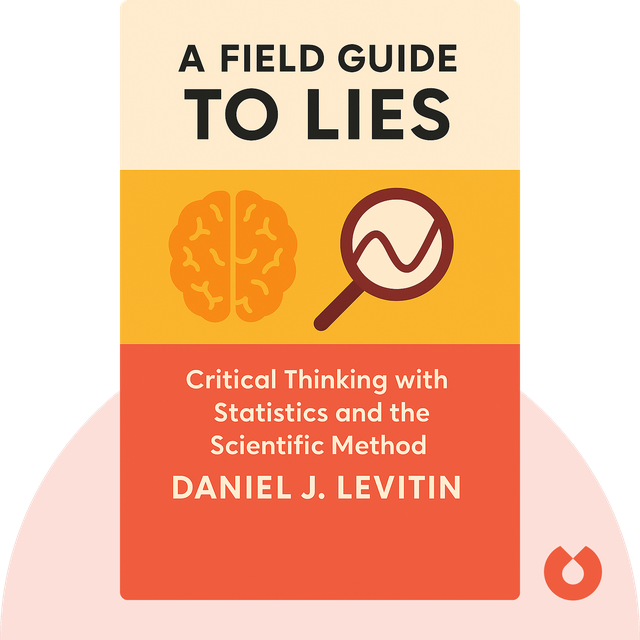
A Field Guide to Lies Summary
By Daniel J. Levitin
Critical Thinking with Statistics and the Scientific Method
Summary preview
We live in a world that pours information over us all day long. Numbers flash across screens. Headlines shout. Advertisers promise. Politicians insist. Experts disagree. Friends repost. In the middle of all that noise, one simple question becomes surprisingly hard to answer. What is true? That is the problem this book wants to help you solve. Daniel J. Levitin does not set out to make you cynical, gloomy, or distrustful of everything. Quite the opposite. He wants you to become a calmer, sharper, more confident thinker. He wants you to be the kind of person who can hear a claim, look at a graph, read a statistic, or listen to a speech and say, hold on a second, does that really follow? Is that number meaningful? What is missing here? Who benefits if I believe this? The lies in this book are not only outright fabrications, though those matter too. Many of the most powerful deceptions come wrapped in truth shaped the wrong way. A number can be technically correct and still deeply misleading. A graph can use real data and still push you toward a false conclusion. A headline can state a fact but leave out the part that changes everything. A study can sound scientific while resting on weak methods, tiny samples, or bad reasoning. We are vulnerable not just because some people want to trick us, but because our minds naturally look for patterns, shortcuts, and stories. So the book becomes a field guide in the most practical sense. It teaches you how to look around, identify danger signs, and recognize the tools of manipulation before they fool you. It walks through numbers, probability, language, causation, scientific evidence, and the media habits that make confusion spread faster than understanding. Along the way, it shows that critical thinking is not a specialized skill for professors or statisticians. It is an everyday survival tool, useful when choosing medical treatments, judging policy, reading the news, understanding risk, and even deciding what to worry about. What makes the journey inviting is the tone. The lessons are serious, but they are delivered with friendliness, curiosity, and plenty of real world examples. You are not scolded for being fooled. You are reminded that everyone can be fooled. The answer is not to know everything. The answer is to ask better questions. By the time you move through these pages, you are being trained to notice what usually slips by unnoticed. You begin to see that information is never just information. It is framed, filtered, selected, measured, and presented by human beings. Once you see that clearly, you gain something precious. You gain the power to think for yourself.
Sign up to continue reading
Get access to full book summaries, audio of the summaries, and many more.
Similar Books
Books with a similar vibe—explore more like this.
The Extended Mind
Annie Murphy Paul
The Power of Thinking Outside the Brain
4.7 (971)30 mins
The Neuroscience of You
Chantel Prat
How every brain is different and how to understand yours
4.7 (679)20 mins

What Your ADHD Child Wishes You Knew
Sharon Saline
Working Together to Empower Kids for Success in School and Life
4.7 (22)26 mins
The Tale of the Dueling Neurosurgeons
Sam Kean
The History of the Human Brain as Revealed by True Stories of Trauma, Madness, and Recovery
4.6 (471)35 mins
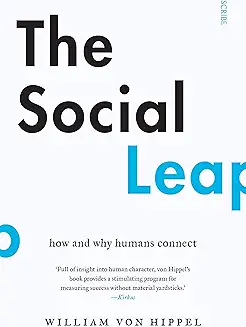
The Social Leap
William von Hippel
The New Evolutionary Science of Who We Are, Where We Come From, and What Makes Us Happy
4.6 (434)28 mins
ADHD 2.0
Edward M. Hallowell and John J. Ratey
New Science and Essential Strategies for Thriving with Distraction from Childhood Through Adulthood
4.6 (467)23 mins
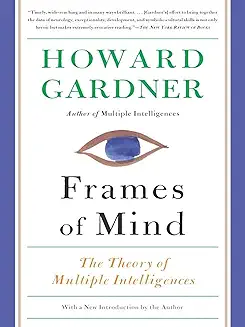
Frames of Mind
Howard Gardner
The Theory of Multiple Intelligences
4.6 (329)30 mins
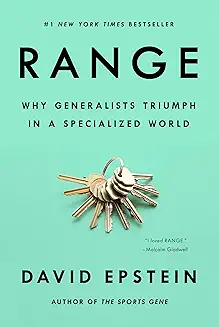
Range
David Epstein
Why Generalists Triumph in a Specialized World
4.6 (3497)28 mins
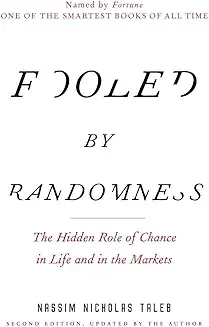
Fooled by Randomness
Nassim Nicholas Taleb
The Hidden Role of Chance in Life and the Markets
4.6 (937)31 mins
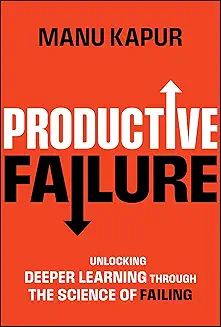
Productive Failure
Manu Kapur
Unlocking Deeper Learning Through the Science of Failing
4.5 (211)22 mins