
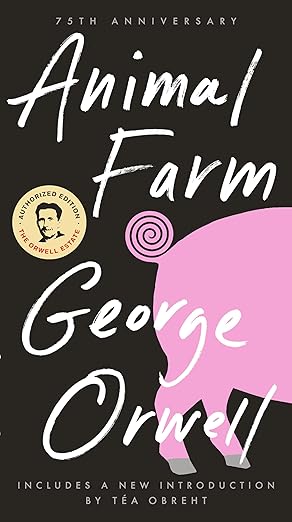
Animal Farm
By George Orwell
A Political Satire on the Corrupting Influence of Power
Introduction
There is a simple way to tell this story. A group of animals, tired of hunger, beatings, and hard labor, drive out the man who owns their farm and decide to run it themselves. At first, the dream feels bright and clean. No more whips. No more stolen milk. No more working only so a lazy master can drink and sleep while everyone else starves. The animals believe they can build a fairer world with their own hooves, wings, and hands, if hands may be allowed to pigs. But this is not only a tale about a farm. It is a tale about power, and about how quickly noble words can be twisted once power settles in the wrong place. It asks a question that never grows old. What happens after the revolution, when the cheering fades and the hard business of ruling begins. Many stories praise the moment of rebellion. This one watches what comes next. It shows how promises are rewritten, how memory grows weak, how fear is trained into habit, and how leaders who begin by speaking for all may end by ruling for themselves. George Orwell tells the story with the plainness of a fable, which is part of its force. The fields, the barn, the farmhouse, the windmill, the songs and slogans, all seem easy to grasp. Yet under that simplicity lies a sharp and bitter understanding of politics. Every animal on the farm carries more than one meaning. They are living creatures with comic habits and sad hopes, but they are also embodiments of social types, political actors, and ordinary citizens caught inside a machine larger than themselves. The pigs think, the horses toil, the dogs obey, the sheep repeat, and each role matters. At the heart of the book is the rise of the pigs, especially Napoleon and Snowball, who step forward after the old owner is overthrown. One speaks in plans and ideals. The other speaks in silence, force, and patience. Around them gather the loyal, the doubtful, the vain, the lazy, and the frightened. Together they create a new order that looks, at first glance, completely unlike the old one. Yet as the days pass, strange resemblances begin to appear. This is a short book, but it wastes nothing. It moves with the speed of a parable and the sting of satire. It can be read as a story of betrayed hopes, as a warning about dictatorship, or simply as a heartbreaking account of decent creatures who cannot protect themselves against cunning. However you approach it, the farm becomes a little world, and in that world you can see how language, violence, labor, loyalty, and lies are used to shape history. What begins as a cry for freedom slowly turns into something darker, and the terrible brilliance of the book lies in how inevitable that darkness seems once the first compromises are made.
Sign up to continue reading
Get access to full book summaries, audio of the summaries, and many more.
Similar Books
Books with a similar vibe—explore more like this.
The Diary of a Young Girl
Anne Frank
The famous story of a Jewish girl who went into hiding during the Second World War
4.8 (192)31 mins
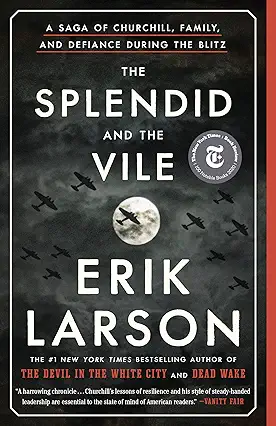
The Splendid and the Vile
Erik Larson
A Saga of Churchill, Family, and Defiance During the Blitz
4.7 (130)45 mins
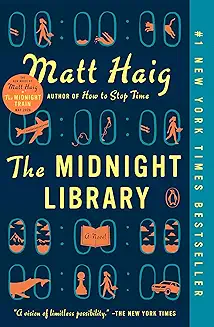
The Midnight Library
Matt Haig
A Fantasy Novel About the Choices That Lead to a Life Well-Lived
4.7 (4782)32 mins
She Said
Jodi Kantor & Megan Twohey
Breaking the Sexual Harassment Story that Helped Ignite a Movement
4.7 (1082)32 mins
1984
George Orwell
A Dystopian Classic on the Dangers of Totalitarianism
4.7 (1738)16 mins
King Leopold's Ghost
Adam Hochschild
A Story of Greed, Terror, and Heroism in Colonial Africa
4.6 (81)37 mins
The Origins of Totalitarianism
Hannah Arendt
Hannah Arendt's landmark work about Europe's anti-Semitic and imperialist roots
4.6 (464)31 mins
The Creative Act
Rick Rubin
A Way of Being
4.6 (512)27 mins
My Grandmother's Hands
Resmaa Menakem
Racialized Trauma and the Pathway to Mending Our Hearts and Bodies
4.6 (167)30 mins
Losing Eden
Lucy Jones
Why Our Minds Need the Wild
4.6 (641)28 mins