
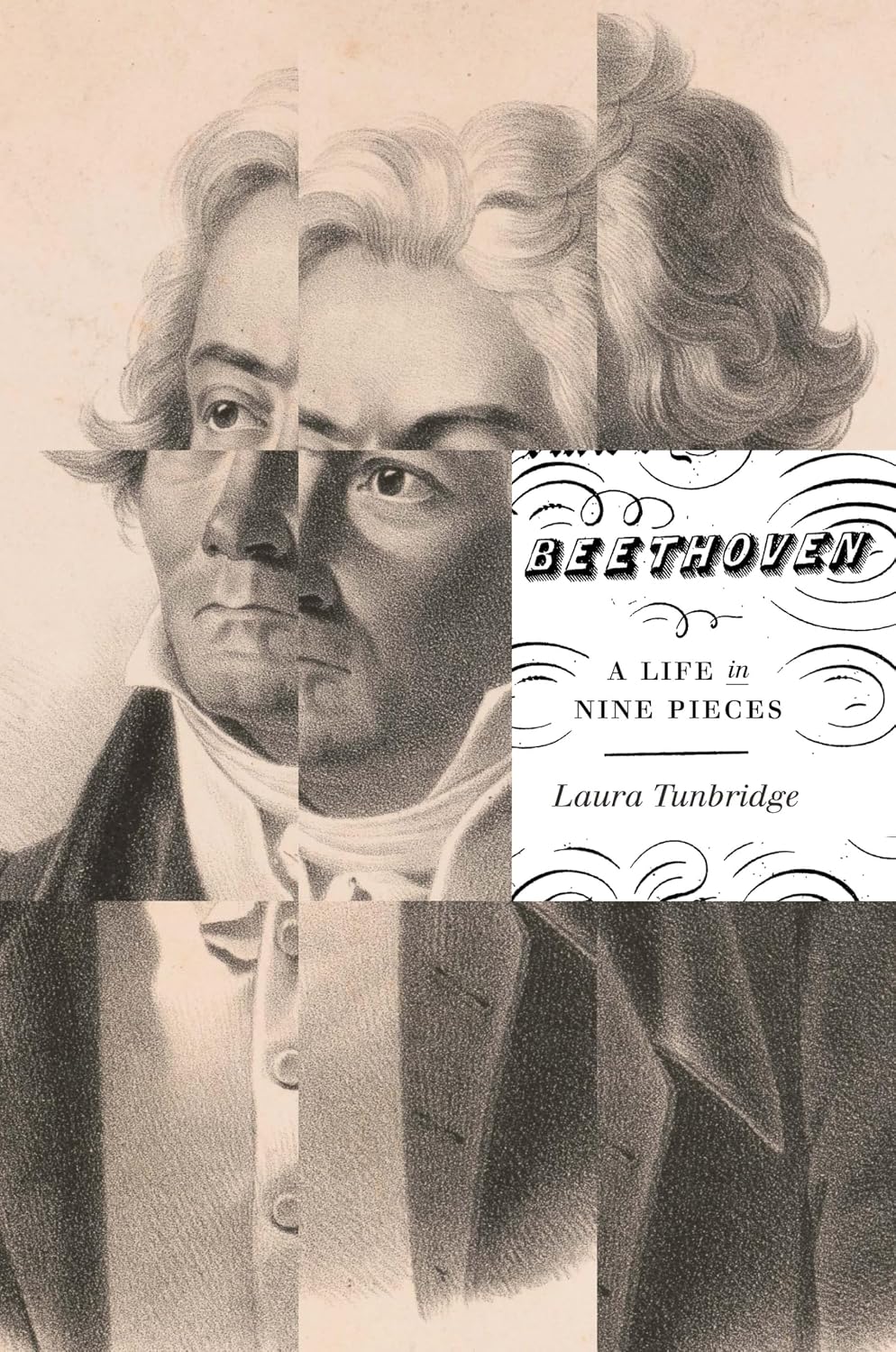
Beethoven Summary
By Laura Tunbridge
A Life in Nine Pieces
Summary preview
What does it mean to know Beethoven. Not just the monument, not just the wild hair and the scowl, not just the opening knock of the Fifth or the glowing farewell of the Ninth, but the working musician, the friend, the difficult guest, the ambitious son, the sharp observer of politics, the man who kept writing music that seemed to burst the frame built for it. That is the heart of this book. Laura Tunbridge does not try to polish him into a saint or flatten him into a list of masterpieces. Instead, she brings him close enough for us to hear the scrape and effort as well as the triumph. The book is less interested in repeating the old legend of lonely genius than in asking how that legend was made, why it stuck, and what gets lost when we let it do all the talking. Beethoven appears here as a composer of enormous force, yes, but also as a person moving through very real places and pressures. Bonn, Vienna, aristocratic salons, crowded lodgings, court theaters, publishers' offices, concert rooms, family quarrels, legal paperwork, notebooks full of ideas, all of these matter. Music does not float above life. It is shaped in contact with money, illness, status, friendship, performance, war, memory, and hope. What makes the story vivid is the sense that each familiar work once belonged to an uncertain present. The symphonies were not born as museum pieces. The piano sonatas were written for players with bodies, habits, and instruments very different from our own. The quartets asked listeners to stretch their ears. The opera had to survive rehearsal, backstage trouble, and public judgment. Even deafness, perhaps the most famous fact about Beethoven, is treated not as a dramatic symbol alone but as an ongoing human reality that changed how he worked, how he related to people, and how others understood him. The book also keeps one eye on the afterlife of Beethoven. How did he become an icon who could mean liberty, struggle, German culture, universal brotherhood, and artistic seriousness all at once. Why do so many generations feel they need their own Beethoven. To answer that, the narrative moves between the man's lifetime and the long shadow cast after his death. So the purpose is twofold. It tells the story of a life and the making of a body of music, while also showing how biography, performance, myth, and listening have become tangled together. The result is a portrait that feels both grand and intimate. You come away with Beethoven not as a fixed statue, but as a restless presence, still arguing with the world and still asking us to listen harder.
Sign up to continue reading
Get access to full book summaries, audio of the summaries, and many more.
Similar Books
Books with a similar vibe—explore more like this.
Bedtime Biography: Yes I Can
Sammy Davis, Jr. and Jane and Burt Boyar
The Story of Sammy Davis Jr.
4.9 (7) mins
Surrender to Lead
Jessica Kriegel, Joe Terry
The Counterintuitive Approach to Driving Extraordinary Results
4.9 (7) mins

American Lion
Jon Meacham
Andrew Jackson in the White House
4.9 (16) mins
The Gift of Struggle
Bobby Herrera
Life-Changing Lessons About Leading
4.8 (22)21 mins
Rise Up, Women!
Diane Atkinson
The Remarkable Lives of the Suffragettes
4.8 (5) mins
Bedtime Biography: Edison
Edmund Morris
A look into the unknown stories of Thomas Edison's life
4.8 (36) mins
Lawrence in Arabia
Scott Anderson
War, Deceit, Imperial Folly and the Making of the Modern Middle East
4.8 (41) mins
The Score That Matters
Ryan Hawk, Brook Cupps
Growing Excellence in Yourself and Those You Lead
4.7 (368)17 mins
Mighty Be Our Powers
Leymah Gbowee with Carol Mithers
How Sisterhood, Prayer, and Sex Changed a Nation at War
4.7 (4) mins
Bedtime Biography: Harriet Tubman
Catherine Clinton
The Road to Freedom
4.7 (34) mins