
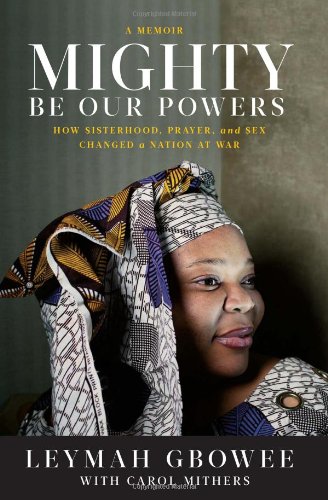
Mighty Be Our Powers Summary
By Leymah Gbowee with Carol Mithers
How Sisterhood, Prayer, and Sex Changed a Nation at War
Summary preview
This is a story about a woman who did not begin with power, money, status, or protection. It is a story about fear and hunger, about war pressing itself into kitchens and bedrooms, into churches and marketplaces, into the bodies of women and the minds of children. And it is a story about discovering that even in a place shattered by violence, ordinary people can gather their courage and force history to turn. In Mighty Be Our Powers by Leymah Gbowee with Carol Mithers, the heart of the book is not just peace in the public sense. It is also peace inside a life, inside a family, inside a wounded spirit that keeps getting up. What unfolds is both memoir and witness testimony. We are taken into Liberia before and during its long civil wars, when the country was ripped apart by armed men, political greed, tribal division, and the collapse of any safe boundary between home and battlefield. The telling is intimate. It does not hide the confusion of youth, the pain of abuse, the shame of bad choices, or the crushing weight of trying to mother children while the world burns. That honesty matters because the journey here is not from perfection to triumph. It is from brokenness to purpose. The book follows the growth of a girl into a woman who slowly realizes that suffering can either silence you or sharpen you. We see her fall in love, become trapped in a destructive relationship, struggle with poverty, and search for direction as shells explode nearby and thousands flee for survival. We also watch her spiritual life deepen, not into something soft or passive, but into something fierce. Faith becomes a source of discipline, insight, and stubborn hope. Little by little, she comes to understand that peace work is not abstract. It means listening to trauma, organizing mothers, crossing religious lines, speaking truth to armed men, and refusing to accept that war is normal. One of the book’s great strengths is the way it shows how movements are born. They do not spring up fully formed. They begin in small conversations, in prayers, in frustration, in women saying enough. They grow through trust, strategy, persistence, and sacrifice. The famous women’s peace movement in Liberia, including Christian and Muslim women standing together in white shirts, did not appear by magic. It was built by exhausted people who kept showing up. By the time the story reaches the peace talks that helped end the war, the deeper message is clear. Power is not only what presidents, generals, and rebels hold. Power also lives in moral clarity, in collective action, in the courage to confront terror without becoming it. This book invites you to see that transformation up close, through one life that became a doorway for many others.
Sign up to continue reading
Get access to full book summaries, audio of the summaries, and many more.
Similar Books
Books with a similar vibe—explore more like this.

Bedtime Biography: Yes I Can
Sammy Davis, Jr. and Jane and Burt Boyar
The Story of Sammy Davis Jr.
4.9 (7)26 mins

American Lion
Jon Meacham
Andrew Jackson in the White House
4.9 (16)35 mins
Rise Up, Women!
Diane Atkinson
The Remarkable Lives of the Suffragettes
4.8 (5)25 mins
Bedtime Biography: Edison
Edmund Morris
A look into the unknown stories of Thomas Edison's life
4.8 (36)23 mins

Lawrence in Arabia
Scott Anderson
War, Deceit, Imperial Folly and the Making of the Modern Middle East
4.8 (41)39 mins

Beethoven
Laura Tunbridge
A Life in Nine Pieces
4.7 (24)34 mins
Bedtime Biography: Harriet Tubman
Catherine Clinton
The Road to Freedom
4.7 (34)26 mins
Guantánamo Diary
Mohamedou Ould Slahi, edited by Larry Siems
Guantanamo from the Inside
4.7 (3)27 mins

Bedtime Biography: Frida
Hayden Herrera
A Biography of Frida Kahlo
4.7 (12)21 mins
Bedtime Biography: Queen of Fashion
Caroline Weber
What Marie Antoinette Wore to the Revolution
4.6 (15)22 mins