Full Book Summary of Capital in the 21st Century by Thomas Piketty
By Thomas Piketty
Groundbreaking Research That Unravels Economic Disparity in Our World Today
Preview
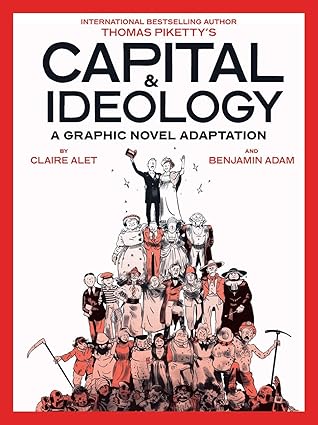
Capital in the 21st Century begins with a question that feels simple and explosive at the same time. How does wealth move through society, and why does it so often gather in the same hands? Thomas Piketty invites you to look past slogans, past old ideological battles, and into the long historical record. He does not want to tell a fairy tale about markets naturally creating harmony, and he does not want to repeat the prophecy that capitalism will automatically collapse under its own weight. Instead, he wants to show you what actually happened across centuries in Europe, America, and beyond, using tax archives, estate records, national accounts, and novels that captured the feel of their age. The heart of the book is the relationship between income from work and income from ownership. Some people live mainly from wages and salaries. Others live partly, or sometimes overwhelmingly, from rents, dividends, interest, and capital gains. Once you begin to trace this difference over time, a pattern appears. When the return on capital stays higher than the growth rate of the economy, wealth inherited from the past tends to grow faster than output and wages. In a phrase that became famous, he writes that when r is greater than g, inequality can widen in a deep and durable way. This is not a law of nature in every moment. It is a powerful tendency, shaped by politics, war, inflation, taxation, education, and institutions. The book moves across three broad landscapes. First, it explains what capital and income are, how they can be measured, and what the data reveal over very long stretches of time. Then it shows how wealth was organized in the old patrimonial societies of the nineteenth century, how the shocks of the twentieth century shattered that world, and how...