
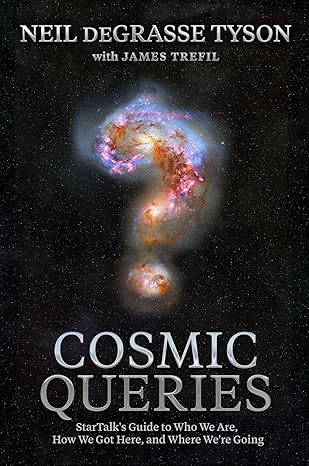
Cosmic Queries Summary
By Neil deGrasse Tyson
Cosmic Perspectives on Civilization
Summary preview
Open this book and you are not stepping into a dry science lecture. You are walking into a lively conversation about the universe and our place inside it. "Cosmic Queries" takes some of the biggest questions people ask about space, time, matter, life, God, aliens, black holes, and our future, then answers them with curiosity, wit, and a kind of joyful seriousness. The whole idea is simple and powerful. Human beings are natural question askers. We look up at the night sky and wonder what is out there, how it began, whether it will end, and whether any of it cares that we exist. This book meets that wonder head on. Neil deGrasse Tyson builds the book around questions that many people have asked him over the years, whether on stage, on television, online, or in everyday conversation. That structure matters because it gives the book its energy. You do not feel as if someone is handing down facts from a mountaintop. You feel as if you are sitting with a sharp, funny, generous guide who knows the science, loves the questions, and enjoys showing how the universe works without making it feel out of reach. Some questions are ancient. What is the meaning of life. Does God exist. Are we alone. Other questions are modern. Can we live on Mars. What is dark matter. Could an asteroid wipe us out. All of them open into bigger reflections about evidence, imagination, humility, and the strange privilege of being conscious in a cosmos so vast. The book does not unfold like one long argument. It moves like a constellation of ideas, each query lighting up a different part of the sky. But there is a clear purpose tying everything together. Science is not just a pile of facts. It is a way of asking better questions and testing possible answers against reality. Again and again, the message is that the universe is under no obligation to make sense according to human instinct, human ego, or human wishes. Yet when we investigate it carefully, it reveals patterns more beautiful and surprising than anything we might have invented on our own. That means the book does two things at once. It gives you real astronomy, physics, and cosmology in plain language, and it invites you to think more clearly about belief, uncertainty, and what counts as knowledge. It is playful, but never shallow. It is skeptical, but never cynical. And beneath all the jokes and dazzling facts, there is a deep emotional current. We are tiny on the cosmic scale, yes, but not meaningless. We are a way for the universe to know itself, and that alone makes every honest question worth asking.
Sign up to continue reading
Get access to full book summaries, audio of the summaries, and many more.
Similar Books
Books with a similar vibe—explore more like this.

The Song of Roland
Anonymous
Enter a World of Medieval Heroism, Where Honor Reigns Supreme
4.9 (3)20 mins

Utilitarianism
John Stuart Mill
Explore a Timeless Ethics Classic
4.8 (46)24 mins

Frankenstein
Mary Shelley
The Modern Prometheus
4.6 (419)24 mins

I Am Malala
Malala Yousafzai
The Girl Who Stood Up for Education and Was Shot by the Taliban
4.6 (720)35 mins
Calling Bullshit
Carl T. Bergstrom & Jevin D. West
The Art of Skepticism in a Data-Driven World
4.5 (720)28 mins
Hidden Valley Road
Robert Kolker
Inside the Mind of an American Family
4.5 (893)32 mins
Dialectic of Enlightenment
Max Horkheimer & Theodor W. Adorno
Uncover the Paradoxes of Modernity and Reason
4.5 (20)24 mins

Patient H.M.
Luke Dittrich
A Story of Memory, Madness, and Family Secrets
4.4 (211)26 mins
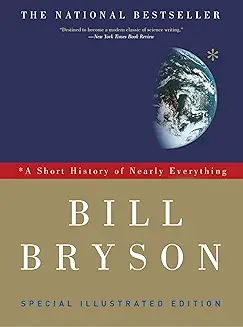
A Short History of Nearly Everything
Bill Bryson
A journey into the most intriguing and intractable questions that science seeks to answer
4.4 (1284)39 mins
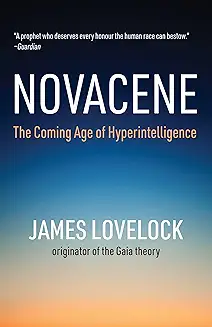
Novacene
James Lovelock
The Coming Age of Hyperintelligence
4.4 (554)25 mins