
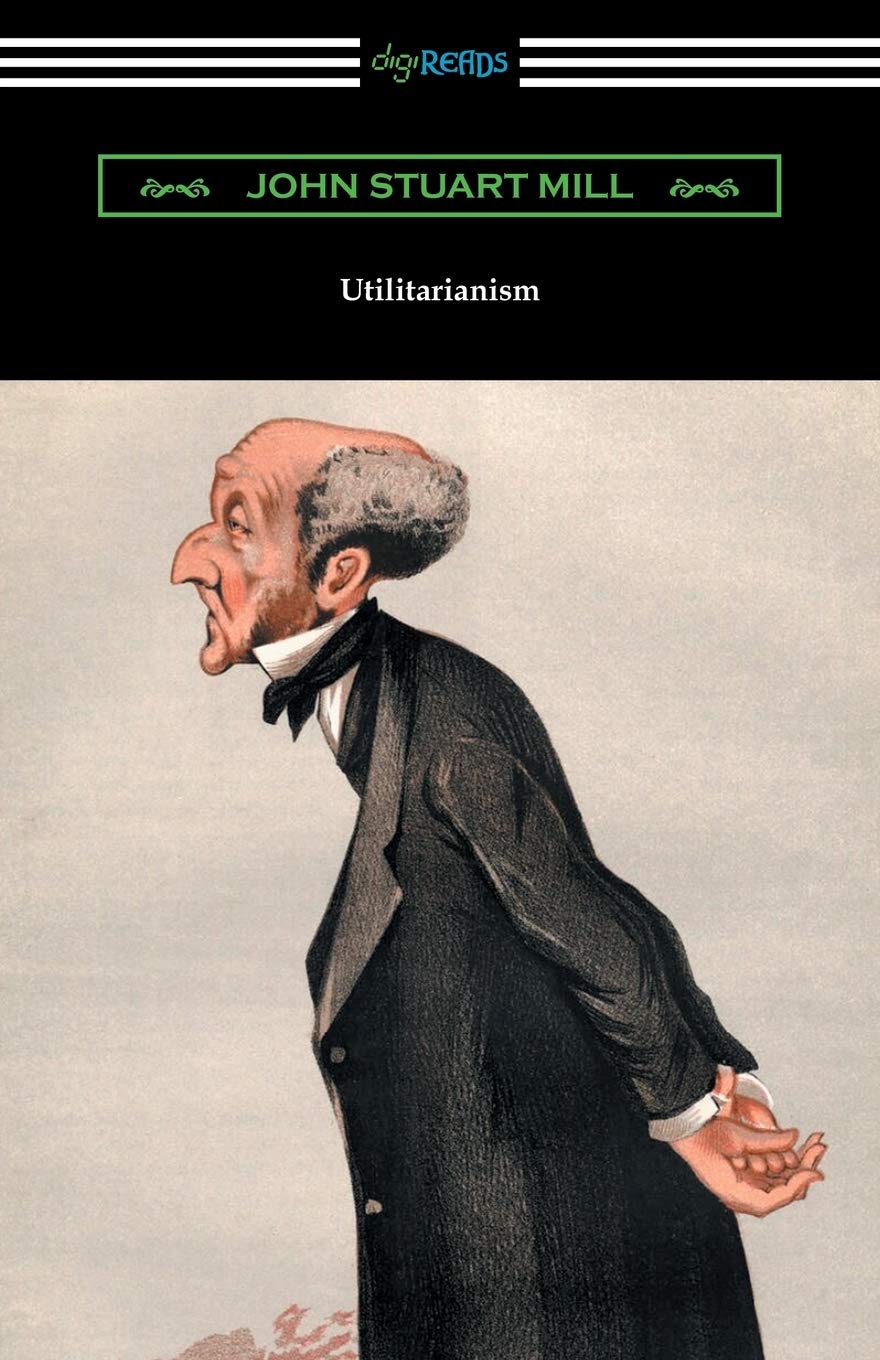
Utilitarianism Summary
By John Stuart Mill
Explore a Timeless Ethics Classic
Summary preview
When people hear that morality should aim at happiness, they often recoil at once. They imagine a shallow creed of comfort, appetite, and easy pleasure. They think they are being asked to trade dignity for indulgence, conscience for calculation, and noble feeling for a neat little arithmetic of enjoyment. The small book called Utilitarianism sets out to answer that resistance plainly. Its purpose is not to invent a new moral world, but to clear away confusion around a principle that has guided much human judgment already, whether people admit it or not. John Stuart Mill speaks as someone trying to defend a simple claim that has been widely misunderstood. Actions are right, he says, in proportion as they tend to promote happiness, and wrong as they tend to produce the reverse of happiness. Happiness here means pleasure and the absence of pain. Unhappiness means pain and the privation of pleasure. That statement sounds stark, almost too bare. So the work proceeds by patiently filling it with human depth. What kind of pleasure is meant. Is every pleasure equal. Can a moral rule rest on experience rather than intuition. Why should anyone care about the happiness of all instead of merely his own. What becomes of justice, duty, truthfulness, and sacrifice under such a view. These are the living questions of the book. The argument unfolds as a defense not only of utility, but of the whole moral seriousness of ordinary life. Far from reducing us to creatures of appetite, the principle is presented as one that gives full place to intellect, imagination, affection, self respect, and the social bond that ties each person to the rest. The life judged happiest is not the life of a contented animal, but the life of a being with higher powers, richer feelings, and a conscience formed in company with others. The book insists that morality cannot float above human life in pure abstraction. It must connect with what people actually seek, suffer, value, and become. At the same time, the discussion is full of practical anxieties. Critics say there is no time to calculate consequences before acting. They say utility makes people cold, godless, selfish, or ready to excuse any crime if enough good should follow. They say it cannot explain why justice feels sacred, why rights seem inviolable, or why guilt stings us from within. The reply is that a moral standard may be broad in principle while still working through settled rules, cultivated character, and social feeling. Much of the book is spent showing how this happens. So what lies ahead is a guided walk through a moral philosophy that wants to be both humane and clear eyed. John Stuart Mill does not ask you to worship happiness as a slogan. He asks you to see it as the end beneath every rule, every virtue, and every demand we reasonably make upon one another. The result is a defense of ethics that tries to be realistic about human nature without becoming...
Sign up to continue reading
Get access to full book summaries, audio of the summaries, and many more.
Similar Books
Books with a similar vibe—explore more like this.
Dialectic of Enlightenment
Max Horkheimer & Theodor W. Adorno
Uncover the Paradoxes of Modernity and Reason
4.5 (20) mins
The Metaphysics
Aristotle
Dive into Ancient Philosophical Insights
4.4 (17) mins

Compromised
Peter Strzok
Counterintelligence and the Threat of Donald J. Trump
4.0 (18)35 mins
Indian Philosophy
Sue Hamilton
A Very Short Introduction
3.9 (7)22 mins

The Song of Roland
Anonymous
Enter a World of Medieval Heroism, Where Honor Reigns Supreme
4.9 (3) mins

Hamlet
William Shakespeare
A Young Prince's Tragic Descend Into Madness and Revenge
4.8 (43) mins
The Epic of Gilgamesh
Anonymous
A timeless tale of friendship, mortality, and the search for meaning
4.8 (34) mins
The Midnight Library
Matt Haig
A Fantasy Novel About the Choices That Lead to a Life Well-Lived
4.7 (4782)32 mins

Uncle Tom's Cabin
Harriet Beecher Stowe
The Problem of Slavery and Its Treatment of Human Beings
4.7 (41)25 mins
Bedtime Biography: Isaac Newton
James Gleick
Learn the truth behind the legend
4.7 (45) mins