
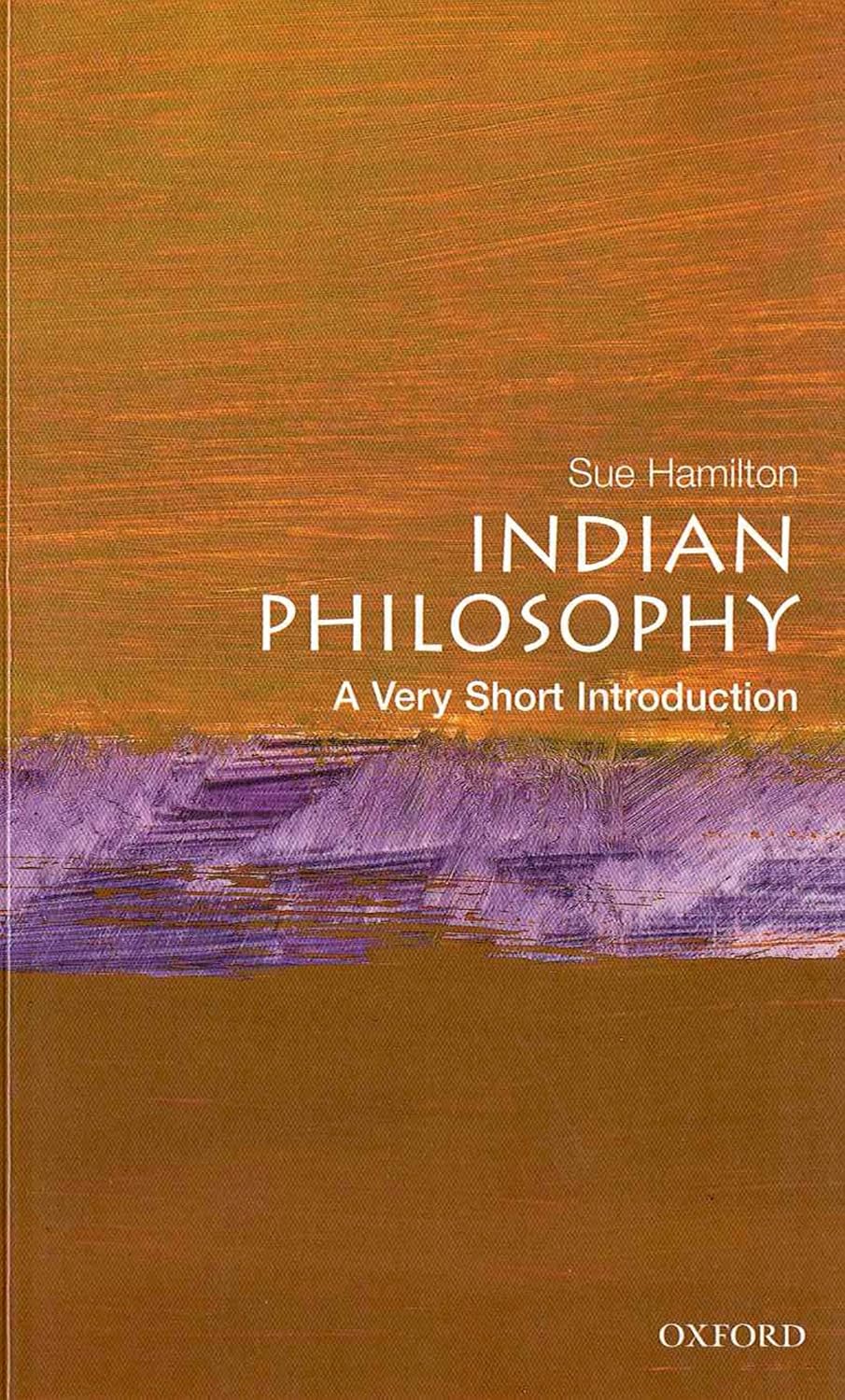
Indian Philosophy Summary
By Sue Hamilton
A Very Short Introduction
Summary preview
Indian philosophy is often introduced as if it were a museum full of strange ideas, sealed behind glass, waiting to be admired from a respectful distance. This book does something far more interesting. It invites you to walk inside and look around as a participant. Rather than treating Indian thought as a neat list of schools and doctrines, it asks what kinds of questions people were trying to answer, what sort of world they believed they lived in, and how those beliefs shaped the way they thought about knowledge, selfhood, action, suffering, and freedom. Sue Hamilton takes a field that can seem huge and intimidating and makes it feel human. The point is not simply to learn names like Veda, Upanishad, Buddhist, Jain, Nyaya, Samkhya, Mimamsa, and Vedanta, though those all matter. The point is to see that these traditions were engaged in a long, lively conversation. They disagreed fiercely, but they also shared concerns. Again and again, thinkers returned to a cluster of pressing questions. What is real. How do we know anything at all. Is there a self, and if so what is it. Why do human beings suffer. What binds us to repeated existence. What would liberation mean, and how might it be achieved. A central thread running through the book is that Indian philosophy cannot be understood well if we force it into categories borrowed unthinkingly from elsewhere. Many readers arrive expecting philosophy to be mainly abstract argument about truth in the narrow sense. Here, thought is closely tied to life. To know something truly is often to be transformed by it. Metaphysics, ethics, psychology, and spiritual practice are woven together. A theory of the person has consequences for the way one acts. A view of language changes how one understands ritual. A claim about causation can alter one’s whole approach to liberation. The book also helps clear away several common misconceptions. Indian philosophy is not just mystical feeling, nor is it a single religious worldview. It contains rigorous analysis, debate, skepticism, materialism, realism, idealism, pluralism, and radical critiques of self. It includes traditions that defend scripture and ritual, and others that challenge the very assumptions on which those practices rest. Some thinkers seek an eternal self. Others deny one completely. Some stress devotion, others reason, others meditative insight, others precise analysis of experience. What emerges is a vivid map of intellectual life in South Asia from the Vedic background through the major classical systems. The journey moves from early cosmological and ritual concerns to searching reflections on the inner self, then into the sharp debates of Buddhists, Jains, and Brahmanical schools. By the end, you are left with more than information. You are left with a sense that philosophy can be a way of seeing, a discipline of attention, and a practical response to the fact of being alive.
Sign up to continue reading
Get access to full book summaries, audio of the summaries, and many more.
Similar Books
Books with a similar vibe—explore more like this.
Utilitarianism
John Stuart Mill
Explore a Timeless Ethics Classic
4.8 (46)24 mins
Dialectic of Enlightenment
Max Horkheimer & Theodor W. Adorno
Uncover the Paradoxes of Modernity and Reason
4.5 (20) mins
The Metaphysics
Aristotle
Dive into Ancient Philosophical Insights
4.4 (17) mins

Compromised
Peter Strzok
Counterintelligence and the Threat of Donald J. Trump
4.0 (18)35 mins

The Song of Roland
Anonymous
Enter a World of Medieval Heroism, Where Honor Reigns Supreme
4.9 (3) mins
Hamlet
William Shakespeare
A Young Prince's Tragic Descend Into Madness and Revenge
4.8 (43) mins
The Epic of Gilgamesh
Anonymous
A timeless tale of friendship, mortality, and the search for meaning
4.8 (34) mins
The Midnight Library
Matt Haig
A Fantasy Novel About the Choices That Lead to a Life Well-Lived
4.7 (4782)32 mins
Uncle Tom's Cabin
Harriet Beecher Stowe
The Problem of Slavery and Its Treatment of Human Beings
4.7 (41)25 mins
Bedtime Biography: Isaac Newton
James Gleick
Learn the truth behind the legend
4.7 (45) mins