
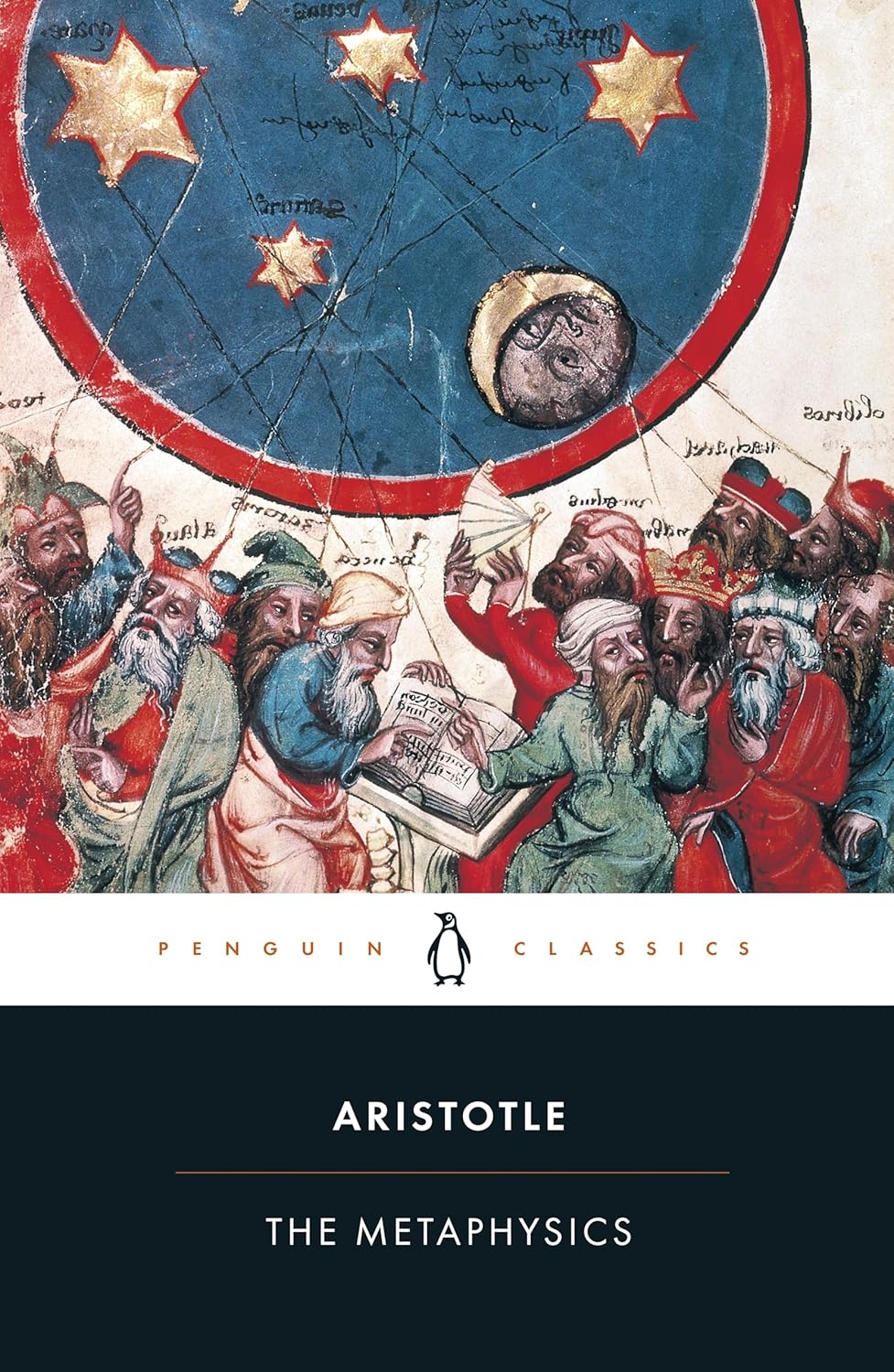
The Metaphysics Summary
By Aristotle
Dive into Ancient Philosophical Insights
Summary preview
Every human being begins with wonder. That is where this book begins too. We look at the world, at change, at life, at order, at the stars, at birth and death, and we ask what all this truly is. Not what appears first to the eye, and not only what this or that special science can measure, but what being itself means. Aristotle takes up that great question and follows it with patience, force, and delight. He wants to know what is most real, what is first by nature, what explains all the rest, and how wisdom differs from the many useful kinds of knowledge that fill ordinary life. This work is not a neat march from one simple point to the next. It feels more like entering a grand conversation already alive with old arguments, rival teachers, hard puzzles, and bold attempts to name the deepest structure of reality. Again and again, you are asked to pause and look more carefully. When we say something is, what do we mean? When we say one thing causes another, how many senses of cause are hidden in that claim? When something changes, what stays the same through the change? Why do some things pass away while others seem eternal? And if there is a highest science, what would it study? The answer slowly takes shape. Wisdom is not mere cleverness. It is not practical skill such as medicine, shipbuilding, or farming, though those have their value. The wise person seeks first causes and first principles. Such knowledge is loved for its own sake. It is the freest kind of knowing because it is not chained to immediate use. To illustrate, the book recalls how people first began to philosophize because they were struck by wonder, first at simple puzzles and later at the great motions of the heavens. Curiosity opens the path. As the inquiry deepens, the book turns toward substance, the thing that exists in the fullest sense. Is substance matter, form, or the compound of both? Is the universal more real, or the individual thing before us? Can there be a science of being as being, when being is said in many ways? The discussion passes through the views of earlier thinkers, weighs them, borrows from them, and corrects them. It examines change through the ideas of potentiality and actuality, and rises at last toward what is fully actual, unmoved, eternal, and divine. So the purpose of this book is both humble and immense. It starts from ordinary speech and common experience, then pushes beyond them toward what must be true if reality is to make sense at all. It asks you not only to collect facts, but to see the order beneath facts. It invites you into the search for first wisdom, where every familiar thing becomes strange again, and then, little by little, intelligible.
Sign up to continue reading
Get access to full book summaries, audio of the summaries, and many more.
Similar Books
Books with a similar vibe—explore more like this.
Utilitarianism
John Stuart Mill
Explore a Timeless Ethics Classic
4.8 (46)24 mins
Dialectic of Enlightenment
Max Horkheimer & Theodor W. Adorno
Uncover the Paradoxes of Modernity and Reason
4.5 (20)24 mins

Compromised
Peter Strzok
Counterintelligence and the Threat of Donald J. Trump
4.0 (18)35 mins
Indian Philosophy
Sue Hamilton
A Very Short Introduction
3.9 (7)22 mins

The Song of Roland
Anonymous
Enter a World of Medieval Heroism, Where Honor Reigns Supreme
4.9 (3)20 mins
Hamlet
William Shakespeare
A Young Prince's Tragic Descend Into Madness and Revenge
4.8 (43)28 mins
The Epic of Gilgamesh
Anonymous
A timeless tale of friendship, mortality, and the search for meaning
4.8 (34)23 mins
The Midnight Library
Matt Haig
A Fantasy Novel About the Choices That Lead to a Life Well-Lived
4.7 (4782)32 mins

Uncle Tom's Cabin
Harriet Beecher Stowe
The Problem of Slavery and Its Treatment of Human Beings
4.7 (41)25 mins
Bedtime Biography: Isaac Newton
James Gleick
Learn the truth behind the legend
4.7 (45)21 mins