
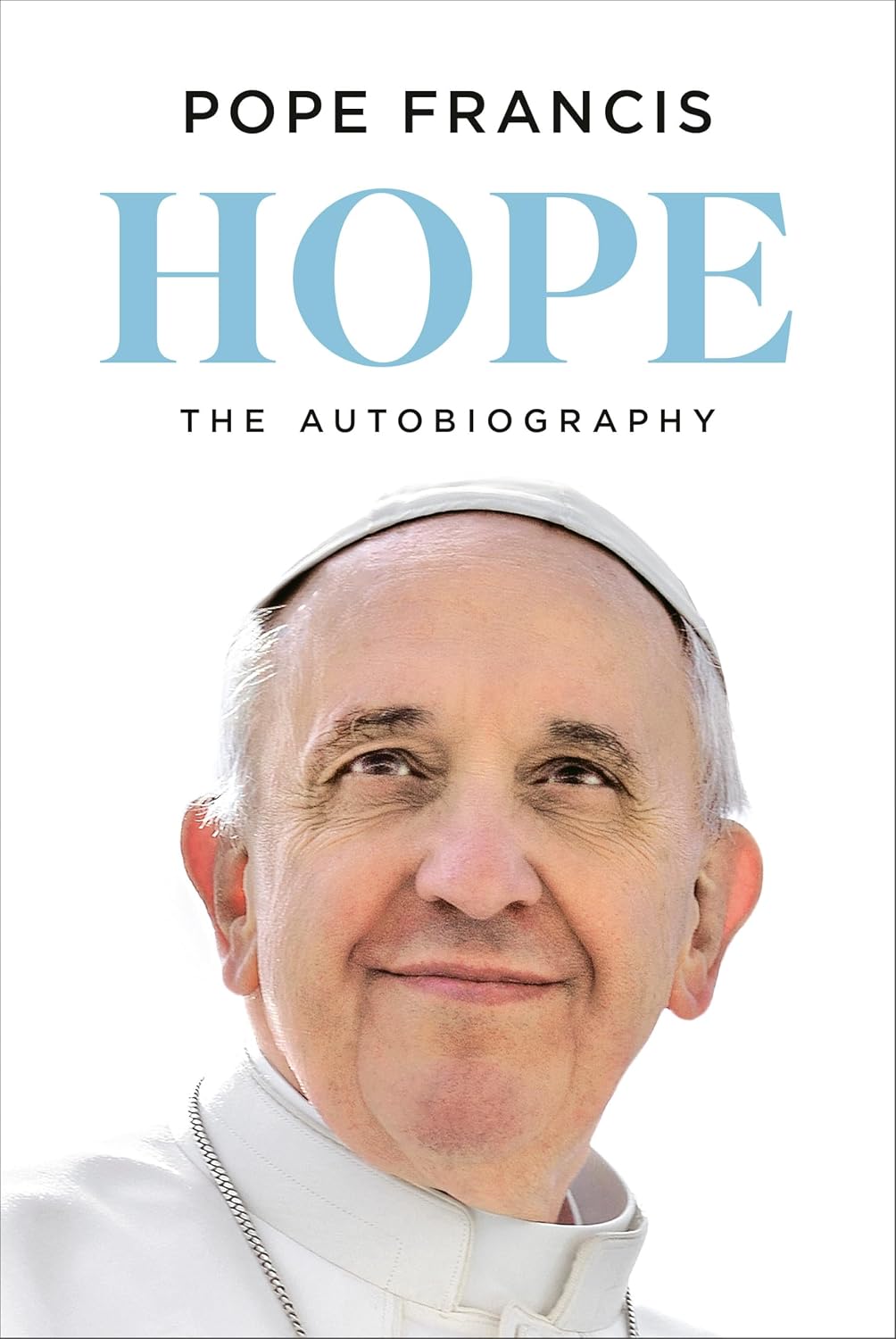
Hope Summary
By Pope Francis, Jorge Mario Bergoglio
The Autobiography
Summary preview
Hope is a book that opens its hands before it opens its arguments. It does not begin with an abstract idea or a tidy theory. It begins with life as we actually live it, with fear, fatigue, disappointment, memory, tears, tenderness, and the stubborn light that still shines in the middle of so much darkness. When Pope Francis, Jorge Mario Bergoglio speaks about hope, he does not offer a cheap optimism that ignores wounds. He speaks of a hope that has passed through suffering and has learned not to run away from reality. It is the hope of people who bury their dead and still plant seeds. It is the hope of mothers, migrants, workers, prisoners, grandparents, and children. It is the hope of those who know what it means to be fragile and who discover that fragility can become a doorway rather than a prison. The book moves like a long conversation, intimate and direct. You feel that someone is sitting beside you, not above you, speaking plainly and from the heart. The purpose is not simply to define hope but to awaken it. Again and again, the pages insist that hope is not naïve. It does not deny evil, war, loneliness, or injustice. It looks at them without blinking. Yet it refuses to grant them the final word. Hope is rooted in the conviction that every human being is more than his failures, that history is more than its violence, and that God continues to work quietly where many people see only rubble. What gives the book its warmth is the way large themes are always tied to concrete faces and stories. Memory matters here. So does closeness. So does the humble art of listening. The reflections move from personal recollections to pastoral experience, from the life of the Church to the sufferings of the world. We are invited to see how hope is born in small daily acts, in forgiveness offered after long bitterness, in a hand held at a hospital bed, in the courage to begin again after shame, in communities that welcome the unwanted. At the center lies a simple but demanding message. We are not made for indifference. We are made for encounter. Hope grows where walls fall, where people choose mercy over condemnation, where we stop treating others as problems and start meeting them as brothers and sisters. The book asks us to resist the culture of fear and exclusion and to rediscover a deeper way of being human. So these pages are both examination and invitation. They examine the false hopes that seduce us, such as power, comfort, self sufficiency, and cynicism disguised as realism. And they invite us toward a hope that walks, serves, weeps, laughs, and waits. It is a hope that does not belong to the strong alone. Often it belongs most clearly to the poor, because they know they need others. The result is a portrait of hope not as an idea on a shelf but as a...
Sign up to continue reading
Get access to full book summaries, audio of the summaries, and many more.
Similar Books
Books with a similar vibe—explore more like this.
The Seven Circles
Chelsey Luger & Thosh Collins
Indigenous Teachings for Living Well
4.7 (13)29 mins
The Inner Work
Mathew Micheletti & Ashley Cottrell
An Invitation to True Freedom and Lasting Happiness
4.6 (76)22 mins
The Road Less Traveled
M. Scott Peck
A New Psychology of Love, Traditional Values and Spiritual Growth
4.4 (1249)22 mins
Letting Go
David R. Hawkins
The Pathway of Surrender
4.4 (1029)21 mins
Codependent No More
Melody Beattie
How to Stop Controlling Others and Start Caring for Yourself
4.4 (928)24 mins
Didn't See It Coming
Carey Nieuwhof
Overcoming the Seven Greatest Challenges That No One Expects and Everyone Experiences
4.3 (304)25 mins
The Four Agreements
Don Miguel Ruiz & Janet Mills
A Practical Guide to Personal Freedom
4.3 (913)21 mins
Choose Yourself
James Altucher
Be Happy, Make Millions, Live the Dream
4.3 (723)31 mins

Be Here Now
Ram Dass
Find Peace in the Now
4.3 (583)20 mins
The Freedom of Self-Forgetfulness
Timothy Keller
The Path to True Christian Joy
4.3 (64)16 mins