

Jane Eyre
By Charlotte Brontë
A Victorian Heroine’s Struggle for Self-Realization
Introduction
There are stories that ask only to entertain us for a few hours, and there are stories that come close, take our hand, and speak as if they know the secret weather of the heart. Jane Eyre belongs to the second kind. Charlotte Brontë gives us not merely a tale of love, hardship, and mystery, but the whole inward life of a woman who refuses to be bought, bent, or silenced. From the first pages, when Jane is a small, lonely child set against a world that seems cold and unjust, we feel that this is not a grand lady born to ease, but a plain and passionate soul who must earn every scrap of dignity she keeps. The book moves through the chief seasons of Jane’s life. We watch her suffer cruelty at Gateshead, where she lives among relations who despise her. We follow her to Lowood School, where harsh discipline, hunger, sickness, and loss shape her mind, yet do not harden her heart. Later she comes to Thornfield Hall as a governess, and there the story opens like a dark flower. A great house, a strange master, laughter in the night, fire, secrecy, and a love that rises slowly, with equal parts tenderness and danger. Yet this is no simple romance. The question is never only whether Jane will be loved, but whether she can love without surrendering her conscience. That is the true pulse of the novel. It asks what a woman owes to herself, to her moral sense, to God as she understands Him, and to the claims of feeling. Jane is poor, plain, and socially powerless, yet she has something many stronger people do not possess. She has an inner law. Again and again she is tempted to give up that law for comfort, belonging, admiration, or even noble self sacrifice. Again and again she must choose. Her struggle is not noisy, but it is fierce. She longs deeply. She feels keenly. She is capable of love in its fullest force. But she will not become less than herself to obtain it. Around Jane stand figures who each offer a different vision of life. There is the cruel household of her childhood, teaching her what loveless power looks like. There is Helen Burns, showing patience and spiritual endurance. There is Rochester, passionate and wounded, who draws out her deepest self while also testing it. There is St. John Rivers, pure in purpose yet cold in nature, who offers duty without joy. Through them all, the novel explores class, religion, education, desire, female independence, and the aching need to be seen as a human being in full. What makes this story endure is the living voice at its center. Jane speaks plainly, intimately, and with such candor that her joys and humiliations become ours. She is modest, but never dull. Tender, but never weak. In following her path, we are asked a question that remains fresh in every age. How shall a person keep integrity while...
Sign up to continue reading
Get access to full book summaries, audio of the summaries, and many more.
Similar Books
Books with a similar vibe—explore more like this.
The Diary of a Young Girl
Anne Frank
The famous story of a Jewish girl who went into hiding during the Second World War
4.8 (192)31 mins
The Splendid and the Vile
Erik Larson
A Saga of Churchill, Family, and Defiance During the Blitz
4.7 (130)45 mins
The Midnight Library
Matt Haig
A Fantasy Novel About the Choices That Lead to a Life Well-Lived
4.7 (4782)32 mins
She Said
Jodi Kantor & Megan Twohey
Breaking the Sexual Harassment Story that Helped Ignite a Movement
4.7 (1082)32 mins
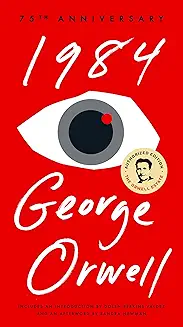
1984
George Orwell
A Dystopian Classic on the Dangers of Totalitarianism
4.7 (1738)16 mins
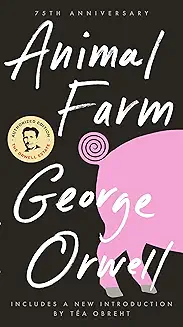
Animal Farm
George Orwell
A Political Satire on the Corrupting Influence of Power
4.7 (793)23 mins
King Leopold's Ghost
Adam Hochschild
A Story of Greed, Terror, and Heroism in Colonial Africa
4.6 (81)37 mins
The Origins of Totalitarianism
Hannah Arendt
Hannah Arendt's landmark work about Europe's anti-Semitic and imperialist roots
4.6 (464)31 mins

The Creative Act
Rick Rubin
A Way of Being
4.6 (512)27 mins
My Grandmother's Hands
Resmaa Menakem
Racialized Trauma and the Pathway to Mending Our Hearts and Bodies
4.6 (167)30 mins