
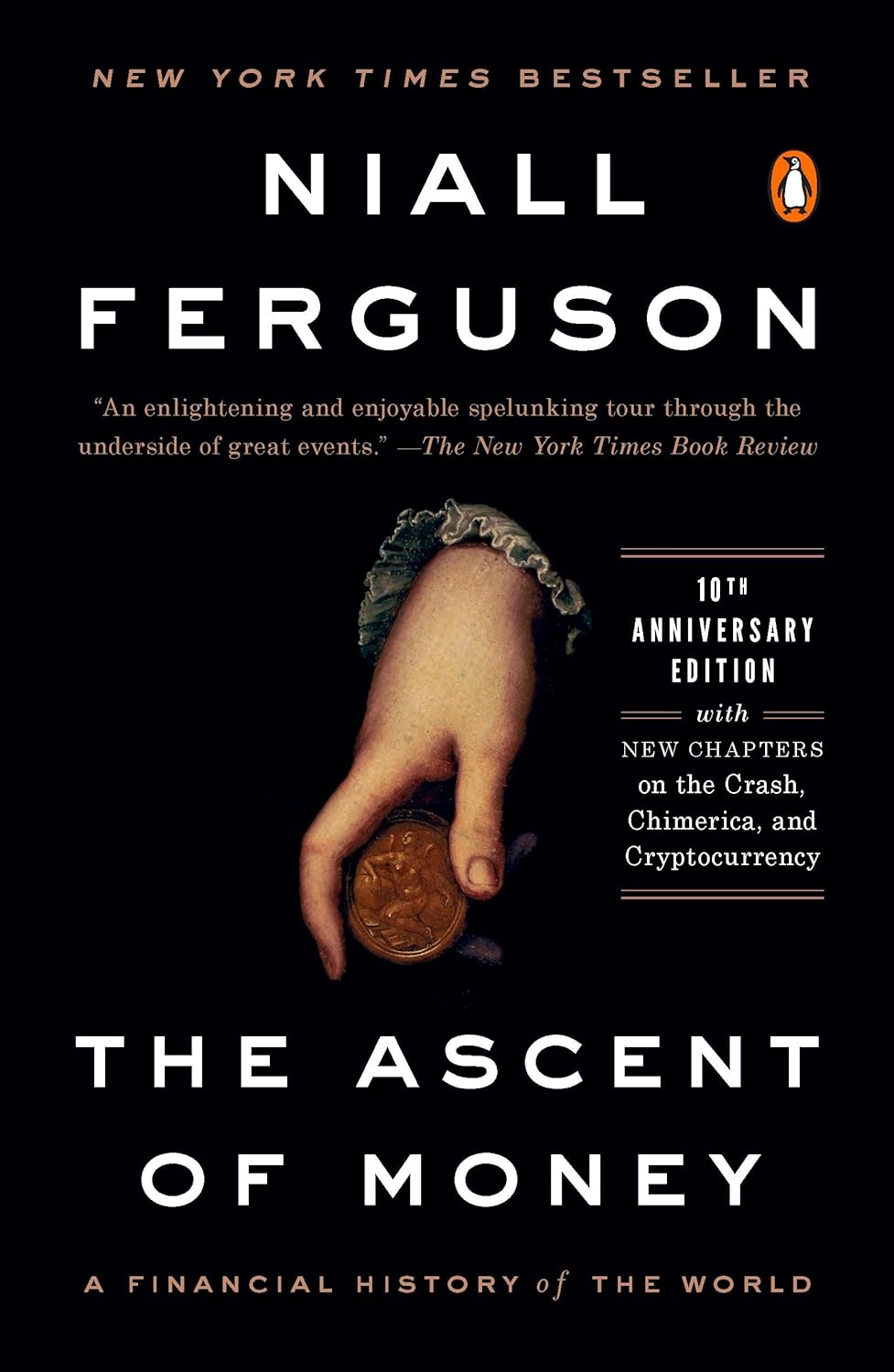
The Ascent of Money Summary
By Niall Ferguson
A Financial History of the World
Summary preview
Money feels solid when you hold a coin or count a stack of notes. Yet the great trick of financial history is that money is never just metal, paper, or numbers on a screen. It is trust made visible. It is a story we agree to believe, a chain of promises linking strangers across time. That is the animating idea behind The Ascent of Money, where Niall Ferguson takes you on a sweeping journey through the history of finance, not as a dull parade of formulas and institutions, but as one of the great engines of human civilization. The book begins with a bold claim. Poverty, violence, and inequality cannot be understood without understanding money. Nor can empire, war, industry, housing, retirement, or globalization. Finance is not some dry side issue tucked away in dealing rooms and central banks. It is the hidden wiring of the modern world. If politics often takes center stage in history books, finance is the stage itself, the pulleys above, and the machinery beneath. Once you start to see that, familiar events look entirely different. What follows is not a technical manual but a kind of guided tour through the architecture of economic life. We move from the birth of credit and debt in the ancient world to the rise of bond markets in Renaissance Italy. We watch stock markets emerge as ingenious ways of sharing risk and funding long distance trade. We see insurance turn uncertainty into something priced and tradable. We follow the creation of property based society through mortgages, then the vast social experiment of welfare states and pension systems. Finally, we arrive in the age of financial globalization, where money races around the world at dazzling speed, carrying both prosperity and danger. Along the way, the book keeps returning to one central paradox. Financial innovation has done immense good. It has helped societies escape subsistence, build cities, fund discoveries, and spread opportunity. But the same tools can become instruments of speculation, delusion, and collapse. Credit can liberate, but it can also enslave. Markets can distribute risk, but they can also multiply it. Human beings invent systems meant to tame uncertainty, yet they often use those very systems to indulge greed, overconfidence, and herd behavior. That is what gives the story its drama. This is not simply a tale of institutions. It is a tale of character. Bankers, rulers, speculators, homeowners, pensioners, and traders all play their part. Their ambitions and fears shape the fate of nations. The result is a history that feels alive, urgent, and oddly intimate. You come away with a simple but unsettling realization. To understand the rise of the modern world, you must understand the ascent of money.
Sign up to continue reading
Get access to full book summaries, audio of the summaries, and many more.
Similar Books
Books with a similar vibe—explore more like this.
The Fixer
Bradley Tusk
Saving Startups from Death by Politics
4.8 (5)32 mins
The Bitcoin Standard
Saifedean Ammous
The Decentralized Alternative to Central Banking
4.6 (291)34 mins
The Big Short
Michael Lewis
Inside the Doomsday Machine
4.5 (1357)36 mins
Money: Master the Game
Tony Robbins
7 Simple Steps to Financial Freedom
4.5 (1785)30 mins
Richer, Wiser, Happier
William Green
How the World's Greatest Investors Win in Markets and Life
4.5 (567)38 mins
Two and Twenty
Sachin Khajuria
How the Masters of Private Equity Always Win
4.5 (116)19 mins

The Land Trap
Mike Bird
A New History of the World's Oldest Asset
4.5 (15)23 mins
The Almightier
Paul Vigna
How Money Became God, Greed Became Virtue, and Debt Became Sin
4.5 (16)27 mins
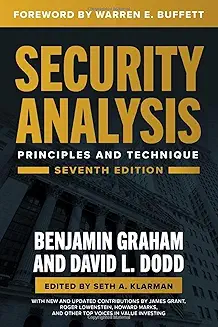
Security Analysis
Benjamin Graham & David Dodd
Principles and Techniques
4.4 (748)26 mins
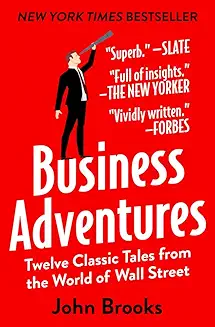
Business Adventures
John Brooks
Twelve Classic Tales from the World of Wall Street
4.4 (593)35 mins