
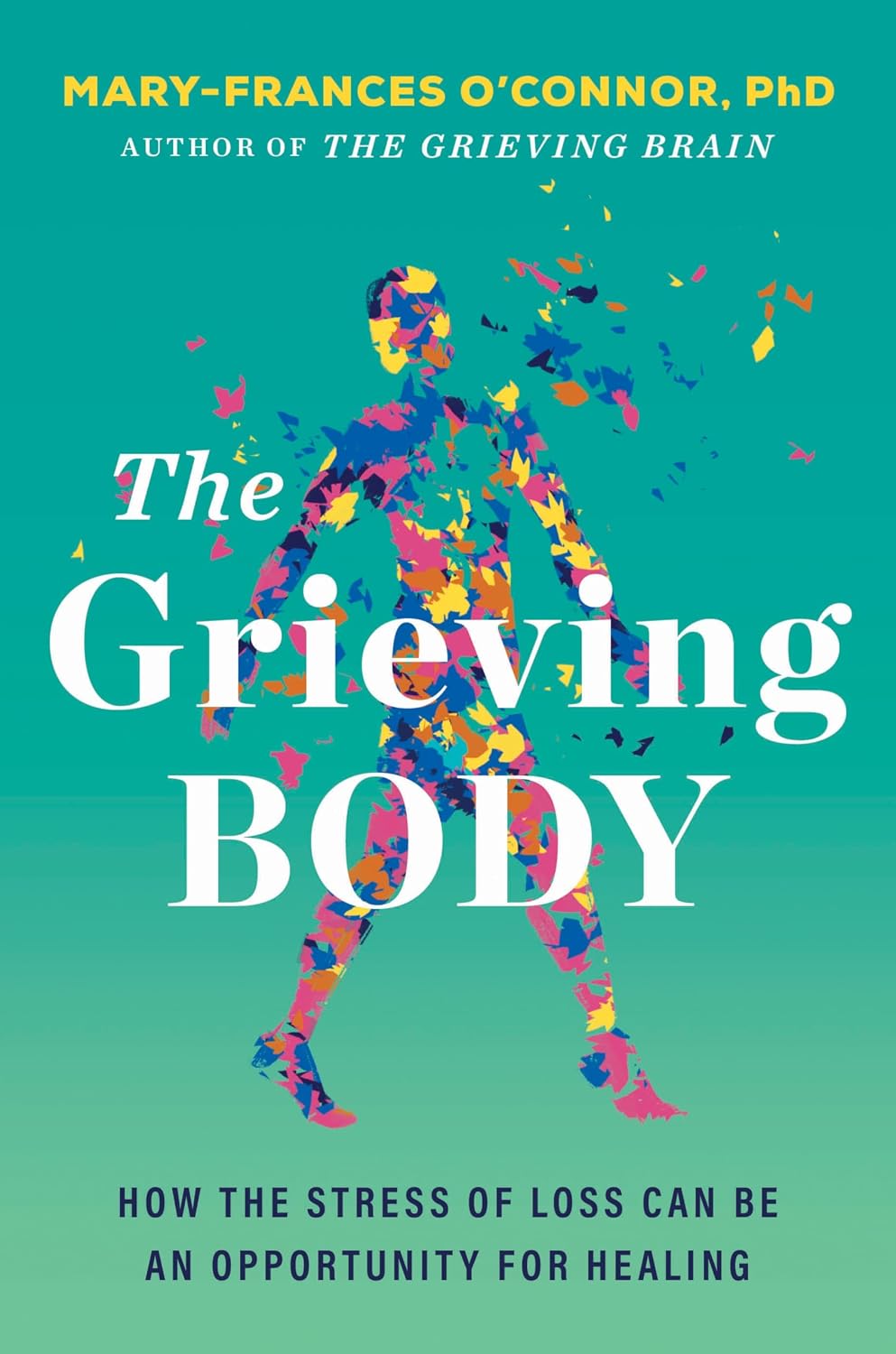
The Grieving Body Summary
By Mary-Frances O'Connor
How the Stress of Loss Can Be an Opportunity for Healing
Summary preview
Grief is often talked about as an emotion, a storm of sadness that moves through the mind and heart. But the real surprise at the center of The Grieving Body is that grief also lives in the body in plain, measurable, physical ways. It changes sleep, appetite, focus, energy, the immune system, the heart, and even the sense of where a loved one is in space and time. When someone we love dies, the loss is not only something we know. It is something the whole body must slowly learn. That is the guiding idea of this book. Mary-Frances O'Connor brings together neuroscience, psychology, medicine, and tender human stories to show that grief is not a sign of weakness or a failure to cope. It is a natural response to attachment. If love teaches the brain and body to expect another person, then death creates a painful mismatch between expectation and reality. Part of us understands the person is gone. Another part still waits for the phone call, still listens for footsteps, still turns to share a piece of news. This is why grief can feel so bewildering. We are not simply sad. We are updating a deep map built through years of connection. The book moves with warmth and clarity through this strange territory. It asks why grief can make people feel sick, why bereavement raises health risks, why some losses soften with time while others stay sharp and disabling, and why rituals, community, and simple daily care matter so much. It also makes room for the wide variety of grief experiences. No two people grieve in the same way, because no two bonds are exactly alike. The death of a spouse, a parent, a child, a sibling, or a friend each tears at a different pattern of expectation and identity. Along the way, the author offers a gentle correction to many myths. Grief does not follow neat stages. Letting go is not the goal. Love does not end because someone has died. What changes is the relationship between the living person and the memory, meaning, and ongoing inner bond with the dead. Healing is not about erasing attachment. It is about learning, little by little, how to carry love without the physical presence we once relied on. What makes this book so moving is its double vision. It can talk about stress hormones and heart rhythms, then turn and sit beside a grieving person with real compassion. It can explain what is happening inside the body while honoring the mystery of devotion, longing, and memory. By the end, grief appears not as a problem to solve but as an expression of love that asks the body, the brain, and the self to adapt to an altered world.
Sign up to continue reading
Get access to full book summaries, audio of the summaries, and many more.
Similar Books
Books with a similar vibe—explore more like this.
Re-Regulated
Anna Runkle
Set Your Life Free from Childhood PTSD
4.8 (10) mins
The 5 Resets
Aditi Nerurkar
Rewire Your Brain and Body for Less Stress and More Resilience
4.6 (61) mins
Atlas of the Heart
Brené Brown
Mapping Meaningful Connection and the Language of Human Experience
4.5 (1028)31 mins
Letting Go
David R. Hawkins
The Pathway of Surrender
4.4 (1029)21 mins
Taming the Molecule of More
Michael E. Long
A Step-by-Step Guide to Make Dopamine Work for You
4.4 (15) mins
Practical Optimism
Sue Varma, M.D.
The Art, Science, and Practice of Exceptional Well-Being
4.4 (63) mins
High Functioning
Judith Joseph
How to Overcome Your Hidden Depression and Reclaim Your Joy
4.4 (8) mins
Strong Minds
Noel Brick
Unlock the Power of Elite Sports Psychology
4.4 (40) mins
Finding Ultra
Rich Roll
Rejecting Middle Age, Becoming One of the World's Fittest Men, and Discovering Myself
4.3 (638)30 mins
Feeling Good
David D. Burns
The New Mood Therapy
4.3 (22) mins