
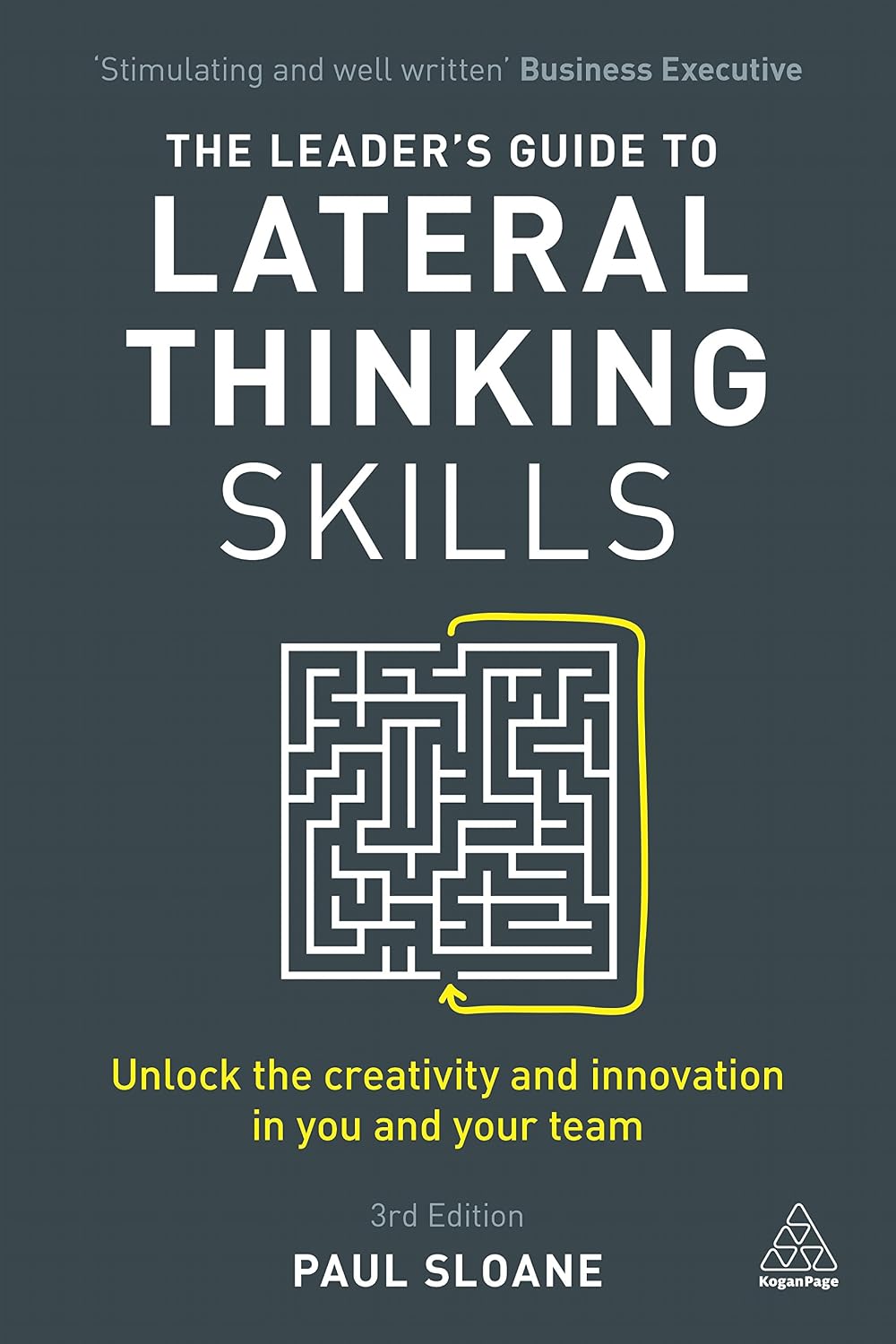
The Leader's Guide to Lateral Thinking Skills Summary
By Paul Sloane
Unlock the Creativity and Innovation in You and Your Team
Summary preview
Most of us have been taught to solve problems by being sensible, careful, and logical. We gather facts, study the data, and move step by step toward an answer. That works well for many routine challenges. But when the market changes, when customers want something new, when competitors appear from nowhere, or when a team is stuck in old habits, logic alone is often not enough. At that point, you need a different kind of thinking. You need the courage to question assumptions, the freedom to explore strange possibilities, and the discipline to turn fresh ideas into useful action. That is the heart of this book. Paul Sloane invites you to see leadership not just as directing people or managing operations, but as creating the conditions where original thinking can flourish. Lateral thinking is not random cleverness and it is not a party trick. It is a practical skill. It helps you break away from patterns, challenge accepted wisdom, and discover options that are hidden in plain sight. If straight line thinking asks, “What is the obvious next step?” lateral thinking asks, “Why must we take that path at all?” The book is written for leaders because leaders shape culture. A creative employee in a rigid organization can do little. A curious team inside a fearful culture soon becomes silent. So the real challenge is bigger than coming up with occasional bright ideas. It is about building an environment where people can question, experiment, fail safely, and learn quickly. It is about replacing the old command and control mindset with one that values initiative, diversity of thought, and thoughtful risk taking. You are shown that innovation does not belong only to inventors, designers, or technology firms. It belongs everywhere. In strategy, customer service, product design, operations, hiring, communication, and problem solving, there are chances to think differently. The book brings this alive with stories from business and beyond, showing how breakthroughs often come from reframing the question rather than working harder on the same answer. A familiar message runs through it all. The future rarely rewards those who simply defend the old way. What makes the guide especially useful is that it balances mindset with method. You are not only encouraged to be more open minded. You are also given tools, prompts, exercises, and leadership habits that help generate ideas and turn them into results. The spirit is upbeat and practical. You are asked to look again, think again, and lead in a way that releases the imagination of others. By the time you finish, the message is clear. Creative thinking is not a luxury. For a leader, it is a core responsibility.
Sign up to continue reading
Get access to full book summaries, audio of the summaries, and many more.
Similar Books
Books with a similar vibe—explore more like this.

Surrender to Lead
Jessica Kriegel, Joe Terry
The Counterintuitive Approach to Driving Extraordinary Results
4.9 (7) mins
Next Play
Alan Stein Jr.
Improve Team Performance, Productivity, and Fulfillment
4.9 (34) mins

The Gift of Struggle
Bobby Herrera
Life-Changing Lessons About Leading
4.8 (22)21 mins
The Score That Matters
Ryan Hawk, Brook Cupps
Growing Excellence in Yourself and Those You Lead
4.7 (368)17 mins

The Archetype Effect
James Root
Unlocking The Six Types of Motivation at Work
4.7 (18)22 mins
Be Yourself at Work
Claude Silver
Show Up, Stand Out, and Lead from the Heart
4.7 (15)22 mins

Team Intelligence
Jon Levy
How Brilliant Leaders Unlock Collective Genius
4.7 (17) mins

Distancing
L. David Marquet, Michael A. Gillespie
How Great Leaders Reframe to Make Better Decisions
4.7 (22) mins

Write Your Book in a Flash
Dan Janal
The Paint-by-Numbers System to Write the Book of Your Dreams—FAST!
4.7 (31) mins

Hope Is the Strategy
Jen Fisher
The Underrated Skill That Transforms Work, Leadership, and Wellbeing
4.6 (31)23 mins