
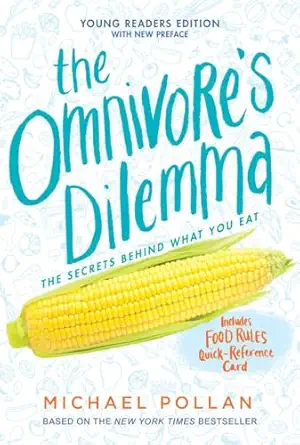
The Omnivore's Dilemma Summary
By Michael Pollan
A Natural History of Four Meals
Summary preview
What should we have for dinner? It sounds like such a small question, the kind of thing you ask late in the day when you are tired and hungry and standing in front of a refrigerator. Yet that little question opens onto a huge landscape of history, biology, economics, culture, and desire. It carries us from cornfields in Iowa to supermarket aisles glowing with abundance, from industrial feedlots to mountain forests, from fast food counters to a meal gathered by hand and hunted in the wild. That is the real drama at the heart of The Omnivore's Dilemma, and Michael Pollan approaches it with the curiosity of a reporter and the appetite of an ordinary eater trying to make sense of a very strange food world. The dilemma belongs to all omnivores. A creature that can eat many things also has to figure out what it ought to eat. Some animals solve this problem with instinct. We solve it with culture, habits, markets, advertising, science, and stories. The trouble is that in modern America those guides have become confused, fragmented, and often captured by industries more interested in selling food than helping us understand it. We have more choices than any people in history, yet many of us feel less certain than ever. We are surrounded by labels, health claims, and moral arguments, but the food itself often seems hidden behind packaging and slogans. So the book sets out to follow several meals back to their source. That simple method turns out to be wonderfully revealing. If you want to know what you are really eating, you have to ask where it came from, how it was grown, what systems produced it, and what those systems do to land, animals, workers, and communities. The investigation moves through three broad food chains. First comes the industrial chain, built largely on cheap corn and fossil fuel, efficient in one sense and deeply troubling in another. Then comes an industrial organic chain, which promises an alternative yet often begins to resemble the thing it opposes. Finally comes a more local and ecological chain, where a farm tries to imitate nature rather than dominate it, followed by a meal from the wild that tests how far a modern eater can go in taking responsibility for his food. What makes the journey so compelling is that it never stays abstract for long. The arguments arrive wrapped in stories, encounters, and meals. You meet farmers, ranchers, truckers, hunters, foragers, and scientists. You see corn transformed into bewildering forms, from feed and sweetener to packaging and fuel. You watch cows eating what they were never meant to eat. You learn why supermarket organic food can carry hidden contradictions. And gradually, meal by meal, the question of dinner becomes a question about how we choose to live. The book is not really trying to hand you a perfect diet or a neat set of rules. It is doing something more interesting. It is trying to restore a way...
Sign up to continue reading
Get access to full book summaries, audio of the summaries, and many more.
Similar Books
Books with a similar vibe—explore more like this.
Losing Eden
Lucy Jones
Why Our Minds Need the Wild
4.6 (641)28 mins
Every Living Thing
Jason Roberts
The Great and Deadly Race to Know All Life
4.8 (7) mins
The Midnight Library
Matt Haig
A Fantasy Novel About the Choices That Lead to a Life Well-Lived
4.7 (4782)32 mins
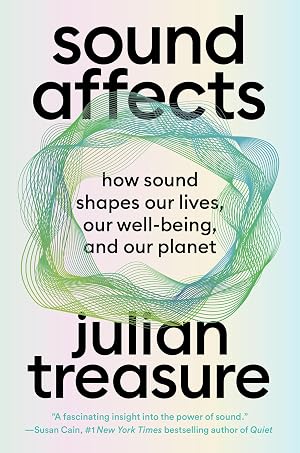
Sound Affects
Julian Treasure
How Sound Shapes Our Lives, Our Wellbeing and Our Planet
4.7 (10) mins
My Grandmother's Hands
Resmaa Menakem
Racialized Trauma and the Pathway to Mending Our Hearts and Bodies
4.6 (167)30 mins
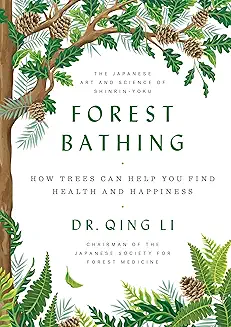
Forest Bathing
Qing Li
How Trees Can Help You Find Health and Happiness
4.6 (285)24 mins
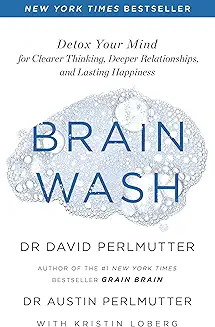
Brain Wash
David Perlmutter
Detox Your Mind for Clearer Thinking, Deeper Relationships, and Lasting Happiness
4.6 (1203)29 mins
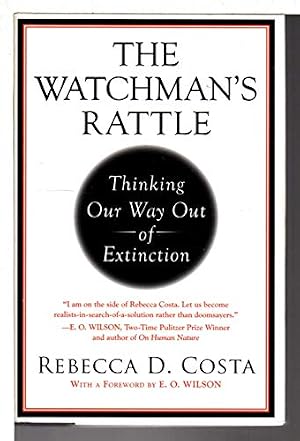
The Watchman's Rattle
Rebecca D. Costa
Thinking Our Way Out of Extinction
4.6 (10) mins
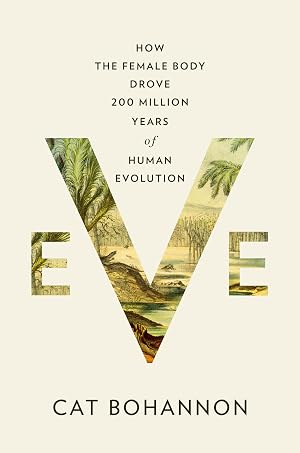
Eve
Cat Bohannon
How the Female Body Drove 200 Million Years of Human Evolution
4.6 (46) mins
The Wide Wide Sea
Hampton Sides
The Fateful Final Voyage of Captain James Cook
4.5 (830)28 mins