
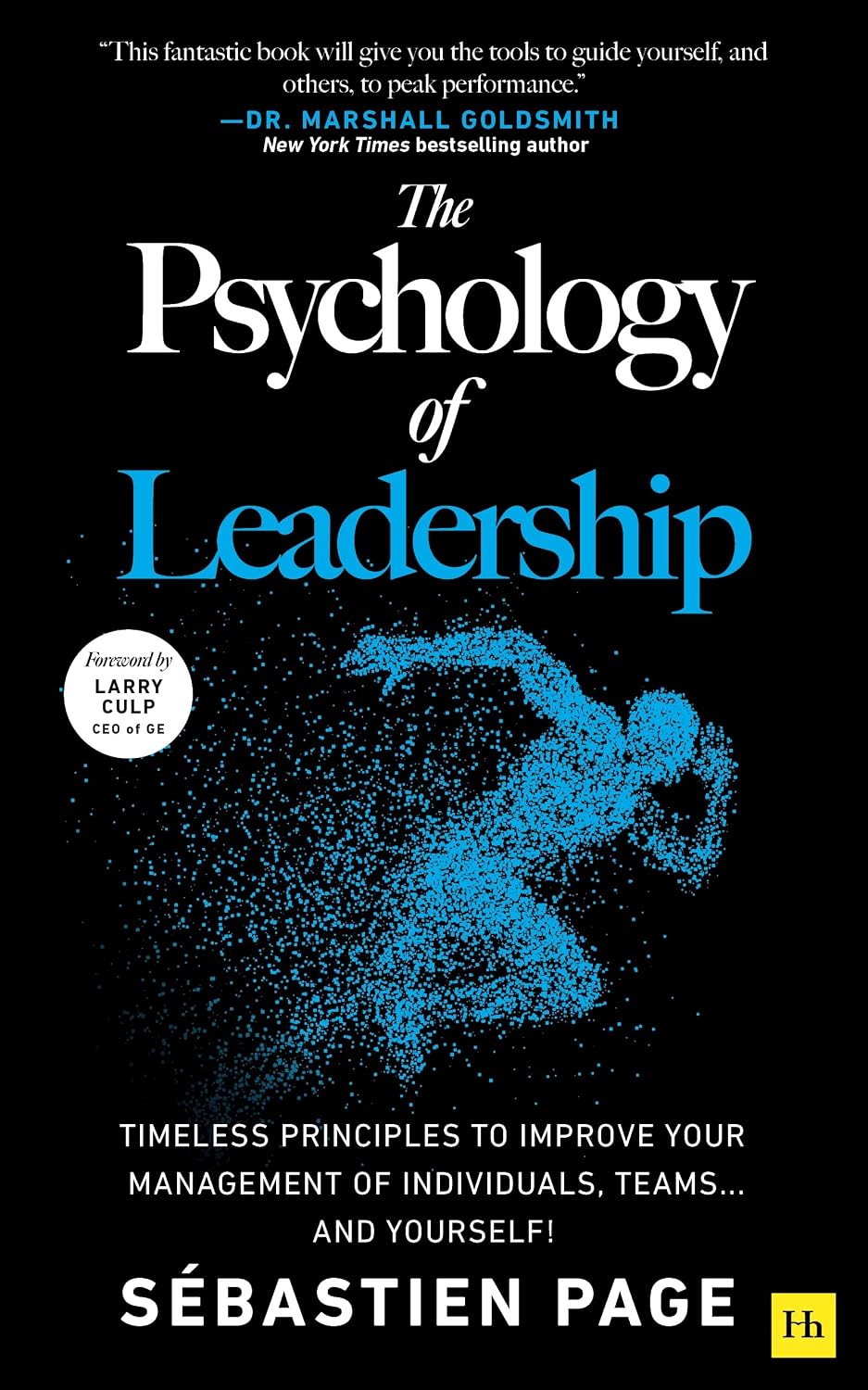
The Psychology of Leadership Summary
By Sébastien Page
Timeless principles to perfect your leadership
Summary preview
Leadership is often treated like a set of visible moves. Speak with confidence. Set a vision. Make decisions quickly. Inspire the room. But the heart of this book is that leadership starts in a place most people cannot see. It starts in the mind. It starts with how you notice your own emotions, how you read the emotions of others, how you make sense of pressure, uncertainty, ego, ambition, fear, loyalty, and change. The real work of leading is not only about strategy or authority. It is about psychology. That is the world Sébastien Page invites you into. He does not present leadership as a grand heroic performance reserved for a few unusual people. He brings it down to human scale. He shows that leading well depends on understanding why people think and act the way they do, including you. A leader is not just a planner or a commander. A leader is a student of human nature. The better you understand the hidden forces inside yourself and inside your team, the better you can create trust, judgment, resilience, and meaningful results. The book moves through the inner architecture of leadership with a practical, personal style. It explores personality, motivation, perception, confidence, humility, and the habits that help a person remain steady when the stakes are high. It asks you to look honestly at your own strengths and blind spots. It also asks you to see leadership not as a solo act, but as a relationship. People do not follow titles. They follow signals. They watch how you behave in conflict, how you listen, how you handle mistakes, and whether your words and actions line up. A key thread running through the book is that leadership is deeply shaped by self awareness. If you do not understand your patterns, your fears will lead for you. Your biases will make decisions before your reason gets a chance. Your moods will spread through the group. But when you develop emotional balance and psychological insight, you become more trustworthy, more adaptable, and more capable of helping others do their best work. The book also widens the lens. It connects individual psychology to culture, decision making, communication, and long term performance. It shows why smart people can still make poor choices, why teams can fail even when everyone is talented, and why the best leaders create environments where people can speak openly, learn continuously, and recover from setbacks. What emerges is a grounded picture of leadership that is both demanding and hopeful. You do not need to be flawless. You need to be aware, curious, disciplined, and open to growth. Leadership, as this book presents it, is a psychological practice. It is the art of managing yourself so you can bring out the best in others, especially when it matters most.
Sign up to continue reading
Get access to full book summaries, audio of the summaries, and many more.
Similar Books
Books with a similar vibe—explore more like this.
The Laws of Human Nature
Robert Greene
What affects your day-to-day life
4.4 (940)32 mins
Crucial Conversations
Kerry Patterson, Joseph Grenny, Ron McMillan, Al Switzler
Tools for Talking When Stakes Are High
4.3 (658)32 mins
Think Twice
Michael J. Mauboussin
Harnessing the Power of Counterintuition
3.8 (74)14 mins

Effective Decision-Making
Edoardo Binda Zane
How to Make Better Decisions Under Uncertainty and Pressure
3.6 (18)25 mins
Surrender to Lead
Jessica Kriegel, Joe Terry
The Counterintuitive Approach to Driving Extraordinary Results
4.9 (7)21 mins
Next Play
Alan Stein Jr.
Improve Team Performance, Productivity, and Fulfillment
4.9 (34)26 mins
The Gift of Struggle
Bobby Herrera
Life-Changing Lessons About Leading
4.8 (22)21 mins
Believe It to Achieve It
Brian Tracy, Christina Stein
Overcome Your Doubts, Let Go of the Past, and Unlock Your Full Potential
4.8 (32)22 mins
The Score That Matters
Ryan Hawk, Brook Cupps
Growing Excellence in Yourself and Those You Lead
4.7 (368)17 mins

The Archetype Effect
James Root
Unlocking The Six Types of Motivation at Work
4.7 (18)22 mins