

AI 2041
By Kai-Fu Lee & Chen Qiufan
Ten Visions for Our Future
Introduction
Imagine waking up in 2041 and finding that artificial intelligence is no longer a tool sitting quietly inside your phone or laptop. It has become part of the texture of daily life. It shapes how we love, learn, travel, heal, work, shop, govern, and dream. That is the world this book invites you into. It does not ask you to stare at AI as a distant science project or fear it as a movie monster. Instead, it brings AI down to earth and places it in kitchens, classrooms, hospitals, police stations, factories, and city streets. The heart of the book is simple. AI is coming fast, and its biggest effects will not arrive all at once in some dramatic explosion. They will appear in ordinary situations, one decision at a time, one app at a time, one system at a time, until everyday life feels quietly transformed. To help you see that future clearly, Kai-Fu Lee & Chen Qiufan use a vivid structure. Each chapter begins with a piece of fiction set in 2041, somewhere in the world. These stories are intimate and human. They follow characters facing love, loss, ambition, inequality, danger, hope, and moral confusion. Then each story opens into a plainspoken explanation of the technologies behind it, what is already possible today, what is likely by 2041, and what could go wrong if we are careless. This blend matters because AI is never just code. It enters human systems full of bias, profit motives, politics, history, and emotion. A smart headset that can tutor a child can also monitor that child. A medical system that saves lives can also widen the gap between those who can pay and those who cannot. A platform that gives someone purpose can also trap them inside algorithmic manipulation. Again and again, the book asks you to hold two truths at once. AI can be astonishingly useful, and AI can be deeply harmful. Progress is real, but so is risk. The stories move across many domains. You will see synthetic companions and personalized education in India, autonomous vehicles in Africa, precision health in Japan, deepfake driven justice problems in the United States, immersive entertainment in South Korea, job disruption and social unrest in China, and climate crisis management tied to AI in the Arctic. The future here is not one single global script. It arrives differently depending on culture, wealth, regulation, and local need. By the end, the message feels both urgent and empowering. The future of AI is not fixed. It will be shaped by choices made by engineers, business leaders, teachers, parents, doctors, lawmakers, and citizens. The question is not whether AI will matter. It is whether we will build it with wisdom, humility, and enough humanity to make it serve life rather than diminish it.
Sign up to continue reading
Get access to full book summaries, audio of the summaries, and many more.
Similar Books
Books with a similar vibe—explore more like this.
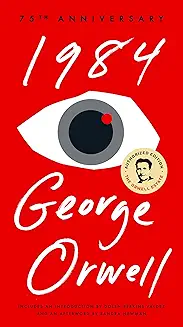
1984
George Orwell
A Dystopian Classic on the Dangers of Totalitarianism
4.7 (1738)16 mins
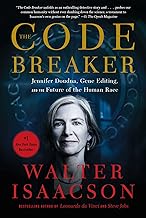
The Code Breaker
Walter Isaacson
Jennifer Doudna, Gene Editing, and the Future of the Human Race
4.6 (1893)43 mins
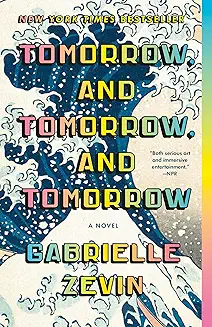
Tomorrow, and Tomorrow, and Tomorrow
Gabrielle Zevin
A Novel
4.5 (4281)24 mins
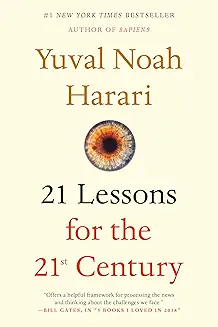
21 Lessons for the 21st Century
Yuval Noah Harari
Future proof yourself against the 21st Century
4.5 (502)24 mins
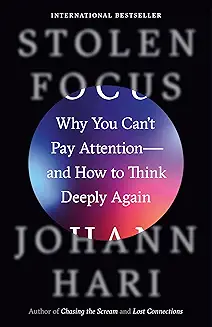
Stolen Focus
Johann Hari
Why You Can't Pay Attention – and How to Think Deeply Again
4.4 (629)24 mins
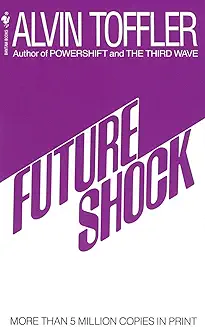
Future Shock
Alvin Toffler
A Handbook for Adjustment in the Face of Accelerating Change
4.4 (847)26 mins
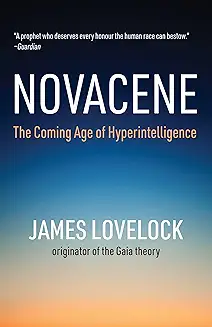
Novacene
James Lovelock
The Coming Age of Hyperintelligence
4.4 (554)25 mins
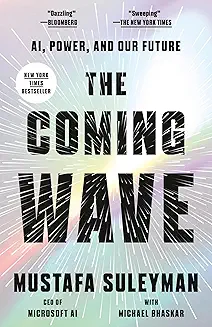
The Coming Wave
Mustafa Suleyman
AI, Power, and Our Future
4.3 (640)28 mins
The Battle for Your Brain
Nita A. Farahany
Defending the Right to Think Freely in the Age of Neurotechnology
4.2 (449)18 mins
The Innovators
Walter Isaacson
How a Group of Hackers, Geniuses, and Geeks Created the Digital Revolution
4.2 (894)31 mins