

Future Shock
By Alvin Toffler
A Handbook for Adjustment in the Face of Accelerating Change
Introduction
There are times in history when change comes like weather. It rolls in, gathers force, and rearranges everything you thought was solid. Then there are times when change comes like an explosion. That is the world this book asks you to face. Alvin Toffler is not merely describing a faster age. He is telling you that speed itself has become the defining fact of modern life, and that human beings, raised for slower worlds, can become sick, confused, and disoriented when too much change strikes in too short a time. He gives that condition a memorable name, future shock. Future shock is not just worry about tomorrow. It is the physical and emotional strain that comes when old habits, social structures, and mental maps can no longer keep pace with the rush of new products, new ideas, new places, new jobs, new relationships, and new moral choices. The book begins with a simple but unsettling observation. The future has arrived too soon. We are not entering change step by step. We are being hurled into it. What once took generations now happens in years, months, sometimes days. The result is a society where permanence fades, where novelty becomes normal, and where many people feel as if the ground is moving under their feet. What makes this book so powerful is that it does not treat this as a private problem or a personal weakness. It says the trouble is civilizational. Our schools, families, businesses, and governments were built for a world of continuity. But the emerging world is marked by transience, diversity, and acceleration. We no longer simply inherit a way of life. We must constantly choose one. We no longer live among stable roles and fixed communities. We move, switch, improvise, and adapt. That sounds exciting, and often it is. But it also carries hidden costs. The argument moves across every corner of life. It looks at cities, mobility, architecture, marriage, friendship, work, technology, politics, and culture. It asks what happens when possessions are designed to be thrown away, when homes become temporary, when careers fragment, when relationships shorten, and when information floods the mind faster than it can be sorted. It also asks whether we can learn to govern change instead of being crushed by it. So this is not a gloomy prophecy and not a celebration of speed for its own sake. It is a warning, a diagnosis, and a call to maturity. Toffler wants you to see that the central drama of modern life is not simply what new machines can do. It is what unceasing novelty does to the human nervous system, to social bonds, and to our ability to make wise decisions. Once you see that, the entire shape of the modern world begins to look different.
Sign up to continue reading
Get access to full book summaries, audio of the summaries, and many more.
Similar Books
Books with a similar vibe—explore more like this.
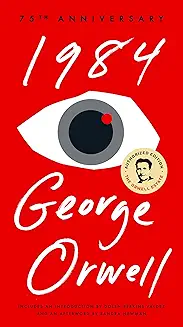
1984
George Orwell
A Dystopian Classic on the Dangers of Totalitarianism
4.7 (1738)16 mins
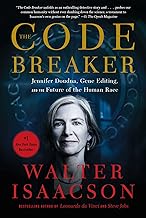
The Code Breaker
Walter Isaacson
Jennifer Doudna, Gene Editing, and the Future of the Human Race
4.6 (1893)43 mins
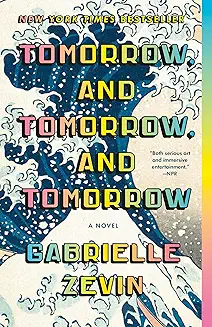
Tomorrow, and Tomorrow, and Tomorrow
Gabrielle Zevin
A Novel
4.5 (4281)24 mins
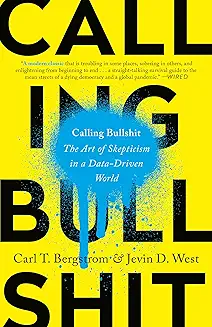
Calling Bullshit
Carl T. Bergstrom & Jevin D. West
The Art of Skepticism in a Data-Driven World
4.5 (720)28 mins
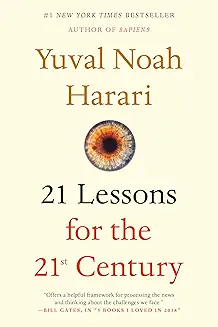
21 Lessons for the 21st Century
Yuval Noah Harari
Future proof yourself against the 21st Century
4.5 (502)24 mins
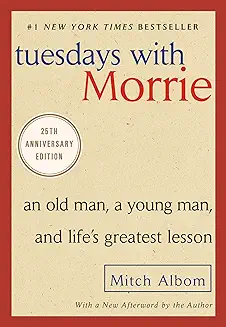
Tuesdays with Morrie
Mitch Albom
An Old Man, a Young Man, and Life's Greatest Lesson
4.5 (820)20 mins
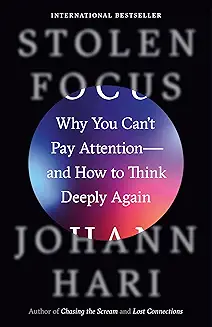
Stolen Focus
Johann Hari
Why You Can't Pay Attention – and How to Think Deeply Again
4.4 (629)24 mins
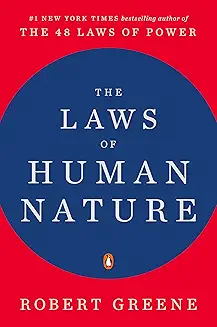
The Laws of Human Nature
Robert Greene
What affects your day-to-day life
4.4 (940)32 mins
AI 2041
Kai-Fu Lee & Chen Qiufan
Ten Visions for Our Future
4.4 (691)32 mins
Novacene
James Lovelock
The Coming Age of Hyperintelligence
4.4 (554)25 mins