
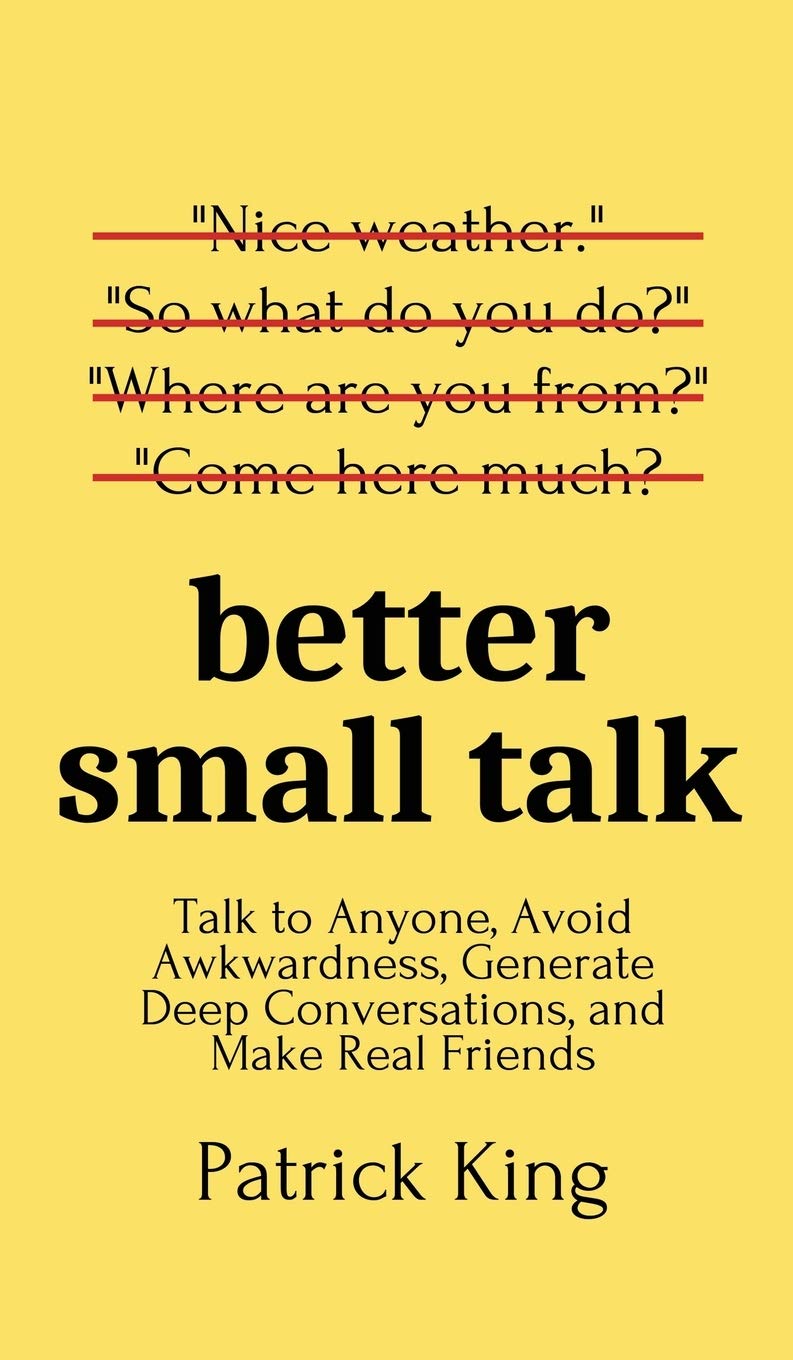
Better Small Talk Summary
By Patrick King
Master the Art of Deep Conversation
Summary preview
Small talk gets dismissed as fluff, filler, or social wallpaper. A lot of people think it is fake, shallow, or something you suffer through on the way to a real conversation. This book flips that idea on its head. The core message is simple and freeing. Small talk is not the enemy of deep connection. It is the doorway to it. If you struggle to start conversations, keep them going, avoid awkward silence, or feel like your mind goes blank at exactly the wrong moment, this book is here to make socializing feel less mysterious and much more learnable. Patrick King treats conversation like a skill, not a gift reserved for naturally charming people. That matters, because many readers come in carrying the same quiet fear. They think everyone else received a secret manual on how to connect, joke, ask interesting questions, and glide through social moments with ease. But the book keeps reminding you that what looks effortless is usually built from habits, structures, and simple shifts in attention. You do not need to become louder, slicker, or more performative. You need tools. You need a way to stop overthinking yourself and start becoming genuinely interested in the person in front of you. That is where the book lives. It is practical from the start. Rather than giving vague advice about confidence or telling you to just be yourself, it breaks conversation down into usable parts. How do you open? How do you move past stale questions? How do you avoid interrogating people? How do you show warmth without trying too hard? How do you recover when a chat loses steam? And how do you make people feel seen, which is really the hidden engine behind every good exchange? These are the kinds of questions the book keeps answering. One of its most important ideas is that great small talk is not about being impressive. It is about making interaction easy, safe, and enjoyable for both people. That means listening with intent, offering details that give others something to respond to, noticing emotional cues, and guiding the flow without gripping it too tightly. The goal is not to dominate a room. The goal is to create momentum and comfort. Once that happens, depth often follows naturally. So what unfolds is a clear, encouraging guide to building rapport one moment at a time. You learn how to start better, how to ask better, how to respond better, and how to think about conversation in a way that removes pressure instead of adding more. The result is a book that does more than teach social technique. It helps you understand why people open up, why they pull back, and how everyday chatter can become the beginning of trust, friendship, romance, opportunity, or simply a lighter day.
Sign up to continue reading
Get access to full book summaries, audio of the summaries, and many more.
Similar Books
Books with a similar vibe—explore more like this.

Once Upon a Stranger
Gillian Sandstrom
The Science of How Small Talk Can Add Up to a Big Life
4.7 (21) mins
Habits of a Peacemaker
Steven T. Collis
10 Habits to Turn Toxic Conversations Into Healthy Dialogues
4.7 (9) mins
How to Know a Person
David Brooks
The Art of Seeing Others Deeply and Being Deeply Seen
4.4 (692)26 mins
Modern Friendship
Anna Goldfarb
How to Nurture Our Most Valued Connections
4.3 (8) mins
Possible
William Ury
How We Survive (and Thrive) in an Age of Conflict
4.2 (48) mins
Infectious Generosity
Chris Anderson
The Ultimate Idea Worth Spreading
4.0 (8) mins

The Ethical Slut
Janet W. Hardy and Dossie Easton
A Practical Guide to Polyamory, Open Relationships, and Other Freedoms in Sex and Love
4.0 (44) mins
The Other Significant Others
Rhaina Cohen
Reimagining Life with Friendship at the Center
3.8 (42)24 mins
Othello
William Shakespeare
Love, Betrayal, and the Fall of a Hero
4.8 (14) mins
No One Succeeds Alone
Robert Reffkin
Learn Everything You Can from Everyone You Can
4.8 (9) mins