
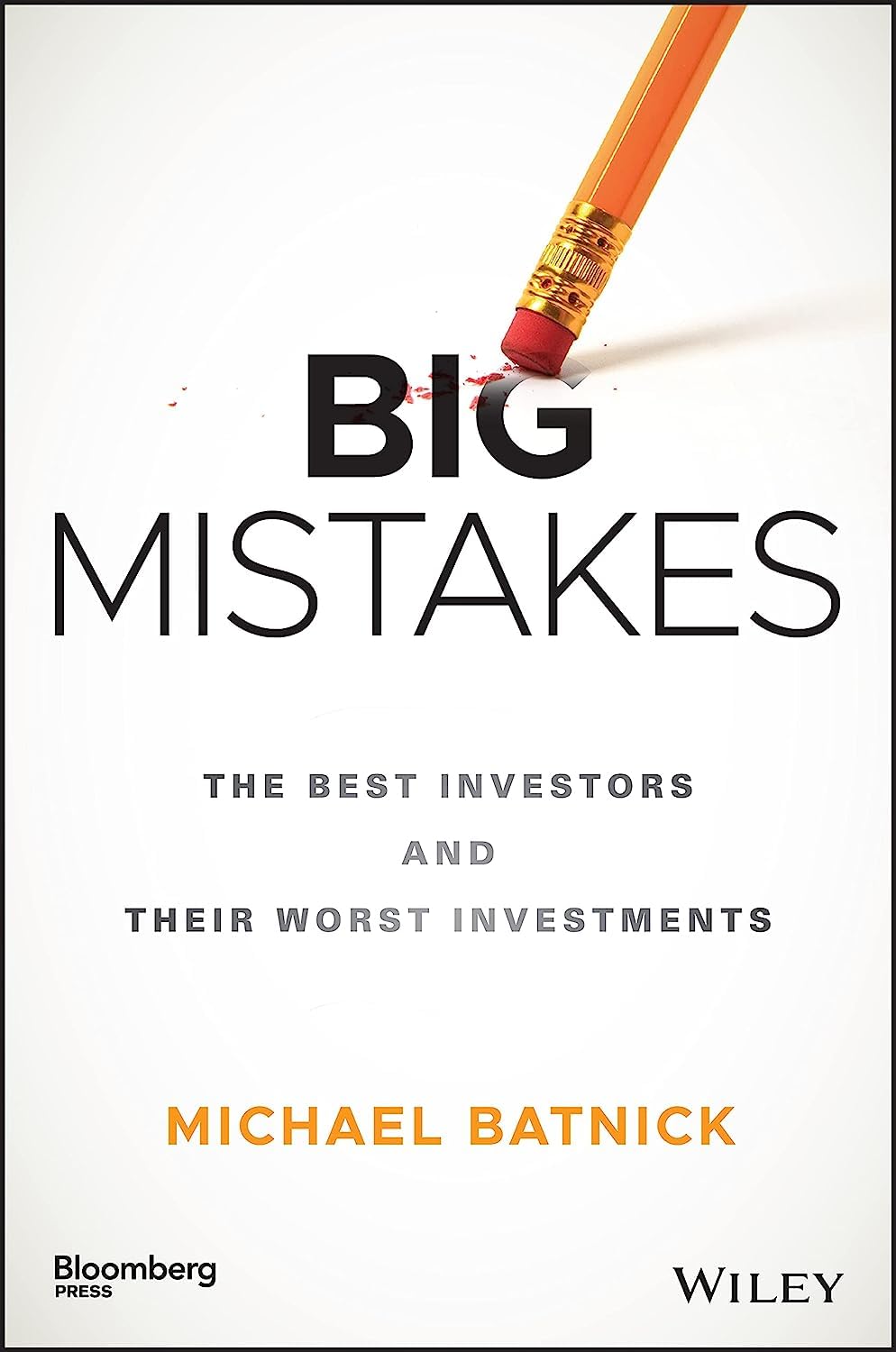
Big Mistakes Summary
By Michael Batnick
The Best Investors and Their Worst Investments
Summary preview
Most investing books try to hand you a map. They show you the clean lines, the tidy logic, the rules that seem obvious when you look backward. Big Mistakes takes the opposite road. It says if you really want to understand markets, people, risk, and your own fragile confidence, do not just study the winners when they were right. Study them when they were painfully, publicly wrong. That is the heart of this book. Michael Batnick gathers some of the smartest, most successful investors in history and puts their worst calls under a bright light. Not to embarrass them. Not to play gotcha. But to show that mistakes are not a side note in the investing story. They are the story. Even legends get trapped by ego, by timing, by narratives that feel too powerful to resist, by data that seems overwhelming until reality changes. The same people who built fortunes and shaped markets also made decisions that lost huge sums of money, damaged reputations, or simply showed that brilliance does not protect you from being human. What makes the book work so well is its tone. It does not preach from a distance. It talks to you the way investors actually talk when the suit jacket comes off and the real lesson starts. You see how a bad call usually does not begin with stupidity. It often starts with intelligence pushed too far. A sound idea becomes rigid conviction. A fair concern becomes an obsession. A great framework gets applied at the wrong time, in the wrong size, or with too much faith in a future that refuses to arrive on schedule. The stories range across different eras, styles, and personalities. Some investors were value purists. Some were macro thinkers. Some trusted economics, some trusted business quality, some trusted patterns in price, and some trusted themselves a little too much. Yet a pattern emerges. Markets are humbling because they are not just numbers on a screen. They are crowds, incentives, fear, greed, policy, technology, and chance all moving together. That means being right in theory is never enough. You also have to survive the path. As you move through these examples, the book quietly teaches something larger than stock picking. It teaches emotional control, position sizing, humility, patience, and the need to separate being clever from being effective. It also offers comfort. If the giants could get things this wrong, then mistakes are not proof that you do not belong. They are proof that you are participating in a game where uncertainty never leaves. The real edge is not perfection. It is learning how to be wrong without being ruined.
Sign up to continue reading
Get access to full book summaries, audio of the summaries, and many more.
Similar Books
Books with a similar vibe—explore more like this.
The Fixer
Bradley Tusk
Saving Startups from Death by Politics
4.8 (5)32 mins
The Curse of Bigness
Tim Wu
Antitrust in the New Gilded Age
4.7 (820)39 mins
The Snowball
Alice Schroeder
Warren Buffett and the Business of Life
4.7 (106)33 mins
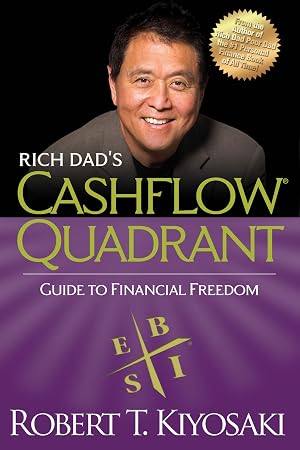
Rich Dad's Cashflow Quadrant
Robert T. Kiyosaki with Sharon L. Lechter
Guide to Financial Freedom
4.7 (199)29 mins
The Bitcoin Standard
Saifedean Ammous
The Decentralized Alternative to Central Banking
4.6 (291)34 mins
New to Big
David Kidder, Christina Wallace
How Companies Can Create Like Entrepreneurs, Invest Like VCs, and Install a Permanent Operating System for Growth
4.6 (683)31 mins
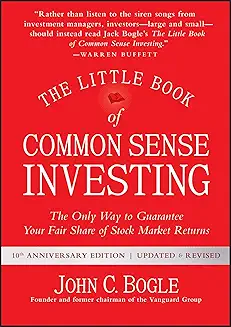
The Little Book of Common Sense Investing
John C. Bogle
The Only Way to Guarantee Your Fair Share of Stock Market Returns
4.6 (2674)23 mins
The NFT Handbook
Matt Fortnow and QuHarrison Terry
How to Create, Sell and Buy Non-Fungible Tokens
4.6 (137)26 mins
Financial Literacy for Managers
Richard A. Lambert
Finance and Accounting for Better Decision-Making
4.6 (22)22 mins
Rich Dad, Poor Dad
Robert T. Kiyosaki
What the Rich Teach Their Kids about Money – That the Poor and the Middle Class Do Not!
4.5 (6209)31 mins