
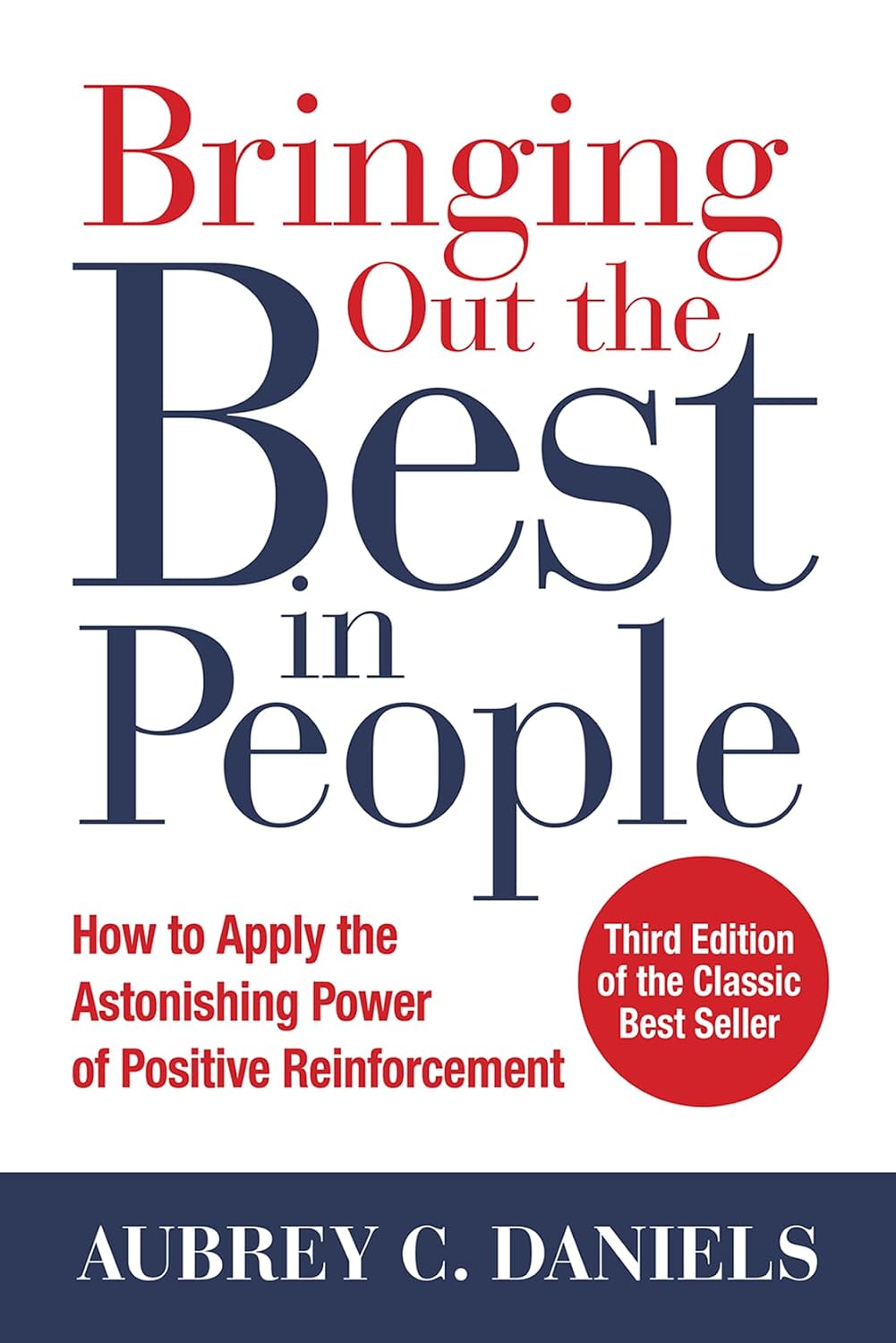
Bringing Out the Best in People Summary
By Aubrey C. Daniels
How to Apply the Astonishing Power of Positive Reinforcement
Summary preview
Most of us were taught a very shaky idea about people. We were taught that if you want better performance, you need more pressure, more rules, more reminders, more criticism, and stronger consequences. We learned to believe that when people fail, the problem sits inside the person as laziness, bad attitude, lack of commitment, or weak character. This book asks you to stop and look again. It says behavior is not a mystery and it is not mainly a moral issue. Behavior is influenced by what happens before it and, even more powerfully, by what happens after it. If you understand that simple truth, you can change how people act in ways that are reliable, humane, and surprisingly fast. Aubrey C. Daniels builds the whole book around a practical promise. If you learn the principles of behavioral science and use them skillfully, you can bring out the best in other people and often in yourself too. That means you can improve performance at work, cooperation at home, teaching in school, safety on the job, customer service, leadership, parenting, and almost any situation where people are expected to do something consistently well. The point is not manipulation. The point is to create conditions in which desirable behavior is easier, more rewarding, and more likely to happen again. The book pushes against many common management habits. It shows why goals alone do not produce action, why annual performance reviews often miss the mark, why money is a weaker motivator than many leaders think, and why punishment may suppress behavior briefly but usually creates fear, avoidance, excuses, and resentment. What really moves behavior, the book says, is positive reinforcement that is immediate, specific, and meaningful to the person receiving it. When people do something right and something good happens because of it, that behavior grows. At the same time, this is not a soft or dreamy message. It is rigorous, concrete, and grounded in observation. You are asked to define behavior clearly, measure it, notice patterns, and stop guessing. Instead of saying someone should be more professional or more responsible, you learn to ask what the person must actually do, when, how often, and under what conditions. Once behavior becomes visible, improvement becomes manageable. What makes the book so useful is its steady insistence that excellence is not pulled out of people by force. It is built by consequences, by feedback, by attention, and by systems that support success. The deeper message is hopeful. People often have more to give than their environment allows them to show. Change the environment, change the consequences, and you often change the person people thought could never change. That is the door this book opens, and once you step through it, leadership, teaching, and influence look very different.
Sign up to continue reading
Get access to full book summaries, audio of the summaries, and many more.
Similar Books
Books with a similar vibe—explore more like this.
The Art of Encouragement
Jordan Montgomery
How to Lead Teams, Spread Love, and Serve from the Heart
4.6 (13)22 mins
The 48 Laws of Power
Robert Greene
The secret methods to getting what you want
4.2 (723)31 mins
Surrender to Lead
Jessica Kriegel, Joe Terry
The Counterintuitive Approach to Driving Extraordinary Results
4.9 (7)21 mins
The Gift of Struggle
Bobby Herrera
Life-Changing Lessons About Leading
4.8 (22)21 mins
The Score That Matters
Ryan Hawk, Brook Cupps
Growing Excellence in Yourself and Those You Lead
4.7 (368)17 mins

Beethoven
Laura Tunbridge
A Life in Nine Pieces
4.7 (24)34 mins
Distancing
L. David Marquet, Michael A. Gillespie
How Great Leaders Reframe to Make Better Decisions
4.7 (22)24 mins
Stop Checking Your Likes
Susie Moore
Shake Off the Need for Approval and Live an Incredible Life
4.6 (543)20 mins
I Hate Job Interviews
Sam Owens
Stop Stressing. Start Performing. Get the Job You Want.
4.6 (6)24 mins
Confident by Choice
Juan Bendaña
The Three Small Decisions That Build Everyday Courage
4.6 (69)22 mins