
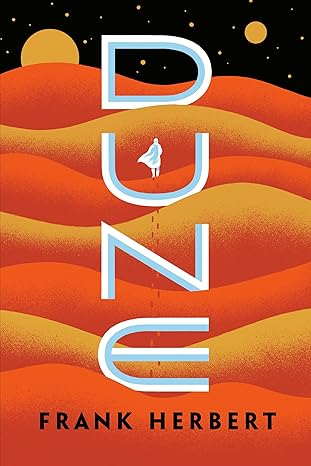
Dune
By Frank Herbert
An Epic Science Fiction Novel on the Politics of Humanity
Introduction
Dune opens like a warning whispered through desert wind. You are not simply entering a far future empire with nobles, planets, and strange technologies. You are stepping into a living trap made of power, belief, ecology, and human desire. Frank Herbert gives you a story about a young heir named Paul Atreides, but he is never content to leave it at that. He wants you to feel how a world shapes people, how people try to shape worlds, and how every victory carries a hidden cost. At the center stands Arrakis, the desert planet also called Dune. It looks empty to the careless eye, but it is the most important place in the universe because it produces the spice melange. Spice extends life, sharpens awareness, and makes space travel possible. Whoever controls Arrakis controls the flow of wealth, politics, religion, and empire itself. So when House Atreides is ordered to leave its ocean world Caladan and take over Arrakis from its old enemies, House Harkonnen, you can already smell treachery in the heat. Young Paul arrives there with gifts and burdens. He has been trained by his father Duke Leto in leadership, by his mother Jessica in the mysterious disciplines of the Bene Gesserit, and by masters of war and strategy in the arts of survival. Yet he is also being watched by forces larger than his family. Secret orders, imperial schemes, old prophecies, and breeding plans all circle around him. He begins as a boy asked to become worthy of his name. He is pulled, step by step, toward something far more dangerous, a figure people may worship, fear, or follow into disaster. What makes this tale endure is not only the sweep of its adventure. It is the way every part of the world feels tied to every other part. The giant sandworms of Arrakis are linked to the spice. The spice is linked to trade and empire. The harsh climate is linked to the fierce culture of the Fremen, the desert people who understand the planet better than any ruler sent to exploit it. Religion is tied to politics. Survival is tied to discipline. Even visions of the future become another kind of prison. So the story moves on several paths at once. It is a family tragedy, a revenge tale, a coming of age journey, a study of empire, and a meditation on what happens when people long for heroes. It asks whether a man can use power without being used by it. It asks whether seeing the future is a gift or a cage. And it asks you to look hard at the difference between ruling a land and truly learning how to live within it.
Sign up to continue reading
Get access to full book summaries, audio of the summaries, and many more.
Similar Books
Books with a similar vibe—explore more like this.
Frankenstein
Mary Shelley
The Modern Prometheus
4.6 (419)24 mins

I Am Malala
Malala Yousafzai
The Girl Who Stood Up for Education and Was Shot by the Taliban
4.6 (720)35 mins
Calling Bullshit
Carl T. Bergstrom & Jevin D. West
The Art of Skepticism in a Data-Driven World
4.5 (720)28 mins
Hidden Valley Road
Robert Kolker
Inside the Mind of an American Family
4.5 (893)32 mins
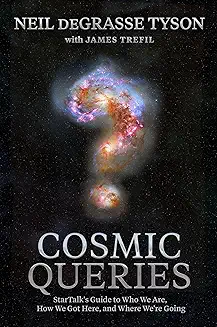
Cosmic Queries
Neil deGrasse Tyson
Cosmic Perspectives on Civilization
4.5 (371)20 mins

Patient H.M.
Luke Dittrich
A Story of Memory, Madness, and Family Secrets
4.4 (211)26 mins
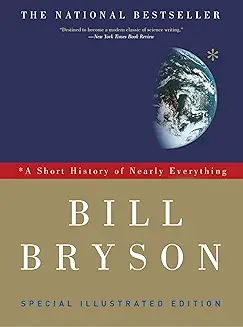
A Short History of Nearly Everything
Bill Bryson
A journey into the most intriguing and intractable questions that science seeks to answer
4.4 (1284)39 mins
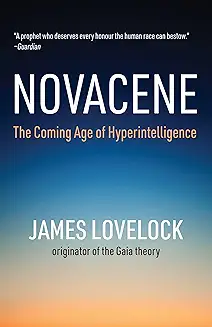
Novacene
James Lovelock
The Coming Age of Hyperintelligence
4.4 (554)25 mins
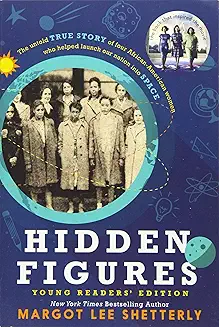
Hidden Figures
Margot Lee Shetterly
The American Dream and the Untold Story of the Black Women Mathematicians who Helped Win the Space Race
4.4 (502)21 mins
Hope for Cynics
Jamil Zaki
The Surprising Science of Human Goodness
4.4 (574)20 mins