

Hidden Figures Summary
By Margot Lee Shetterly
The American Dream and the Untold Story of the Black Women Mathematicians who Helped Win the Space Race
Summary preview
Hidden Figures tells a story that was always there, yet somehow left out of the national memory. It is about brilliant Black women whose minds helped send airplanes higher, rockets farther, and a nation into space, even while that same nation kept them at the edges of its promise. The book opens a door into the world of Langley Memorial Aeronautical Laboratory in Hampton, Virginia, where human computers sat at desks covered in numbers and turned math into motion. They calculated lift, drag, fuel use, flight paths, and all the invisible forces that decide whether a plane flies safely or a spacecraft returns home. What looks at first like a story about science quickly becomes a story about citizenship, work, ambition, and dignity. At the heart of the book are women such as Dorothy Vaughan, Mary Jackson, Katherine Johnson, and many others whose names were not celebrated when history was first written. They were trained by segregated schools, shaped by families who believed fiercely in education, and called into government service during a time of war and technological urgency. Their rise was not smooth or simple. They worked in offices marked by racial separation, in a South still ruled by Jim Crow, and in a professional world where women were often expected to assist rather than lead. Yet they solved problems no one else could solve, learned skills that changed as quickly as the machines around them, and insisted through their daily excellence that they belonged. What makes this account so powerful is the way it ties the personal to the national. The struggle for civil rights does not run beside the space race as a separate story. The two are woven together. Every promotion delayed, every classroom segregated, every restroom sign, every meeting from which women were excluded shaped the work itself. At the same time, every successful calculation, every new engineering credential, every breakthrough in computing quietly pushed against the limits of what America thought Black women could do. Margot Lee Shetterly writes with the intimacy of someone who grew up among these families and understood early that the neighborhood around Langley held a hidden epic. She shows that this is not only a correction to the record. It is a fuller version of the American story, one in which talent is everywhere, even when recognition is not. By the time you move deeper into the book, you see that the title points to more than overlooked people. It points to the way a country can hide part of itself from view, then be transformed when those figures finally step into the light.
Sign up to continue reading
Get access to full book summaries, audio of the summaries, and many more.
Similar Books
Books with a similar vibe—explore more like this.

How to Prevent the Next Pandemic
Bill Gates
What We've Learned From COVID-19 & the Changes We Need to Make
3.8 (88) mins
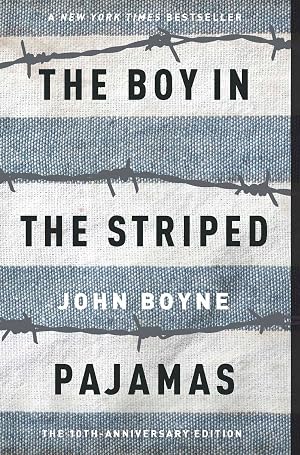
The Boy in the Striped Pajamas
John Boyne
Heartbreaking Truths Unfold in a Tale of Friendship and Innocence
3.0 (4) mins

Bedtime Biography: Yes I Can
Sammy Davis, Jr. and Jane and Burt Boyar
The Story of Sammy Davis Jr.
4.9 (7) mins
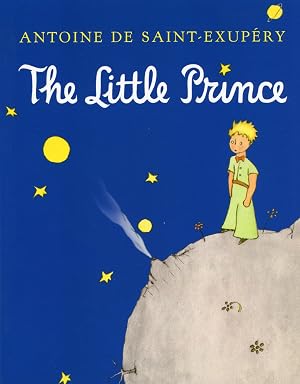
The Little Prince
Antoine de Saint-Exupéry
A Tale About the Human Condition and the Search for Happiness
4.9 (36) mins

The Song of Roland
Anonymous
Enter a World of Medieval Heroism, Where Honor Reigns Supreme
4.9 (3) mins

American Lion
Jon Meacham
Andrew Jackson in the White House
4.9 (16)35 mins
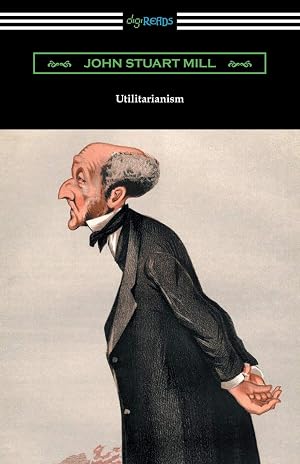
Utilitarianism
John Stuart Mill
Explore a Timeless Ethics Classic
4.8 (46)24 mins
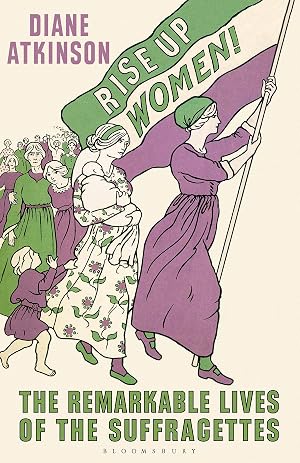
Rise Up, Women!
Diane Atkinson
The Remarkable Lives of the Suffragettes
4.8 (5) mins
Bedtime Biography: Edison
Edmund Morris
A look into the unknown stories of Thomas Edison's life
4.8 (36) mins

Lawrence in Arabia
Scott Anderson
War, Deceit, Imperial Folly and the Making of the Modern Middle East
4.8 (41) mins