
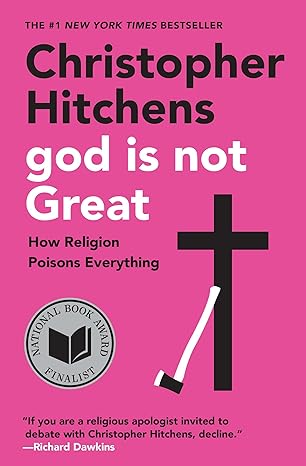
God Is Not Great Summary
By Christopher Hitchens
How Religion Poisons Everything
Summary preview
There are books that ask you to look again at what you have been told since childhood, and then there are books that take a hammer to the stained glass and invite the fresh air in. This is one of the latter sort. Christopher Hitchens sets out to challenge one of humanity’s oldest habits, namely the habit of calling religion a source of moral truth, human comfort, and civilizing wisdom. His argument is not shy, and it is not padded with polite evasions. He says plainly that religion poisons everything. By that he means not just that faith sometimes goes wrong, or that bad people misuse sacred ideas, but that the very method of religion, with its claims of certainty, obedience, and divine authority, has again and again damaged our politics, our science, our sex lives, our sense of justice, and even our ability to think clearly. The purpose of the book is larger than a simple attack on belief in God. It is an examination of the human need for meaning and the strange bargain religion offers in return. You are promised comfort, but only after being told you are fallen. You are offered purpose, but only if you submit. You are given a story about creation, morality, and destiny, but only at the cost of evidence, doubt, and independent thought. The case presented here is that religion survives not because it is true, but because it is old, organized, emotionally powerful, and often protected from the ordinary standards we apply to every other claim. What follows moves across scripture, history, politics, philosophy, and personal memory. The Bible, the Quran, and other sacred texts are treated not as untouchable revelations but as human documents, full of contradiction, cruelty, fantasy, and tribal pride. The founders and defenders of faith are examined as men of their time rather than mouthpieces of heaven. Whole chapters of human suffering are revisited to show what happens when people believe they are acting on behalf of the divine. For example, we are taken into the world of sectarian violence, totalitarian temptation, missionary arrogance, and sexual repression. We are also shown how science and reason have steadily illuminated what religion once claimed to explain. Yet the book is not merely destructive. Beneath the sharpness there is a defense of something more generous and more adult than faith. It is a plea for intellectual honesty, for the freedom to inquire, for the courage to face mortality without fairy tales, and for a morality grounded in human solidarity rather than supernatural surveillance. It asks whether we might grow up as a species and accept that meaning is something we make together, not something handed down from the clouds. The pages ahead are full of dispute, wit, historical anecdote, and unblushing indignation. But at heart they offer a simple challenge. Stop kneeling. Start thinking. Then see what kind of life becomes possible.
Sign up to continue reading
Get access to full book summaries, audio of the summaries, and many more.
Similar Books
Books with a similar vibe—explore more like this.

Utilitarianism
John Stuart Mill
Explore a Timeless Ethics Classic
4.8 (46)24 mins
Sovereign Self
Acharya Shunya
Claim Your Inner Joy and Freedom with the Empowering Wisdom of the Vedas, Upanishads, and Bhagavad Gita
4.8 (114) mins
The God Equation
Michio Kaku
The Quest for a Theory of Everything
4.7 (409)28 mins

The Book of Five Rings
Miyamoto Musashi
A Classic Text on the Japanese Way of the Sword
4.7 (293)23 mins

Uncle Tom's Cabin
Harriet Beecher Stowe
The Problem of Slavery and Its Treatment of Human Beings
4.7 (41)25 mins
The Divine Comedy
Dante Alighieri
The Inferno, The Purgatorio, and The Paradiso
4.6 (457)27 mins
The Power Of Meaning
Emily Esfahani Smith
Crafting a Life That Matters
4.6 (126) mins
Mythology
Edith Hamilton
Timeless Tales of Gods and Heroes
4.6 (41) mins

The Book of Genesis
The Holy Bible
In the beginning
4.6 (12) mins
The Book
Alan W. Watts
On the Taboo Against Knowing Who You Are
4.5 (540)26 mins