
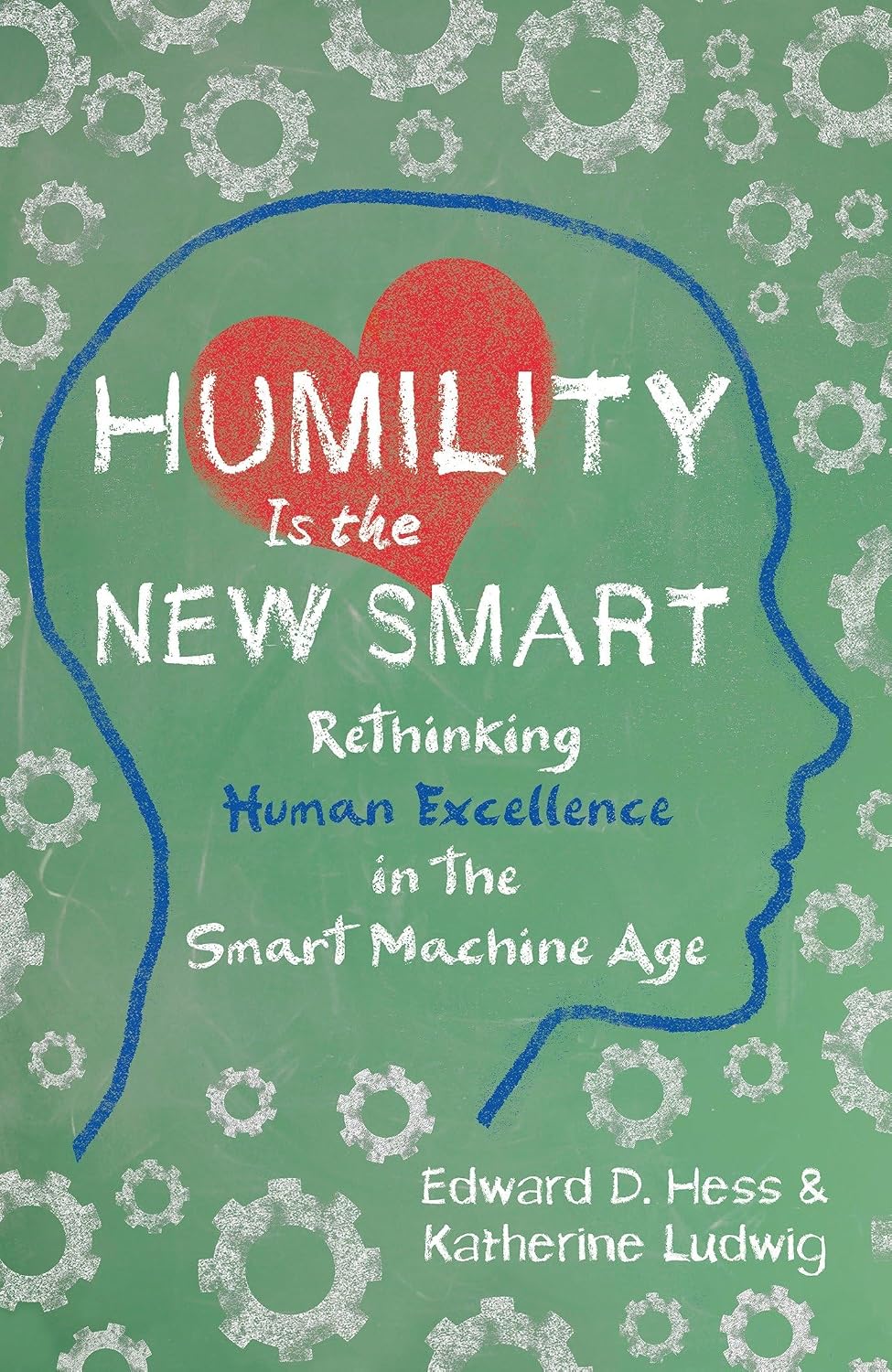
Humility Is The New Smart Summary
By Edward D. Hess and Katherine Ludwig
Rethinking Human Excellence In the Smart Machine Age
Summary preview
We are living through a huge shift in what it means to be smart, capable, and valuable at work. For a long time, many of us were taught that success came from having the right answers, showing confidence, protecting our status, and proving how much we knew. That world is fading. Smart machines can now do more and more of the work that once made humans feel special. They can calculate faster, store more, and in many situations make better predictions. So if machines keep getting better at routine thinking, pattern finding, and even some kinds of expert judgment, where does that leave us? That question sits at the heart of this book. Edward D. Hess and Katherine Ludwig argue that the future belongs not to the loudest, the most certain, or the most ego driven, but to the people who can learn, adapt, connect, and collaborate at the highest level. The new advantage is not raw intelligence alone. It is a set of very human qualities that let us keep growing in a changing world. And the foundation of those qualities is humility. Humility here does not mean weakness, passivity, or thinking less of yourself. It means being open to the truth that you do not know everything, that your mind has limits, that your beliefs can be wrong, and that learning requires curiosity, self awareness, and courage. It means being able to say, with honesty, that other people may see something you do not. It means listening deeply enough to change your mind. In a world where technology will keep reshaping jobs and industries, that kind of humility becomes a practical strength. The book shows that many of the biggest obstacles to learning are inside us. Our ego wants certainty. Our fear wants control. Our mind is full of biases, stories, and automatic reactions. We often think we are being rational when we are actually defending our identity or protecting our comfort. To become better learners, we have to understand how our brain works, how emotions shape behavior, and how habits either trap us or free us. From there, the book moves into action. It explores the behaviors and practices that help us do the kind of thinking and relating that machines cannot easily copy. Deep listening. Reflective thinking. Otherness, which means truly valuing different perspectives. Calmness under pressure. Trust based relationships. Teaming rather than competing. Disciplined habits that turn ideals into daily behavior. At its core, this is a book about becoming more fully human in an age of intelligent machines. It asks you to trade certainty for curiosity, self protection for self awareness, and knowing for learning. Its message is both challenging and hopeful. The future is uncertain, yes. But if you can learn to quiet your ego, manage your fear, and open yourself to others, you can do the kind of work that will always matter most.
Sign up to continue reading
Get access to full book summaries, audio of the summaries, and many more.
Similar Books
Books with a similar vibe—explore more like this.

Liftoff
Eric Berger
Elon Musk and the Desperate Early Days That Launched SpaceX
4.6 (638)26 mins

Power Play
Tim Higgins
Tesla, Elon Musk, and the Bet of the Century
4.4 (682)22 mins
Human Edge in the AI Age
Nitin Seth
Eight Timeless Mantras For Success
4.3 (28)25 mins
Artificial Intelligence
Melanie Mitchell
A Guide for Thinking Humans
4.0 (31)24 mins

Bedtime Biography: Yes I Can
Sammy Davis, Jr. and Jane and Burt Boyar
The Story of Sammy Davis Jr.
4.9 (7)26 mins

The Little Prince
Antoine de Saint-Exupéry
A Tale About the Human Condition and the Search for Happiness
4.9 (36)22 mins
Surrender to Lead
Jessica Kriegel, Joe Terry
The Counterintuitive Approach to Driving Extraordinary Results
4.9 (7)21 mins

Girl Code
Cara Alwill Leyba
Secrets to Sanity and Success for the Female Entrepreneur
4.9 (4)21 mins
Nineteen Eighty-Four (1984)
George Orwell
A Dystopian Classic on the Dangers of Totalitarianism
4.9 (697)17 mins

American Lion
Jon Meacham
Andrew Jackson in the White House
4.9 (16)35 mins