
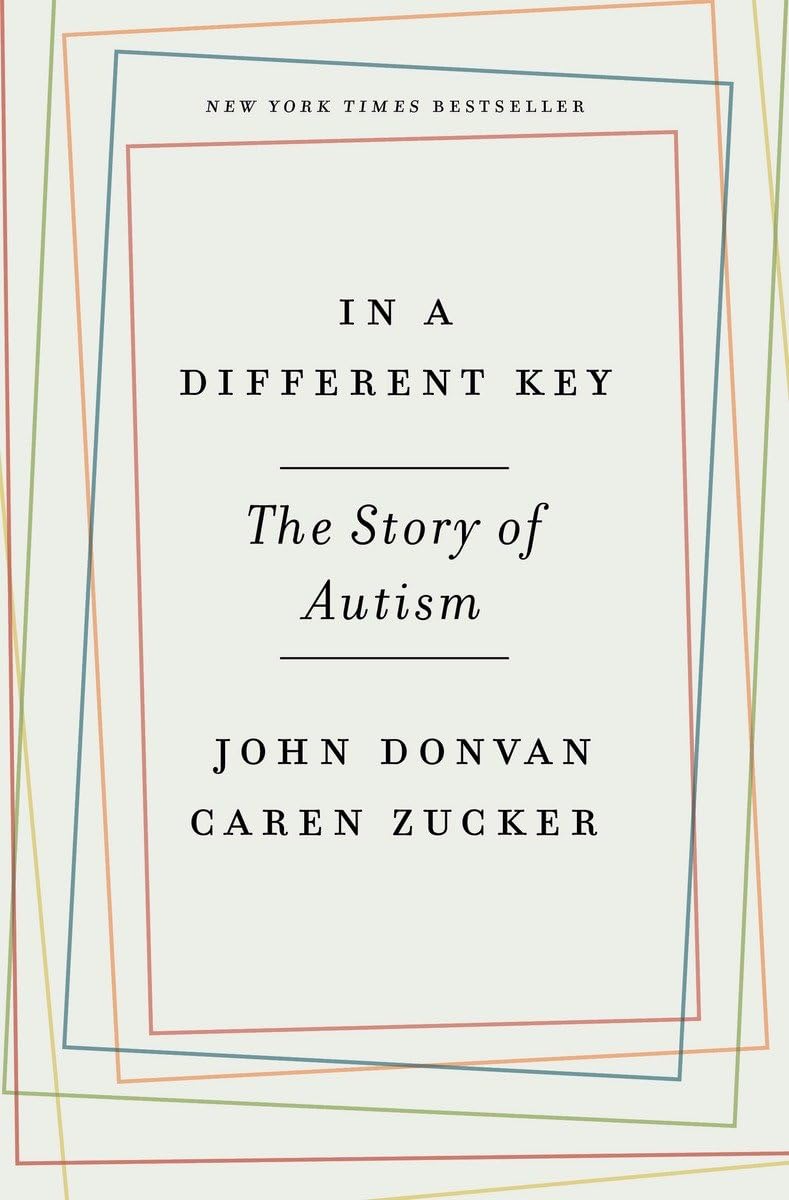
In a Different Key Summary
By John Donvan and Caren Zucker
The Story of Autism
Summary preview
This is a story about autism, but it is also a story about America, about families, about fear, science, love, and the slow painful way a society learns to see people it once pushed out of sight. In In a Different Key, John Donvan and Caren Zucker do not give you a neat history with clean answers. They give you a living, breathing human drama that stretches across decades. It begins in a time when autism was barely understood at all, when parents were blamed, children were hidden away, and doctors often spoke with far more confidence than knowledge. From there it moves through heartbreak, activism, bad theories, brave experiments, changing language, public battles, and private victories. At the center of the book stands one unforgettable life, Donald Triplett, the first child ever diagnosed with autism. His story gives the whole book its heartbeat. By tracing his life from childhood in small town Mississippi to adulthood in a community that, in its own imperfect way, made room for him, the book shows that autism is not just a medical label. It is a way of being in the world, one that can bring deep struggle, unusual gifts, fierce isolation, and moments of extraordinary connection. Around Donald’s life swirls a much larger history. You meet Leo Kanner, the doctor who first described autism in 1943 and gave shape to a condition that had existed long before anyone named it. You see the damage done by ideas that treated mothers as the cause, especially the cruel fantasy of the so called refrigerator mother. You watch parents fight institutions, challenge experts, build schools, demand services, and insist that their children had value even when the culture around them said otherwise. The book also takes you into the rise of behavior therapy, the politics of disability, the search for causes, and the debate over what progress should even mean. Should autism be cured, treated, accepted, or all three in uneasy tension. Who gets to speak for autistic people, especially those who cannot easily speak for themselves. And what happens when a diagnosis becomes more common, more visible, and more contested. What makes this account so powerful is that it never lets history stay abstract. Big ideas are always tied to actual lives. A theory in a doctor’s office becomes anguish in a family. A policy decision becomes a turning point in a child’s future. A change in public language becomes a shift in who gets seen as fully human. By the end, you feel not as if you have read a medical history, but as if you have traveled through a hidden civil rights struggle, one still unfolding, one asking all of us what kind of world we are willing to build for people who move through life in a different key.
Sign up to continue reading
Get access to full book summaries, audio of the summaries, and many more.
Similar Books
Books with a similar vibe—explore more like this.
The Midnight Library
Matt Haig
A Fantasy Novel About the Choices That Lead to a Life Well-Lived
4.7 (4782)32 mins
My Grandmother's Hands
Resmaa Menakem
Racialized Trauma and the Pathway to Mending Our Hearts and Bodies
4.6 (167)30 mins

Losing Eden
Lucy Jones
Why Our Minds Need the Wild
4.6 (641)28 mins
Eve
Cat Bohannon
How the Female Body Drove 200 Million Years of Human Evolution
4.6 (46)24 mins

The Omnivore's Dilemma
Michael Pollan
A Natural History of Four Meals
4.5 (672)34 mins
Hidden Valley Road
Robert Kolker
Inside the Mind of an American Family
4.5 (893)32 mins

Unwell Women
Elinor Cleghorn
Misdiagnosis and Myth in a Man-Made World
4.5 (5)22 mins

Feeding You Lies
Vani Hari
How to Unravel the Food Industry's Playbook and Reclaim Your Health
4.4 (581)21 mins
Can't Even
Anne Helen Petersen
How Millennials Became the Burnout Generation
4.4 (429)23 mins
The Boys in the Boat
Daniel James Brown
An Epic Journey to the Heart of Hitler’s Berlin
4.4 (729)38 mins