
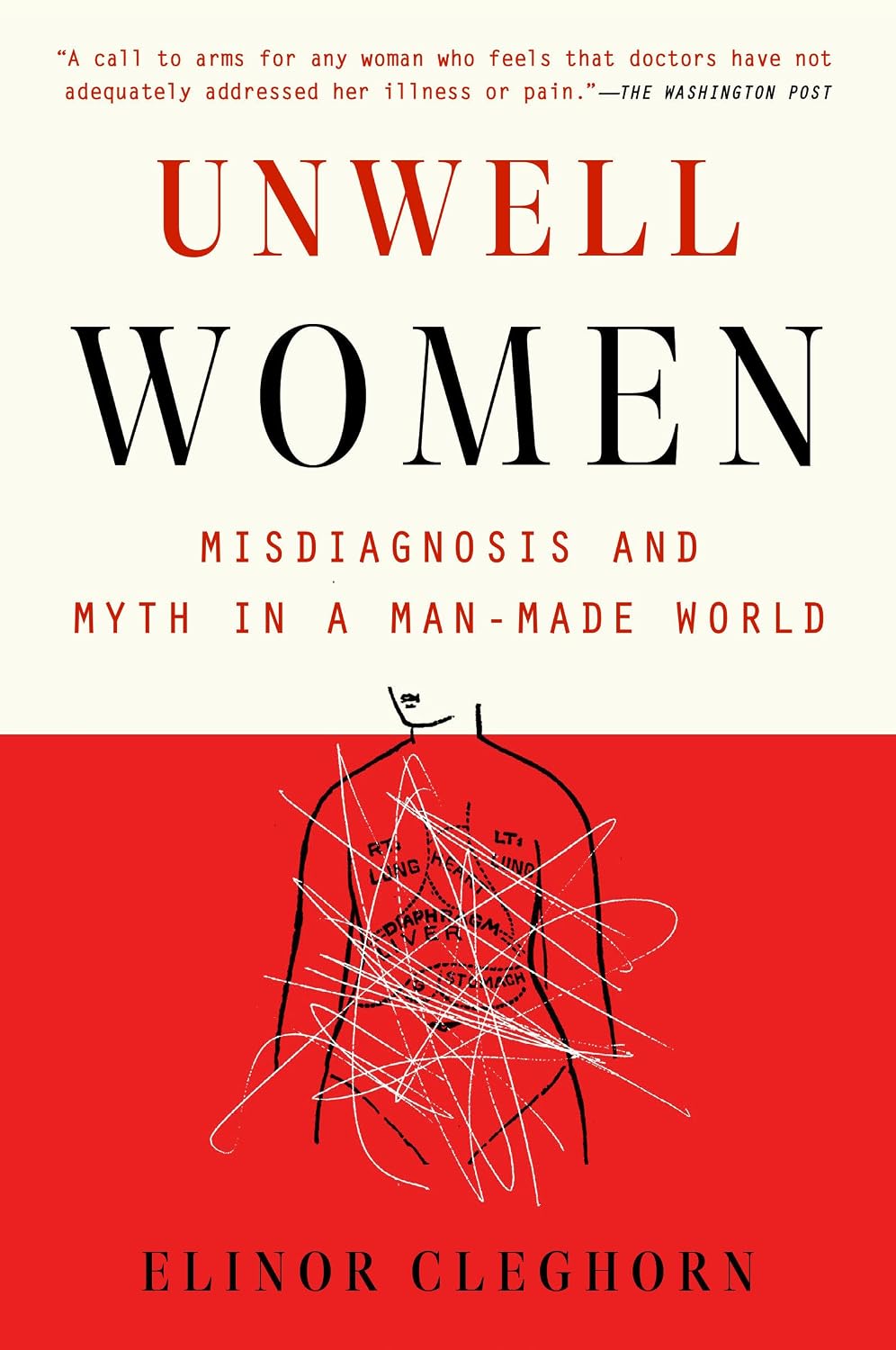
Unwell Women Summary
By Elinor Cleghorn
Misdiagnosis and Myth in a Man-Made World
Summary preview
Unwell Women is a history of what happens when medicine looks at women through a cracked lens and then mistakes that distorted view for truth. Elinor Cleghorn tells that story across centuries, showing how pain, illness, bleeding, fatigue, infertility, pregnancy, miscarriage, menopause, madness, and chronic disease have so often been interpreted not as real experiences in real bodies, but as signs of female weakness, instability, excess feeling, or moral failure. The book asks a plain, urgent question. What if women have not been difficult patients, but patients failed by the stories medicine has told about them? What unfolds is not a neat march of progress. It is a long, looping pattern of dismissal and control. Again and again, women report suffering and are told that the source lies in their nature. Their wombs are blamed. Their nerves are blamed. Their minds are blamed. Their hormones are blamed. Even when scientific language changes, the old suspicion often remains. The female body becomes a puzzle to be managed, a mystery to be contained, or a problem to be explained away. The result is not only bad theory. It is real harm. Delayed diagnoses, dangerous treatments, coercive surgeries, exclusion from medical research, and the steady erosion of trust. The power of this book lies in the way it joins sweeping history to intimate human stories. Ancient texts, Victorian consulting rooms, wartime hospitals, psychiatric wards, laboratory trials, and modern clinics all sit beside the voices of people whose suffering was minimized or misread. For example, women with endometriosis wait years to be believed. Women with autoimmune disease are told they are anxious. Women in pain are described as emotional rather than ill. A culture of disbelief settles over medicine, and then medicine helps reinforce it. Yet this is not only a story of oppression. It is also a story of resistance, testimony, and hard won knowledge. Patients keep speaking. Some doctors listen. Feminist activists, disabled women, researchers, and campaigners challenge inherited myths and force medicine to confront the damage done in the name of expertise. The book insists that medical ideas are never neutral. They are shaped by power, by gender, by race, by class, and by who gets to define what counts as evidence. By tracing that history, Cleghorn gives us a language for the present. The unanswered symptoms, the patronizing smile, the too quick psychiatric label, the treatment designed around a male norm, none of this appears out of nowhere. It has a past. And once that past is made visible, the failures of the present become harder to excuse and easier to change.
Sign up to continue reading
Get access to full book summaries, audio of the summaries, and many more.
Similar Books
Books with a similar vibe—explore more like this.
The Midnight Library
Matt Haig
A Fantasy Novel About the Choices That Lead to a Life Well-Lived
4.7 (4782)32 mins
My Grandmother's Hands
Resmaa Menakem
Racialized Trauma and the Pathway to Mending Our Hearts and Bodies
4.6 (167)30 mins

Losing Eden
Lucy Jones
Why Our Minds Need the Wild
4.6 (641)28 mins
Eve
Cat Bohannon
How the Female Body Drove 200 Million Years of Human Evolution
4.6 (46)24 mins

The Omnivore's Dilemma
Michael Pollan
A Natural History of Four Meals
4.5 (672)34 mins

Hidden Valley Road
Robert Kolker
Inside the Mind of an American Family
4.5 (893)32 mins
Feeding You Lies
Vani Hari
How to Unravel the Food Industry's Playbook and Reclaim Your Health
4.4 (581)21 mins
Can't Even
Anne Helen Petersen
How Millennials Became the Burnout Generation
4.4 (429)23 mins

The Boys in the Boat
Daniel James Brown
An Epic Journey to the Heart of Hitler’s Berlin
4.4 (729)38 mins
In a Different Key
John Donvan and Caren Zucker
The Story of Autism
4.4 (50)25 mins