
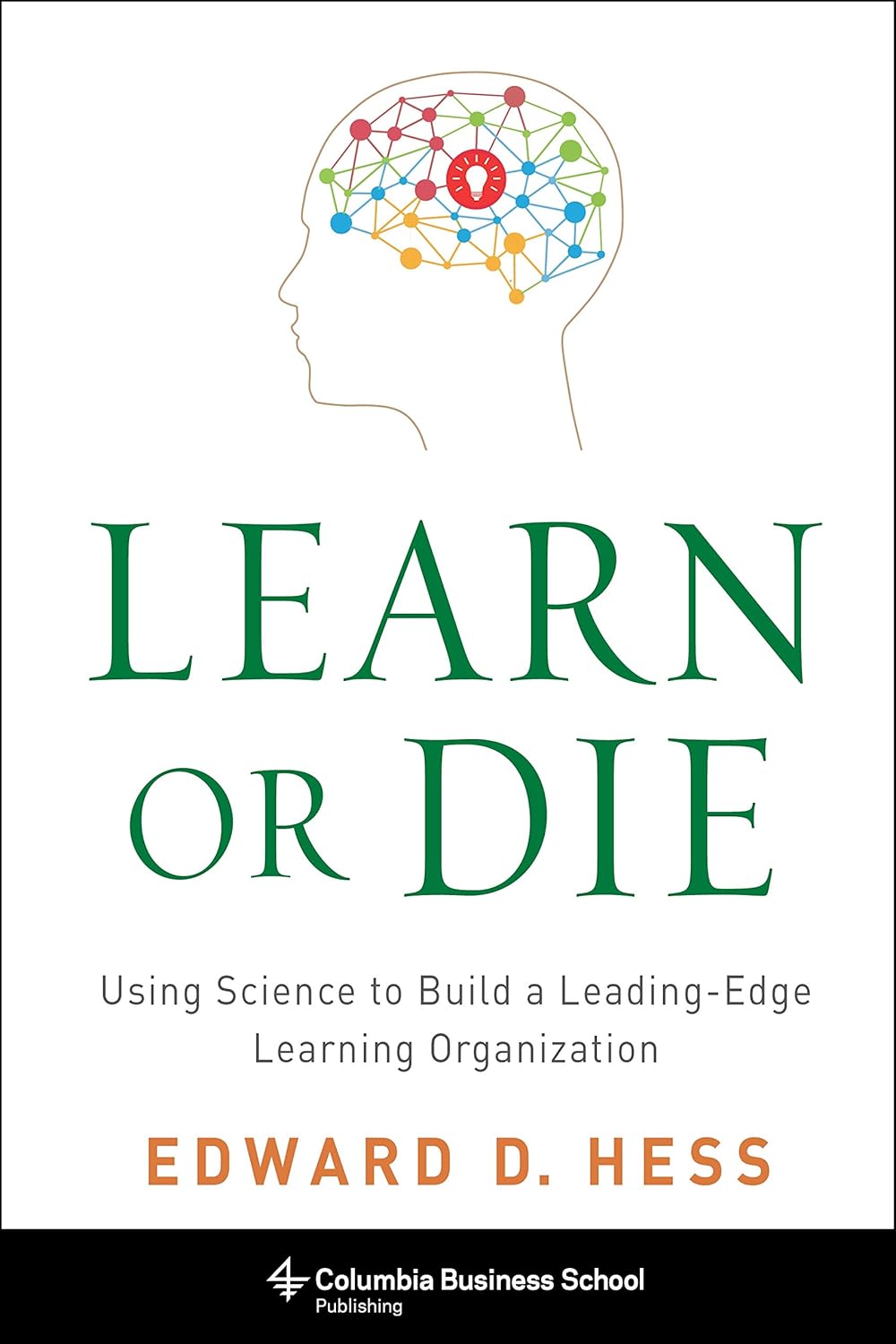
Learn or Die Summary
By Edward D. Hess
Using Science to Build a Leading-Edge Learning Organization
Summary preview
We are living through a great reset of what it means to work, compete, and stay useful. That is the heartbeat of Learn or Die. Edward D. Hess is not trying to scare you for effect. He is trying to wake you up. The world that rewarded routine, obedience, and doing the same thing better each year is fading fast. Smart machines, advanced software, and global competition are taking over more and more tasks that used to belong to human beings. If your value comes mainly from what can be standardized, measured, and repeated, then your value is under attack. But this is not a gloomy book. It is a practical and deeply human one. The core message is simple. In a world where technology keeps getting smarter, your survival and your chance to thrive depend on becoming a better learner. Not once. Not during school only. Every day. Over and over. Learning is no longer a side activity. It is the work. If you do not keep learning, unlearning, and relearning, you will fall behind. That is where the title comes from. Learn or die is not a slogan. It is the new rule of life and business. The book asks a hard question. What do humans do better than machines? The answer is not routine analysis or memory or speed. Machines are becoming excellent at those things. Our edge lies somewhere else. It lies in higher level thinking, deep listening, creativity, self awareness, emotional balance, collaboration, and the ability to make sense of messy situations with other people. To grow these abilities, you need humility. You need to admit you do not know enough. You need to listen more than you talk. You need to question your own beliefs, because your ego will try to protect your old identity even when change is necessary. That is why the book spends so much time on the human mind. The biggest obstacle to learning is not technology. It is us. Our brains love certainty, habits, and being right. We defend our opinions. We avoid discomfort. We mistake experience for wisdom even when the world has changed. So if you want to win in this new age, you must learn how to manage yourself first. You must become less driven by ego and more driven by curiosity. What follows is a road map for doing that. It moves from the economic realities changing work, to the inner barriers that keep us from adapting, to the habits and environments that make continuous learning possible. It also reaches beyond individuals to teams and organizations, because no one learns well alone for long. The larger aim is not just employability. It is a better way to live and work, one grounded in openness, reflection, and growth.
Sign up to continue reading
Get access to full book summaries, audio of the summaries, and many more.
Similar Books
Books with a similar vibe—explore more like this.
Financial Literacy for Managers
Richard A. Lambert
Finance and Accounting for Better Decision-Making
4.6 (22)22 mins
The Trusted Learning Advisor
Keith Keating
The Tools, Techniques and Skills You Need to Make L&d a Business Priority
4.5 (3)24 mins
Smart Startups
Catalina Daniels, James H. Sherman
Tried and True Advice from 18 Harvard Business School Founders
4.2 (8)22 mins

The Modern Learning Ecosystem
JD Dillon
A New L&D Mindset for the Ever-Changing Workplace
4.2 (5)21 mins
The 12-Week MBA
Nathan Kracklauer & Bjorn Billhardt
Learn the Skills You Need to Lead in Business Today
4.2 (32)23 mins
A Passion for Leadership
Robert M. Gates
Lessons on Change and Reform from Fifty Years of Public Service
4.0 (10)22 mins
Driving Performance Through Learning
Andy Lancaster
Develop Employees through Effective Workplace Learning
3.9 (215)24 mins
Surrender to Lead
Jessica Kriegel, Joe Terry
The Counterintuitive Approach to Driving Extraordinary Results
4.9 (7)21 mins
Next Play
Alan Stein Jr.
Improve Team Performance, Productivity, and Fulfillment
4.9 (34)26 mins
The Brand Benefits Playbook
Allen Weiss, Debbie J. MacInnis
Why Customers Aren't Buying What You're Selling--And What to Do About It
4.8 (803)20 mins