
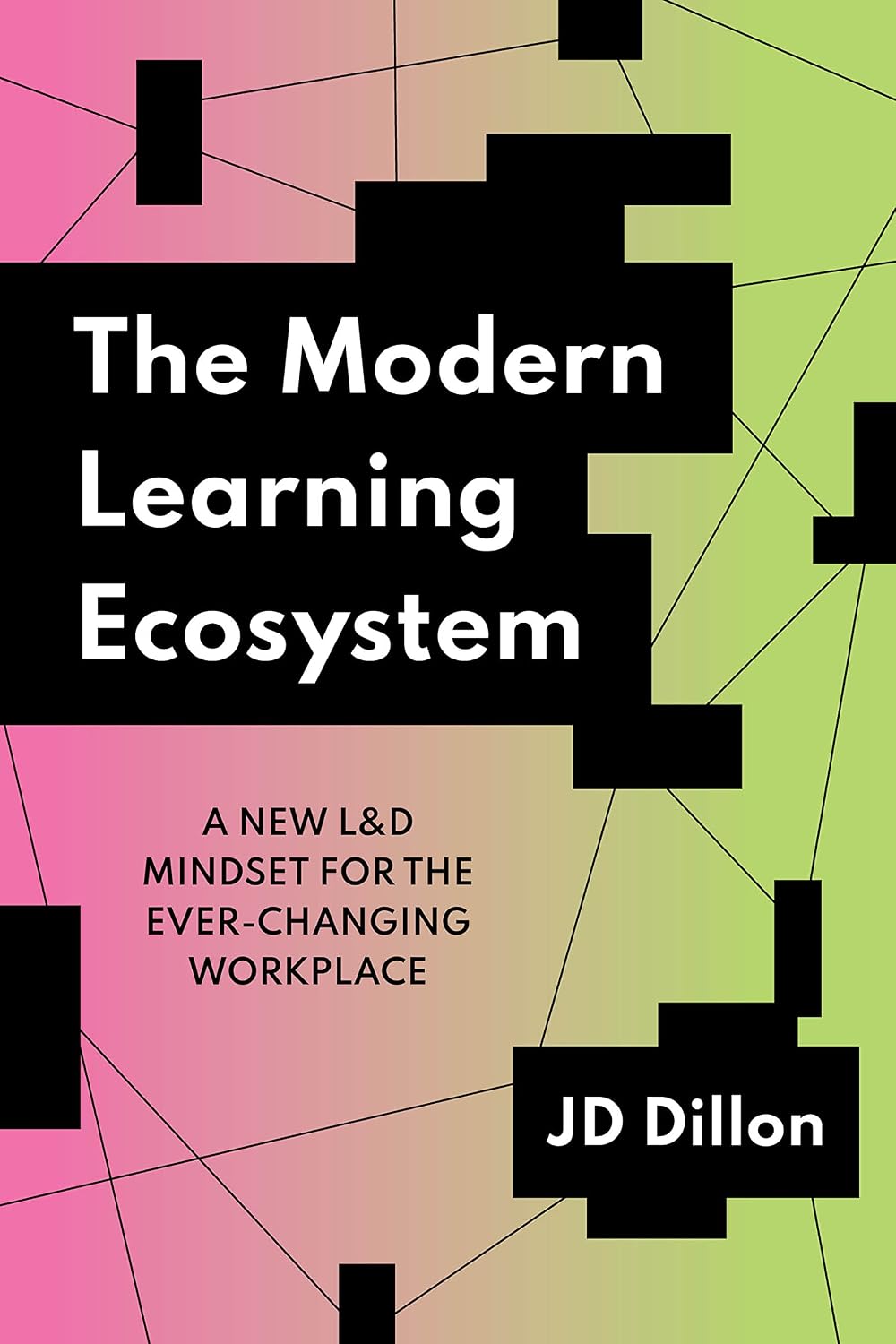
The Modern Learning Ecosystem Summary
By JD Dillon
A New L&D Mindset for the Ever-Changing Workplace
Summary preview
Work has changed faster than most learning teams ever expected. Jobs shift in real time. Tools update overnight. Teams spread across cities, countries, and time zones. People learn while they work, not before work begins. That is the heart of this book. It asks a simple question with huge consequences. If the world of work is now fluid, digital, social, and always on, why are so many learning strategies still built like a classroom schedule from another era? The answer is not that learning professionals do not care. It is that many of us inherited systems built for control, consistency, and scale in a different age. We built catalogs, courses, and programs meant to push knowledge at people in neat packages. We measured attendance, completions, and smile sheets. We treated learning as an event. But employees do not experience work as a series of tidy events. They experience moments. A problem pops up. A customer asks a new question. A machine fails. A manager gives feedback. A promotion opens. A team changes direction. In those moments, people need help, context, practice, and connection. That is where the modern learning ecosystem comes in. JD Dillon invites you to stop thinking about learning as a department, a class, or a single platform. Instead, think of it as an ecosystem made up of people, technology, content, culture, and everyday experiences. In a healthy ecosystem, learning is not trapped in one place. It shows up across the flow of work. It includes formal training when structure matters, but it also includes search, coaching, collaboration, experimentation, reflection, and performance support. It is less about delivering courses and more about enabling capability. A big part of the book is a mindset shift. You are not the owner of learning. You are the designer of conditions that make learning possible. That means paying attention to business goals, worker needs, operational realities, and the many ways people actually solve problems on the job. It means noticing that employees often turn first to peers, managers, online communities, job aids, and quick answers long before they ever enter a learning management system. Rather than fight that behavior, you build for it. The book is practical, not abstract. It pushes you to map your current ecosystem, find the gaps, and create a more connected experience. It challenges old assumptions about content, platforms, governance, and measurement. Most of all, it makes the case that modern learning is not about replacing one tool with another. It is about reimagining how people grow, adapt, and succeed every day. Once you see learning this way, you cannot unsee it.
Sign up to continue reading
Get access to full book summaries, audio of the summaries, and many more.
Similar Books
Books with a similar vibe—explore more like this.

Financial Literacy for Managers
Richard A. Lambert
Finance and Accounting for Better Decision-Making
4.6 (22)22 mins
The Trusted Learning Advisor
Keith Keating
The Tools, Techniques and Skills You Need to Make L&d a Business Priority
4.5 (3)24 mins
Smart Startups
Catalina Daniels, James H. Sherman
Tried and True Advice from 18 Harvard Business School Founders
4.2 (8)22 mins
The 12-Week MBA
Nathan Kracklauer & Bjorn Billhardt
Learn the Skills You Need to Lead in Business Today
4.2 (32)23 mins

A Passion for Leadership
Robert M. Gates
Lessons on Change and Reform from Fifty Years of Public Service
4.0 (10)22 mins
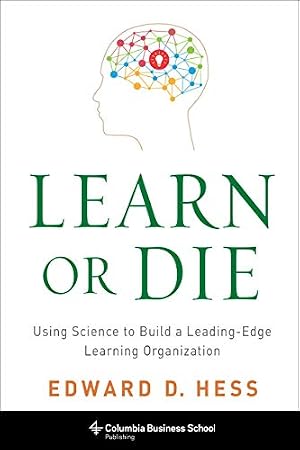
Learn or Die
Edward D. Hess
Using Science to Build a Leading-Edge Learning Organization
4.0 (22)25 mins
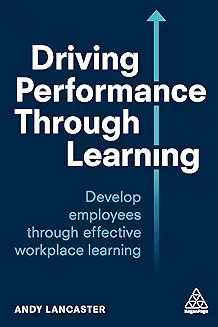
Driving Performance Through Learning
Andy Lancaster
Develop Employees through Effective Workplace Learning
3.9 (215)24 mins
Surrender to Lead
Jessica Kriegel, Joe Terry
The Counterintuitive Approach to Driving Extraordinary Results
4.9 (7)21 mins
Next Play
Alan Stein Jr.
Improve Team Performance, Productivity, and Fulfillment
4.9 (34)26 mins

The Brand Benefits Playbook
Allen Weiss, Debbie J. MacInnis
Why Customers Aren't Buying What You're Selling--And What to Do About It
4.8 (803)20 mins