
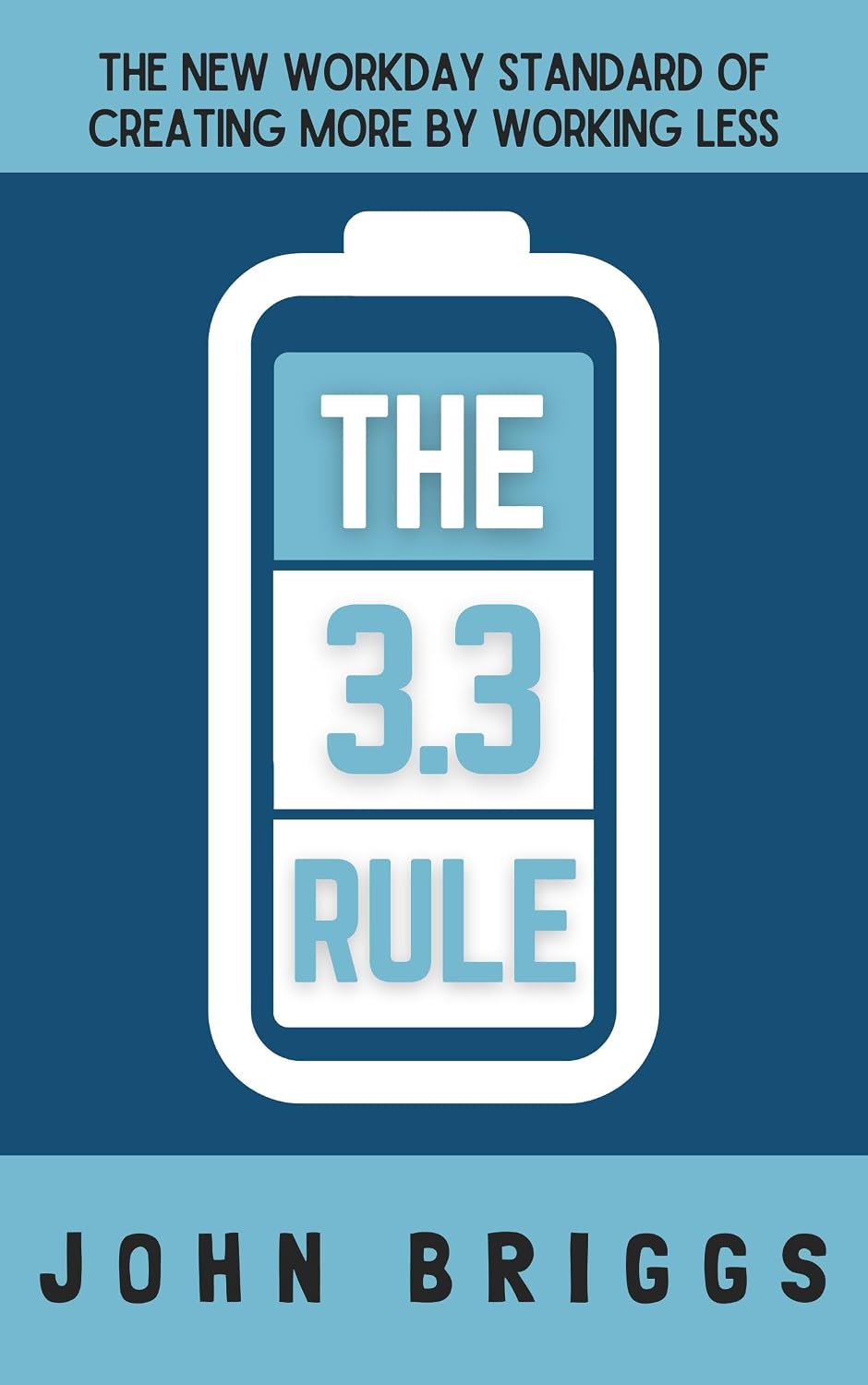
The 3.3 Rule Summary
By John Briggs
The New Workday Standard of Creating More by Working Less
Summary preview
The heart of The 3.3 Rule is wonderfully simple. Life gets noisy. Work expands. Days disappear. You wake up busy, stay busy, and somehow still feel like the things that matter most are waiting somewhere offstage. This book steps into that confusion with a calm, practical promise. You do not need a brand new personality, a perfect planner, or superhuman discipline. You need a clearer way to divide your time and attention so your best energy goes where it counts. John Briggs builds the whole book around one striking idea. If you want a life that feels meaningful and productive, you should shape your day around three hours of deep work and three hours of meaningful connection, movement, or life building activity. That is the spirit of the 3.3 Rule. It is not about stuffing every minute with activity. It is about protecting a handful of high value hours and letting the rest of the day support them instead of sabotage them. What makes the book land is that it speaks to a modern problem almost everyone knows well. We are drowning in options, alerts, requests, entertainment, and low grade obligations. The result is not just distraction. It is fragmentation. Your mind gets split into pieces. You might be answering messages, checking tasks, reacting to other people’s priorities, and calling it a full day, yet still feel strangely empty. The book says that this is not a personal failure. It is a design problem. If your day is built for reaction, reaction is what you will get. So the author offers a rule that is easy to remember and flexible enough to fit real life. Three hours for concentrated effort on your most important work. Three hours for the human side of life, which can include relationships, health, learning, reflection, household responsibilities, and the activities that keep you grounded. What matters is not robotic precision. What matters is intention. The rule gives you a frame so you can stop negotiating with yourself all day long. Along the way, the book blends productivity advice with a deeper message about attention, identity, and fulfillment. It asks what kind of day actually leaves you satisfied. It challenges the habit of mistaking urgency for importance. It reminds you that a life can look crowded and still be hollow if it has no protected center. And it keeps returning to a hopeful truth. Small structure creates big freedom. That is why the book feels less like a lecture and more like a reset. It invites you to reclaim your hours, not through pressure, but through clarity. Once you understand the rule, the rest of the book shows you how to use it in a real, imperfect life.
Sign up to continue reading
Get access to full book summaries, audio of the summaries, and many more.
Similar Books
Books with a similar vibe—explore more like this.
Next Play
Alan Stein Jr.
Improve Team Performance, Productivity, and Fulfillment
4.9 (34)26 mins
How to Be a Star at Work
Robert E. Kelley
9 Breakthrough Strategies You Need to Succeed
4.6 (34)28 mins
Mission Ready
Lindy Elkins-Tanton
How to Build Teams That Perform Under Pressure
4.5 (6)22 mins
The Art of Action
Stephen Bungay
How to Close the Gaps between Plans, Actions, and Results
4.4 (20)25 mins
Leveling Up
Ryan Leak
12 Questions to Elevate Your Personal and Professional Development
4.4 (22)28 mins
The Whole Brain Business Book
Ann Herrmann-Nehdi, Ned Herrmann
Unlocking the Power of Whole Brain Thinking
3.9 (7)21 mins
Surrender to Lead
Jessica Kriegel, Joe Terry
The Counterintuitive Approach to Driving Extraordinary Results
4.9 (7)21 mins
The Gift of Struggle
Bobby Herrera
Life-Changing Lessons About Leading
4.8 (22)21 mins
The Score That Matters
Ryan Hawk, Brook Cupps
Growing Excellence in Yourself and Those You Lead
4.7 (368)17 mins
The Archetype Effect
James Root
Unlocking The Six Types of Motivation at Work
4.7 (18)22 mins