
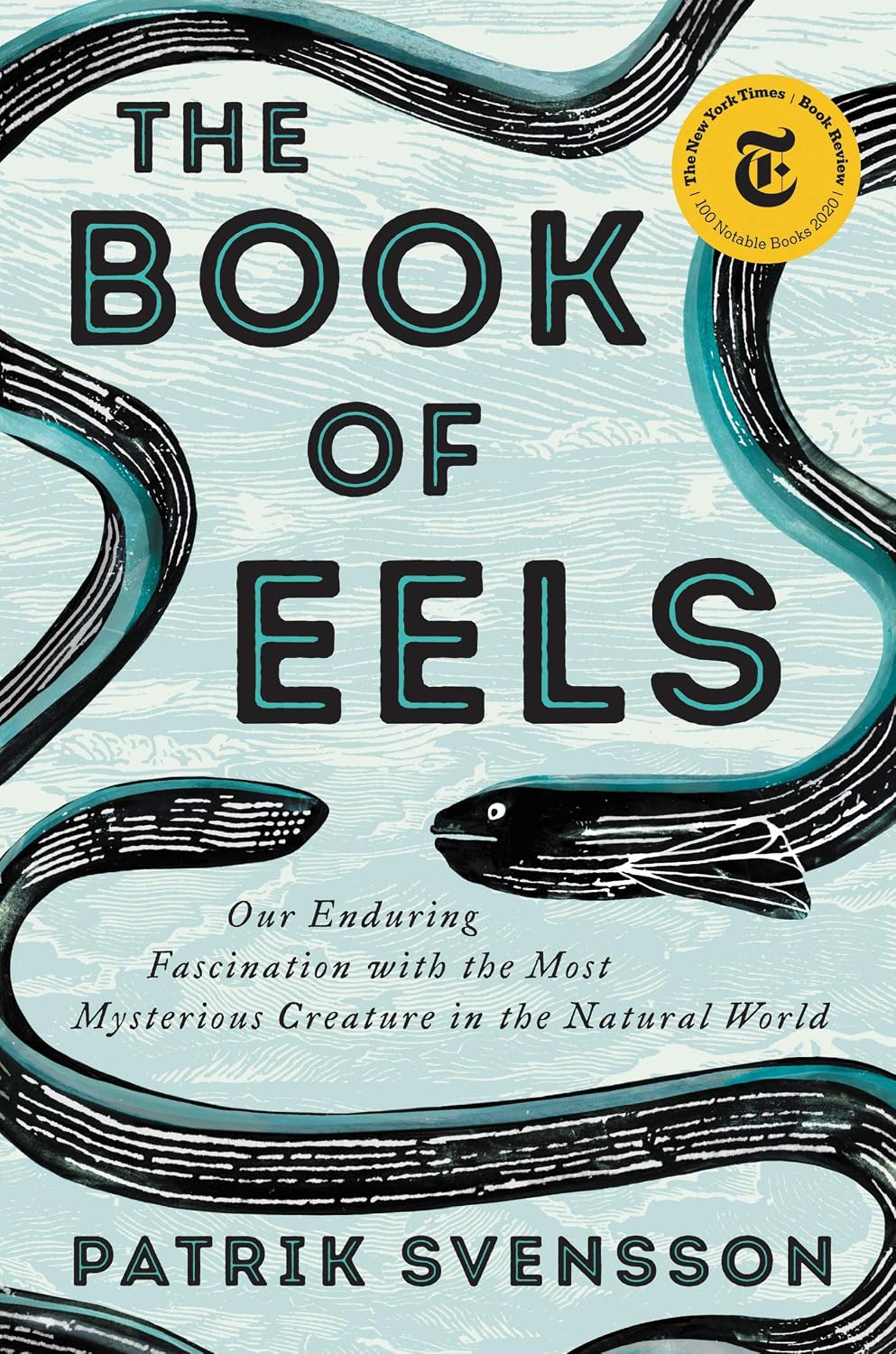
The Book of Eels Summary
By Patrik Svensson
Our Enduring Fascination with the Most Mysterious Creature in the Natural World
Summary preview
Some books begin with an argument, some with a journey, and some with a mystery. This one begins with a fish that is not quite like any other fish, and with a father and son standing in the dark by a river, waiting. The eel slips through all the usual categories. It is familiar and yet unknown, ordinary and almost impossible. People have eaten it, hunted it, sold it, feared it, studied it, and told stories about it for thousands of years. And still, even now, it remains partly hidden from us. That strange fact opens the door to everything that follows. At first, the book seems to be about the European eel and its life. It traces the eel from coastal streams and muddy inland waters to the vast Atlantic and the distant Sargasso Sea, where its life begins and ends in secrecy. It asks questions scientists struggled with for centuries. Where do eels come from? How do they reproduce? How do they find their way across an ocean? Why do they change shape and color as they move between worlds? But the book is never only about biology. The eel becomes a way of thinking about what it means to search for knowledge and to accept that some parts of life may never fully yield to explanation. It is also a deeply personal story. Patrik Svensson returns again and again to memories of fishing for eel with his father in southern Sweden. Those nights by the water, quiet and repetitive, become the emotional heart of the book. A father who is not always easy to understand can still be known through shared action, through patience, through silence. The work of setting lines, waiting, pulling, and cleaning the catch becomes a language all its own. The eel, in this sense, is not just an animal. It is a bridge between generations, a keeper of memory, and a companion to grief. As the story unfolds, science, history, myth, family memory, and philosophy twist together much like the eel itself. Ancient thinkers who guessed wildly, modern researchers who spent lifetimes chasing a single answer, fishermen whose knowledge came from weather and water rather than books, and a son trying to understand his father all meet in the same current. The eel carries them all. What makes this book so moving is that it never treats wonder as weakness. It suggests that not knowing can be as important as knowing. The eel resists our need to classify and control. It asks us to be patient. It asks us to look closely. And in looking closely at this slippery creature, the book discovers something larger about love, mortality, the limits of science, and the strange beauty of a life that can never be fully held in the hand.
Sign up to continue reading
Get access to full book summaries, audio of the summaries, and many more.
Similar Books
Books with a similar vibe—explore more like this.
Entangled Life
Merlin Sheldrake
How Fungi Make Our Worlds, Change our Minds and Shape Our Futures
4.8 (949)29 mins
Farmageddon
Philip Lymbery with Isabel Oakeshott
The True Cost of Cheap Meat
4.8 (5)32 mins
The Mosquito
Timothy C. Winegard
A Human History of Our Deadliest Predator
4.8 (37)33 mins
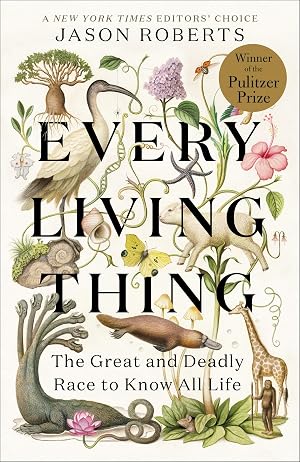
Every Living Thing
Jason Roberts
The Great and Deadly Race to Know All Life
4.8 (7)22 mins
An Immense World
Ed Yong
How Animal Senses Reveal the Hidden Realms Around Us
4.7 (950)17 mins
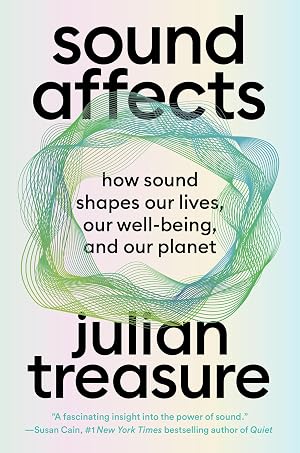
Sound Affects
Julian Treasure
How Sound Shapes Our Lives, Our Wellbeing and Our Planet
4.7 (10)21 mins
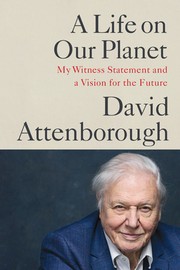
A Life on Our Planet
David Attenborough
My Witness Statement and a Vision for the Future
4.6 (223)22 mins
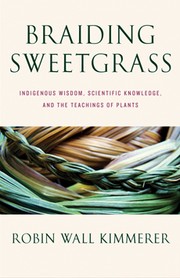
Braiding Sweetgrass
Robin Wall Kimmerer
Indigenous Wisdom, Scientific Knowledge and the Teachings of Plants
4.6 (582)23 mins
How to Avoid a Climate Disaster
Bill Gates
The Solutions We Have and the Breakthroughs We Need
4.6 (642)34 mins
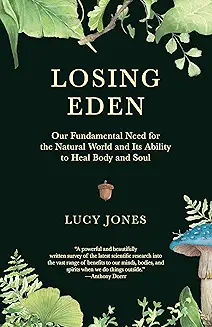
Losing Eden
Lucy Jones
Why Our Minds Need the Wild
4.6 (641)28 mins