
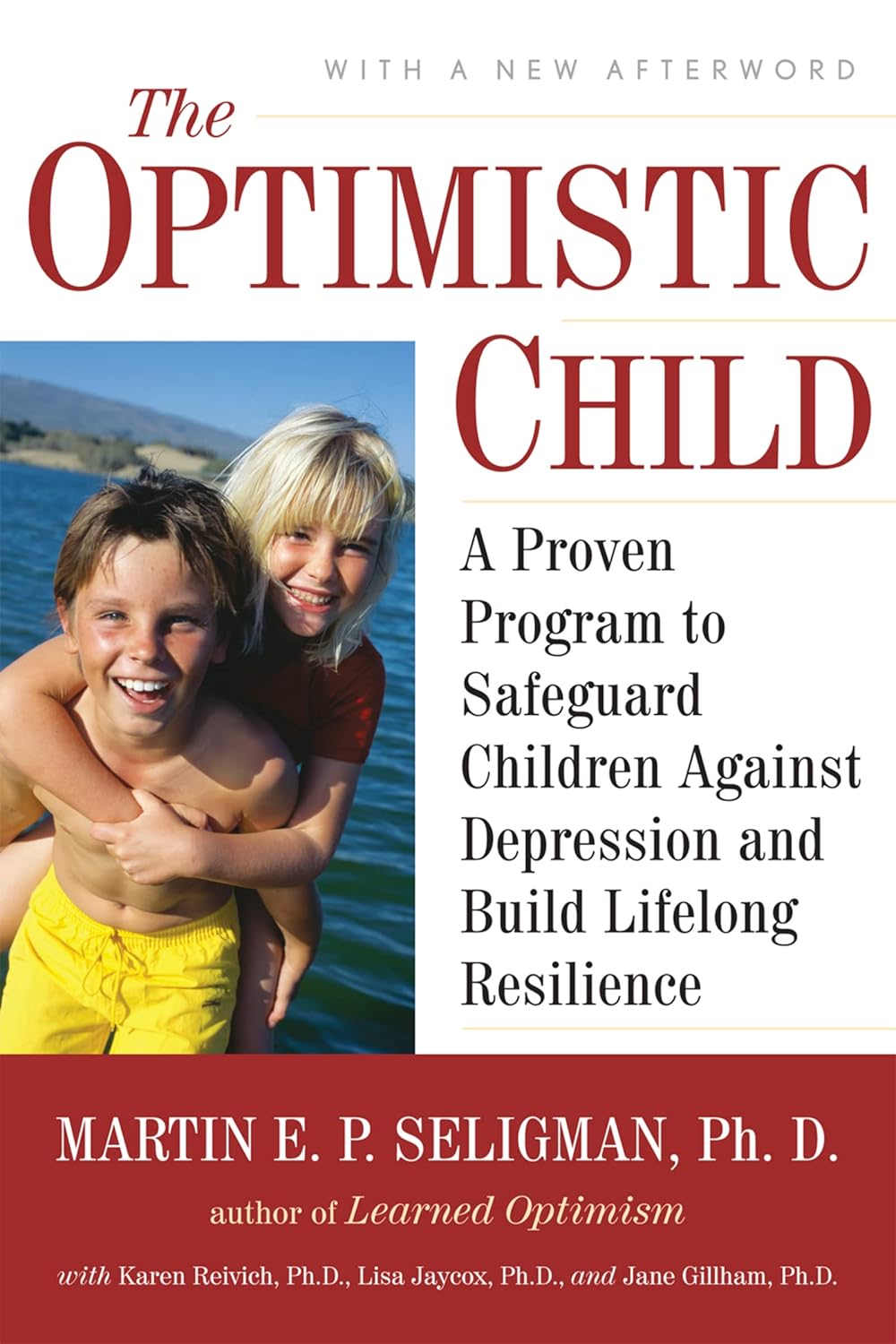
The Optimistic Child Summary
By Martin E.P. Seligman
A Proven Program to Safeguard Children Against Depression and Build Lifelong Resilience
Summary preview
What if the most important gift you could give a child is not praise, not protection, not even talent, but a way of thinking that helps them face trouble without being crushed by it? That is the beating heart of The Optimistic Child. Martin E.P. Seligman sets out to answer a question that matters in every home, every classroom, and every playground. Why do some children bounce back from setbacks while others fold into helplessness, sadness, or anger? And more important, can we teach children the habits of mind that make resilience possible? The answer offered here is a hopeful one. Pessimism is not just a mood that drifts in and out. It is a style of explaining the world. It is the story a child tells himself when he fails a test, loses a friend, gets left out, or hears criticism. An optimistic child does not deny pain or pretend life is easy. Instead, that child learns to see bad events as temporary rather than permanent, specific rather than all consuming, and changeable rather than fixed by some deep personal flaw. That simple shift in explanation can alter how a child feels, how hard she tries, and how long she keeps going. This book grows out of research on learned helplessness, depression, achievement, and health, but it never stays trapped in theory. It keeps returning to ordinary family life where these patterns first take shape. We hear the words parents use without thinking. We watch how children interpret disappointments. We see how schools, sports, friendships, and sibling fights can become training grounds either for despair or for confidence. The message is not that children should be shielded from adversity. Quite the opposite. They need challenge. They need frustration. What they also need is a way to answer the bleak inner voice that says, "It’s me, it will always be this way, and it affects everything." At the center of the book is a practical program. You are taught how to recognize a child’s explanatory style, how your own style rubs off on the child, and how to help children challenge the automatic thoughts that feed hopelessness. There is room here for discipline, honesty, and realistic limits. This is not a manual for raising blindly cheerful children. It is a guide to raising capable children who can think clearly under stress. By the end, the book makes a bold claim. Resilience is teachable. Optimism can be learned. And if children learn it early, they carry with them a psychological immune system that can protect them from depression, improve performance, and give them courage for the long road of growing up.
Sign up to continue reading
Get access to full book summaries, audio of the summaries, and many more.
Similar Books
Books with a similar vibe—explore more like this.
What Your ADHD Child Wishes You Knew
Sharon Saline
Working Together to Empower Kids for Success in School and Life
4.7 (22)26 mins

What Your Childhood Memories Say About You
Kevin Leman
And What You Can Do about It
4.7 (17)23 mins
Hold On to Your Kids
Gordon Neufeld & Gabor Maté
Why Parents Need to Matter More Than Peers
4.6 (973)24 mins

Who's the Favorite?
Catherine Carr
The Loving, Messy Realities of Sibling Relationships
4.6 (9)22 mins
The Power of Neurodiversity
Thomas Armstrong
Unleashing the Advantages of Your Differently Wired Brain
4.5 (829)27 mins
Raising Securely Attached Kids
Eli Harwood
Using Connection-Focused Parenting to Create Confidence, Empathy, and Resilience
4.5 (726)25 mins

Why Love Matters
Sue Gerhardt
How Affection Shapes a Baby's Brain
4.5 (386)29 mins
Permission to Feel
Marc Brackett
Unlocking the Power of Emotions to Help Our Kids, Ourselves, and Our Society Thrive
4.4 (362)29 mins
Drama Free
Nedra Glover Tawwab
A Guide to Managing Unhealthy Family Relationships
4.4 (582)23 mins
Adult Children of Emotionally Immature Parents
Lindsay C. Gibson
How to Heal from Distant, Rejecting, or Self-Involved Parents
4.4 (683)23 mins