
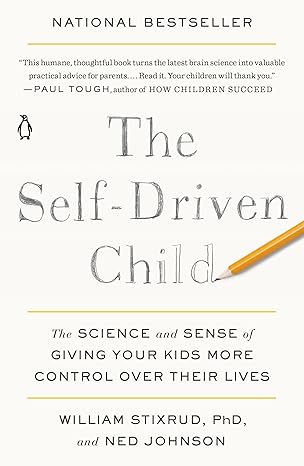
The Self-Driven Child Summary
By William Stixrud & Ned Johnson
The Science and Sense of Giving Your Kids More Control Over Their Lives
Summary preview
There is a quiet crisis happening in families all around us. Kids look accomplished on the outside, yet many feel overwhelmed, anxious, exhausted, and strangely powerless inside their own lives. They move from school to sports to homework to test prep with barely a breath in between, and the adults who love them often believe they are helping by pushing harder, planning more, and worrying constantly. But what if the very thing children need most is not more control from us, but more control within themselves? That is the heart of this book. William Stixrud & Ned Johnson argue that one of the strongest protections for a child’s mental health, motivation, and long term success is a genuine sense of control over their own life. Not total freedom, not neglect, not stepping away and hoping for the best. What helps is a steady transfer of ownership. Children do better when they feel that their lives belong to them, that their choices matter, and that they are not simply actors following a script written by stressed adults. The book pushes back against a very modern style of parenting and schooling that treats every assignment, every grade, every college outcome as a high stakes emergency. When pressure becomes the air kids breathe, their nervous systems stay on alert. They can stop learning deeply, stop trusting themselves, and start measuring their worth by performance alone. The result can be anxiety, depression, procrastination, conflict, and burnout. Sometimes the child who seems lazy or oppositional is really scared. Sometimes the child who looks perfect is carrying a crushing load. What makes the message so powerful is that it is both compassionate and practical. The authors do not scold worried parents. They understand that adults are anxious too. We live in a culture that makes it easy to fear that one wrong move will ruin a child’s future. Yet the book keeps returning to a calmer truth. Kids thrive when adults become sources of safety, perspective, and support rather than managers of every outcome. A parent’s job is not to force excellence but to create conditions where a young person can build competence, resilience, self knowledge, and inner drive. Along the way, the book blends neuroscience, clinical experience, coaching stories, and plain common sense. It explores why stress hijacks thinking, why motivation cannot be commanded from the outside, how sleep, exercise, and downtime shape the brain, and why connection matters more than constant correction. It also shows how to talk to kids in ways that lower tension and increase ownership. What unfolds is not just a parenting strategy. It is a shift in worldview. Children are not projects to perfect. They are people learning how to run their own minds, handle their own responsibilities, and build a life that feels meaningful to them. When we help them develop that power, we give them something far more valuable than a polished resume. We help them become strong from the inside out.
Sign up to continue reading
Get access to full book summaries, audio of the summaries, and many more.
Similar Books
Books with a similar vibe—explore more like this.
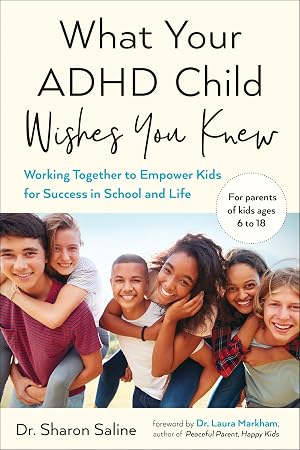
What Your ADHD Child Wishes You Knew
Sharon Saline
Working Together to Empower Kids for Success in School and Life
4.7 (22) mins
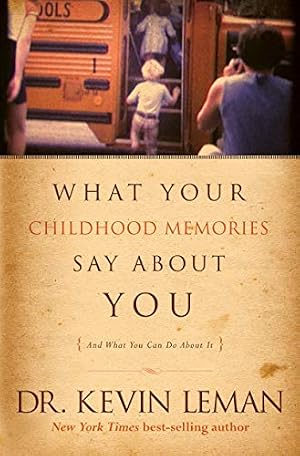
What Your Childhood Memories Say About You
Kevin Leman
And What You Can Do about It
4.7 (17) mins
The Emotional Lives of Teenagers
Lisa Damour
Raising Connected, Capable, and Compassionate Adolescents
4.6 (107)23 mins
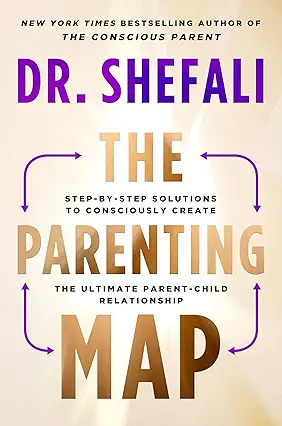
The Parenting Map
Dr. Shefali
Step by Step Solutions to Consciously Create the Ultimate Parent-Child Relationship
4.6 (917)16 mins
How to Talk So Kids Will Listen
Faber & Mazlish
The parenting bible
4.6 (2284)31 mins

Hold On to Your Kids
Gordon Neufeld & Gabor Maté
Why Parents Need to Matter More Than Peers
4.6 (973)24 mins
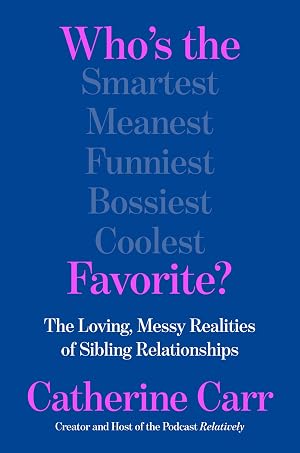
Who's the Favorite?
Catherine Carr
The Loving, Messy Realities of Sibling Relationships
4.6 (9) mins

Parenting
Andy & Sandra Stanley
Getting It Right
4.6 (43) mins
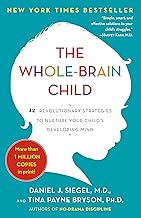
The Whole-Brain Child
Daniel J. Siegel and Tina Payne Bryson
12 Revolutionary Strategies to Nurture Your Child’s Developing Mind
4.5 (488)23 mins
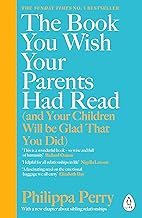
The Book You Wish Your Parents Had Read (and Your Children Will Be Glad That You Did)
Philippa
Sound parenting advice based on psychology
4.5 (740)24 mins