
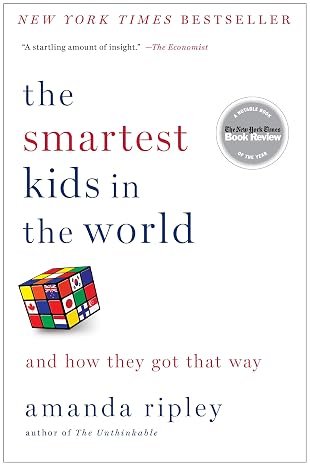
Summary preview
What makes some countries so much better at educating children than others? That question sits at the heart of this book, and it turns out to be much stranger, more human, and more urgent than you might expect. Amanda Ripley begins with a simple but unsettling observation. In the modern world, the quality of a country’s schools shapes not only a child’s future but the future of whole societies. Yet many adults still talk about schools as if they were fixed, local, and impossible to compare. The book challenges that idea from the first page. It asks us to look beyond our own neighborhoods and national myths and to see education as a system that can be studied, tested, and improved. To do that, the story follows three American teenagers who leave home and spend a school year in countries that regularly outperform the United States on international exams. Kim goes to Finland, a place famous for calm schools and highly respected teachers. Eric heads to South Korea, where education is treated almost like a national sport, intense and exhausting and deeply serious. Tom lands in Poland, a country that quietly transformed its schools in a way much of the world barely noticed. Through their eyes, the book turns statistics into lived experience. You do not just hear about test scores. You sit in classrooms, eat lunch with students, struggle through homework, and feel what it is like to be a teenager inside very different systems. The book is not really about copying another country’s habits one by one. It is not a travel brochure for schools. It is an investigation into what high performing education systems have in common beneath their surface differences. Why do some places produce students who can think deeply, solve problems, and handle hard material, while others get stuck in cycles of distraction, low expectations, and inequality? Why do some nations treat teaching like elite intellectual work while others bury teachers under bureaucracy and status anxiety? And why do parents and politicians so often misunderstand what real rigor looks like? As the story unfolds, what emerges is both hopeful and uncomfortable. Better schools are possible. There is no magic gene and no single culture that owns excellence. But success usually requires choices that can feel politically difficult and personally demanding. It means treating education less like entertainment and more like serious preparation for life. It means believing children can do harder things. And it means building systems that trust strong teachers, challenge students, and refuse to confuse comfort with learning.
Sign up to continue reading
Get access to full book summaries, audio of the summaries, and many more.
Similar Books
Books with a similar vibe—explore more like this.
What Your ADHD Child Wishes You Knew
Sharon Saline
Working Together to Empower Kids for Success in School and Life
4.7 (22) mins
How Children Succeed
Paul Tough
Grit, Curiosity, and the Hidden Power of Character
4.5 (1028)29 mins
The Call of the Wild and Free
Ainsley Arment
Reclaiming Wonder in Your Child's Education
4.4 (294)30 mins
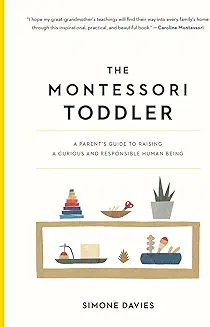
The Montessori Toddler
Simone Davies
A Parent's Guide to Raising a Curious and Responsible Human Being
4.4 (1283)29 mins
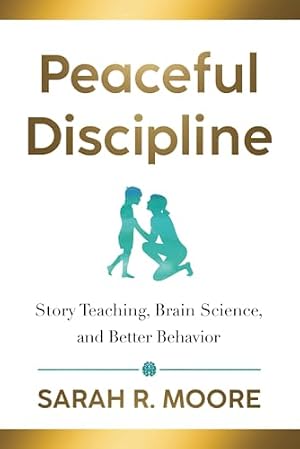
Peaceful Discipline
Sarah R. Moore
Story Teaching, Brain Science & Better Behavior
4.4 (10)21 mins
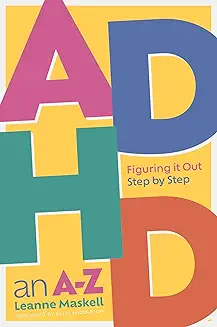
ADHD an A-Z
Leanne Maskell
Figuring It Out Step by Step
4.2 (308)18 mins
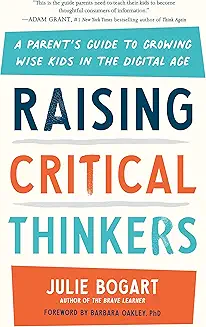
Raising Critical Thinkers
Julie Bogart
A Parent's Guide to Growing Wise Kids in the Digital Age
4.2 (579)24 mins
The Anxious Generation
Jonathan Haidt
How the Great Rewiring of Childhood Is Causing an Epidemic of Mental Illness
4.2 (325)20 mins
This Is So Awkward
Cara Natterson & Vanessa Kroll Bennett
Modern Puberty Explained
4.2 (4) mins
How We Grow Up
Matt Richtel
Understanding Adolescence
4.0 (20) mins