
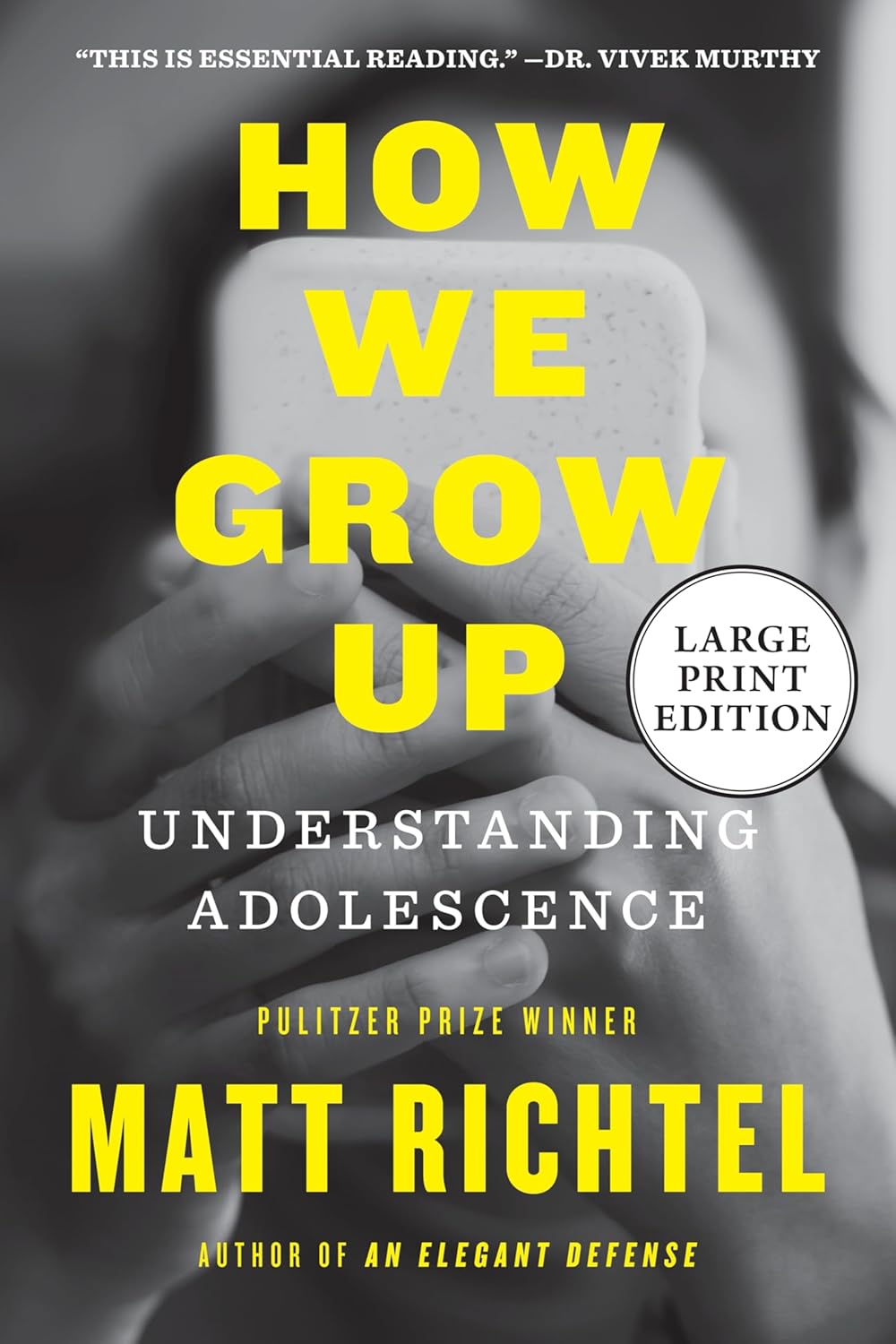
How We Grow Up Summary
By Matt Richtel
Understanding Adolescence
Summary preview
Growing up can look simple from the outside. A child gets taller, learns more words, makes friends, struggles, recovers, and slowly becomes an adult. But when you lean in close, the whole thing is far stranger and more dramatic. "How We Grow Up" is really a story about the hidden machinery of becoming human. It asks what is happening inside a young person’s brain and body as they move from helpless infancy to the messy, creative, impulsive, resilient years of adolescence. And it answers that question not with dry theory, but with a vivid tour through science, medicine, and real lives. Matt Richtel treats childhood and adolescence as one of the great high stakes experiments of nature. He shows that growing up is not a smooth climb. It is a series of collisions between biology and the world. Young people are built to test limits, seek novelty, misread danger, crave belonging, and learn at astonishing speed. These qualities can produce brilliance and connection, but they can also open the door to anxiety, depression, addiction, risk taking, and deep confusion. The same traits that help a child adapt can also leave that child exposed. A big idea running through the book is that development is not just about the brain getting better and better in a neat line. It is about timing, imbalance, sensitivity, and repair. Different systems mature at different speeds. Emotion can surge before control catches up. Social awareness can sharpen before a young person knows what to do with it. The body changes, the brain rewires itself, and the environment presses on all of it. Family life matters. School matters. Screens matter. Sleep matters. So do stress, trauma, friendship, play, and plain old chance. What makes the book so compelling is the way it links lab findings to lived experience. You meet researchers peering into neural circuits, clinicians trying to understand suffering, and young people navigating danger and discovery in real time. For example, when the book looks at risk taking, it does not reduce teenagers to stereotypes. It shows why sensation seeking can be useful, even necessary, while also explaining why it sometimes turns tragic. When it explores mental health, it does not offer easy reassurance. It shows how vulnerability emerges, how pain can be missed, and how support can change a life. At heart, this is a book about why young people are the way they are, and why adults so often misunderstand them. It invites you to see childhood and adolescence not as problems to control, but as developmental stages with their own logic. If you want to understand why kids push boundaries, why teens can seem so intense, and why the path to adulthood is both perilous and full of possibility, this book opens the door with curiosity, compassion, and a sharp eye for the science beneath the chaos.
Sign up to continue reading
Get access to full book summaries, audio of the summaries, and many more.
Similar Books
Books with a similar vibe—explore more like this.

What Your ADHD Child Wishes You Knew
Sharon Saline
Working Together to Empower Kids for Success in School and Life
4.7 (22)26 mins

What Your Childhood Memories Say About You
Kevin Leman
And What You Can Do about It
4.7 (17)23 mins

Who's the Favorite?
Catherine Carr
The Loving, Messy Realities of Sibling Relationships
4.6 (9)22 mins
Raising Securely Attached Kids
Eli Harwood
Using Connection-Focused Parenting to Create Confidence, Empathy, and Resilience
4.5 (726)25 mins
Productive Failure
Manu Kapur
Unlocking Deeper Learning Through the Science of Failing
4.5 (211)22 mins
Mindset
Carol Dweck
The New Psychology of Success
4.4 (2959)33 mins
Superforecasting
Philip E. Tetlock
The Art and Science of Prediction
4.4 (439)23 mins

Bad Therapy
Abigail Shrier
Why the Kids Aren't Growing Up
4.4 (629)22 mins
More Than Words
Maryellen MacDonald
How Talking Sharpens the Mind and Shapes Our World
4.4 (16)20 mins
Peaceful Discipline
Sarah R. Moore
Story Teaching, Brain Science & Better Behavior
4.4 (10)21 mins