
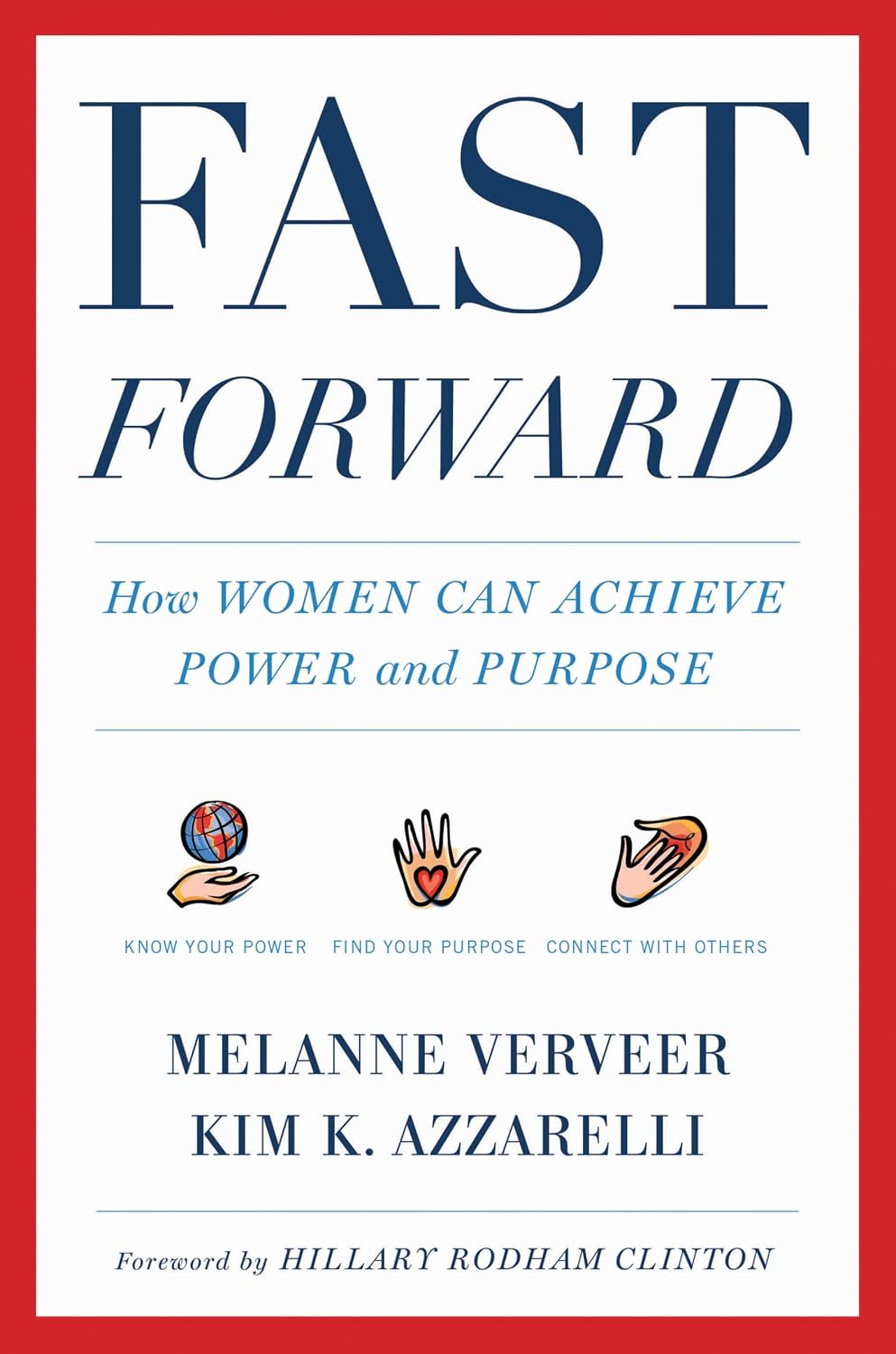
Fast Forward Summary
By Melanne Verveer and Kim K. Azzarelli
How Women Can Achieve Power and Purpose
Summary preview
Fast Forward is a practical and deeply hopeful book about power, progress, and possibility. It begins with a simple but urgent truth. When women rise, economies grow, communities become stronger, and whole societies move closer to stability and peace. Yet even though this has been shown again and again, the world still moves far too slowly. The book asks a direct question. If we already know that advancing women is one of the smartest investments any country, company, or community can make, why are we not moving faster? That question drives everything that follows. Melanne Verveer and Kim K. Azzarelli invite you to look beyond slogans and good intentions. They want you to see women not as a special interest group and not as a side issue, but as a force that can transform the global economy and reshape the future. Their argument is not built only on ideals, though moral urgency is part of it. It is also built on data, business evidence, political change, and stories from women whose lives reveal what happens when barriers fall and what is lost when they remain in place. The book moves across boardrooms, villages, parliaments, factories, banks, and classrooms. It brings together heads of state, entrepreneurs, activists, workers, and investors. Along the way, it shows that progress for women is never just about one thing. It is about access to capital, education, health, legal rights, technology, safety, and representation. Pull one of those threads and you quickly see how connected everything is. A woman cannot fully participate in the economy if she cannot open a bank account, inherit property, move safely through public space, or count on childcare. She cannot lead at work if the system around her was built to ignore or limit her talent. What gives this book its energy is that it refuses despair. It recognizes the weight of discrimination, unpaid labor, violence, exclusion, and bias, but it also insists that systems can change. It points to companies improving performance when women lead, to countries becoming more prosperous when girls are educated, and to communities becoming healthier when women control more resources. Again and again, the message is clear. Equality is not charity. It is smart economics, smart policy, and smart leadership. What unfolds is both a diagnosis and a road map. You are shown the obstacles that slow women down and the practical ways governments, businesses, and individuals can speed things up. The result is a book that feels urgent without being grim, grounded without being dry, and ambitious without losing sight of real lives. It asks you not only to understand the case for women’s advancement, but to help build the momentum that can carry it forward.
Sign up to continue reading
Get access to full book summaries, audio of the summaries, and many more.
Similar Books
Books with a similar vibe—explore more like this.
Bedtime Biography: Yes I Can
Sammy Davis, Jr. and Jane and Burt Boyar
The Story of Sammy Davis Jr.
4.9 (7) mins

American Lion
Jon Meacham
Andrew Jackson in the White House
4.9 (16) mins
Rise Up, Women!
Diane Atkinson
The Remarkable Lives of the Suffragettes
4.8 (5) mins
Bedtime Biography: Edison
Edmund Morris
A look into the unknown stories of Thomas Edison's life
4.8 (36) mins
Lawrence in Arabia
Scott Anderson
War, Deceit, Imperial Folly and the Making of the Modern Middle East
4.8 (41) mins

Beethoven
Laura Tunbridge
A Life in Nine Pieces
4.7 (24)34 mins
Mighty Be Our Powers
Leymah Gbowee with Carol Mithers
How Sisterhood, Prayer, and Sex Changed a Nation at War
4.7 (4) mins
Bedtime Biography: Harriet Tubman
Catherine Clinton
The Road to Freedom
4.7 (34) mins
Guantánamo Diary
Mohamedou Ould Slahi, edited by Larry Siems
Guantanamo from the Inside
4.7 (3) mins

Bedtime Biography: Frida
Hayden Herrera
A Biography of Frida Kahlo
4.7 (12) mins