

Physics of the Impossible Summary
By Michio Kaku
A Scientific Exploration of the World of Phasers, Force Fields, Teleportation, and Time Travel
Summary preview
Open this book and you step into a place where science fiction is treated with unusual respect. Not because every wild dream is secretly true, and not because fantasy should replace careful thought, but because many ideas once dismissed as absurd later became ordinary facts of life. Airplanes, radio, space travel, and computers all sounded impossible to earlier generations. The real question, then, is not whether an idea seems strange at first glance. The real question is whether the laws of physics truly forbid it. That is the game being played here. Michio Kaku invites you to tour the borderland between imagination and scientific law, taking machines and powers that fill comic books, films, and old futuristic tales, then asking a simple and delightful question. Could this ever happen? If so, how? If not today, then perhaps in a century? Or would it require a complete rewriting of the universe itself? To make sense of that, the impossible is sorted into three broad classes. Some things are impossible only for now. They sit far beyond our present engineering, yet they do not violate known physics. These are called Class I impossibilities. A second group may be possible, but only on scales of thousands or millions of years, if at all. These are Class II. Then there are the sacred taboos, the ideas that appear to clash with the deepest structure of reality as we understand it. Those are Class III. This framework gives the whole journey a playful logic. It lets us dream boldly while still keeping our feet on the ground. What follows is not just a list of gadgets. It is a guided tour through the foundations of modern physics itself. Along the way, you find relativity bending time, quantum theory blurring certainty, thermodynamics placing hard limits on energy and order, and information theory changing the way we think about memory, intelligence, and even consciousness. You also discover that nature is far stranger than many fantasies. Black holes, warped space, extra dimensions, and quantum weirdness do not need fiction writers to make them dramatic. The charm of the book is that it keeps asking us to be both skeptical and hopeful. We are reminded that nature does not care about our habits of thought. If a concept fits the equations, then one day engineers may chase it. If it breaks the equations, then no amount of wishful thinking can save it. This creates a wonderful tension between dream and discipline. By the time you move from force fields to teleportation, from starships to time machines, from robot minds to invisible cloaks, you begin to see that the impossible is not a wall. It is a map. Some roads are open, some are blocked, and some vanish into deep cosmic fog. The adventure of science is learning which is which, and why.
Sign up to continue reading
Get access to full book summaries, audio of the summaries, and many more.
Similar Books
Books with a similar vibe—explore more like this.

What Is Intelligence?
Blaise Aguera y Arcas
Lessons from AI About Evolution, Computing, and Minds
4.6 (16)23 mins
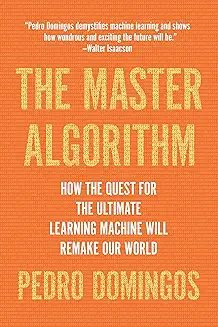
The Master Algorithm
Pedro Domingos
How The Quest For The Ultimate Learning Machine Will Remake Our World
4.5 (2734)36 mins
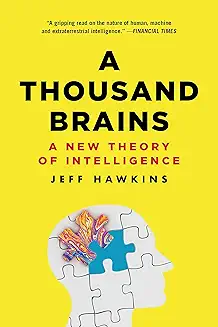
A Thousand Brains
Jeff Hawkins
A New Theory of Intelligence
4.5 (389)23 mins
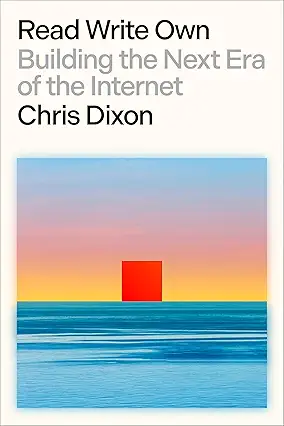
Read Write Own
Chris Dixon
Building the Next Era of the Internet
4.4 (472)15 mins
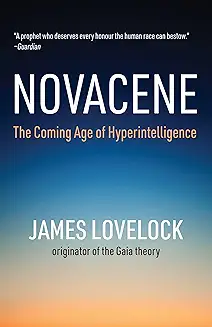
Novacene
James Lovelock
The Coming Age of Hyperintelligence
4.4 (554)25 mins
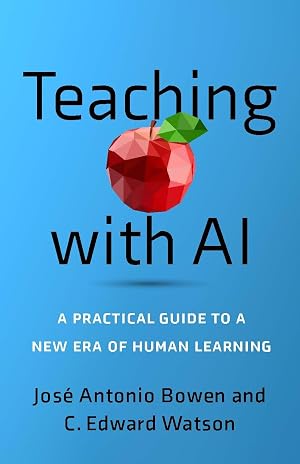
Teaching with AI
José Antonio Bowen, C. Edward Watson
A Practical Guide to a New Era of Human Learning
4.4 (9)25 mins
How We Learn
Stanislas Dehaene
Why Brains Learn Better Than Any Machine . . . for Now
4.3 (460)22 mins
Artificial Intelligence & Generative AI for Beginners
David M. Patel
The Complete Guide (Generative AI & Chat GPT Mastery Series)
4.3 (271)21 mins
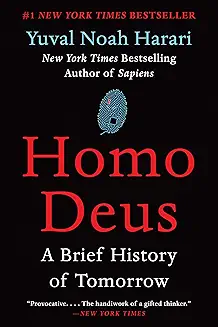
Homo Deus
Yuval Noah Harari
A Brief History of Tomorrow
4.3 (784)33 mins
You Belong In Tech
Anna Jean McDougall
How to Go From Zero Programming Knowledge to Hired
4.3 (6) mins