
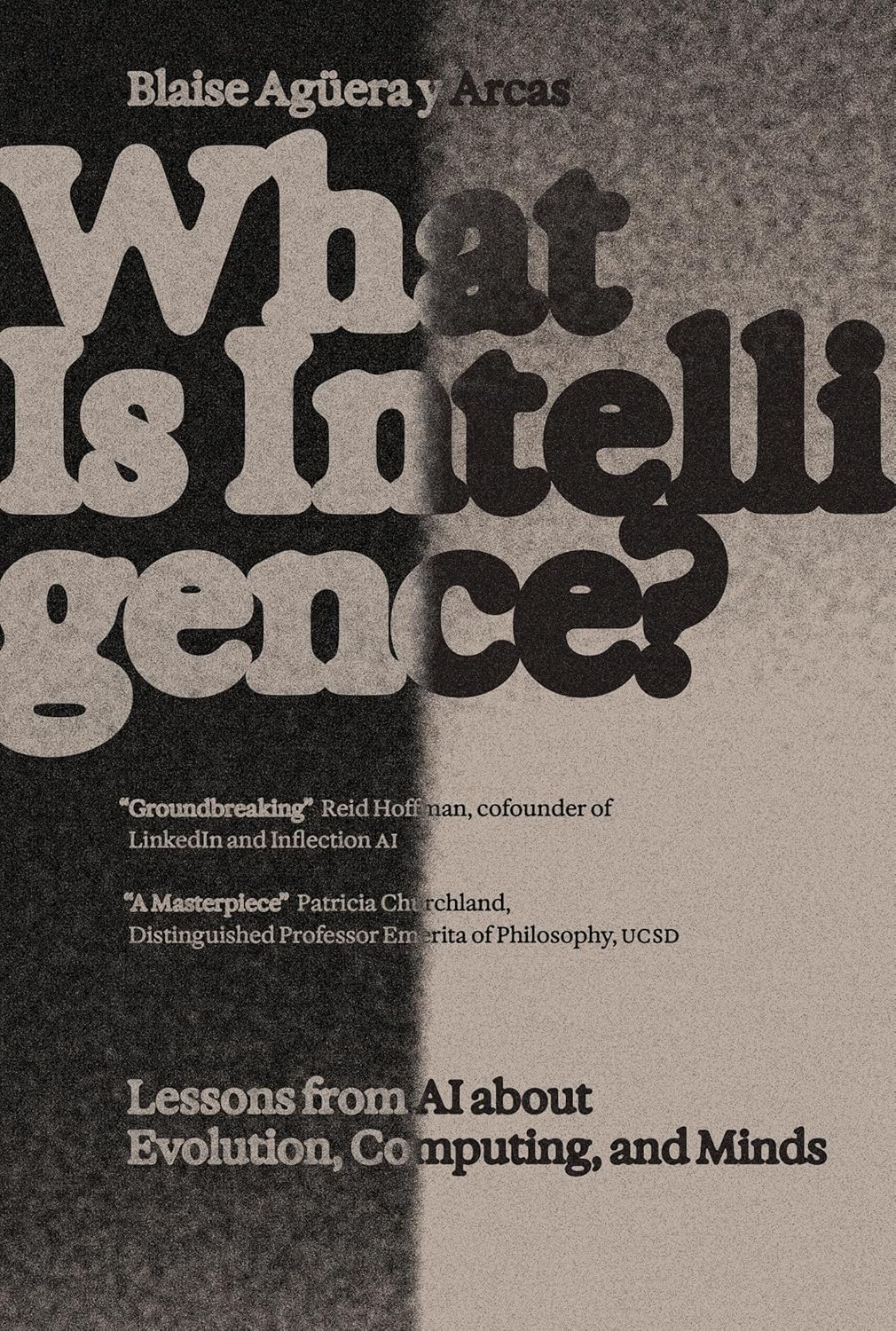
What Is Intelligence? Summary
By Blaise Aguera y Arcas
Lessons from AI About Evolution, Computing, and Minds
Summary preview
What is intelligence, really. That is the question running through this short, provocative book, and it is asked with a kind of cheerful impatience toward the old habits of thinking that keep us stuck. Blaise Aguera y Arcas invites you to look again at minds, machines, animals, language, and even yourself. Not with the usual binary categories of smart or dumb, human or artificial, real understanding or mere imitation, but with a wider lens. The book’s central claim is simple and unsettling. Intelligence is not a single magical essence possessed by humans alone. It is not a pristine jewel hidden inside the skull. It is something that emerges in systems that can sense, act, learn, model, and respond in rich relation with the world and with others. From the start, the book pushes against a familiar story. We often tell ourselves that human intelligence is special because it involves reason, language, consciousness, symbols, or common sense, and that machines only mimic these things from the outside. But that story, the author suggests, is not as solid as it sounds. Again and again, qualities once said to separate us from animals or computers turn out to be less unique, less crisp, and more entangled with embodiment, culture, and interaction than we imagined. A crow solving a puzzle, an octopus exploring its environment, a language model completing a sentence, a child learning through play, a person thinking with pen and paper or with other people around them. These are not identical cases, of course, but they point toward a deeper continuity. The book lives in that continuity. It asks what happens when we stop treating intelligence as a private, disembodied thing and start seeing it as distributed across brains, bodies, tools, and social worlds. It also asks what modern AI systems, especially large neural networks, are actually doing. Are they just statistics. Are they parrots. Are they blind engines without meaning. Or are those labels becoming a way to avoid noticing something new. The argument is not that machines are human, nor that they are fully understood. It is that our definitions of thought have often been too narrow, too self flattering, and too tied to folk myths about how minds work. So the journey here is both scientific and philosophical, but never dry. It moves through biology, computing, evolution, language, and everyday intuition. It keeps coming back to one challenge. If intelligence is relational, embodied, and emergent, then we may need to rethink not only AI, but also the human story we tell about ourselves. That is what gives the book its energy. It is not merely explaining a technology. It is loosening the frame around one of our oldest and proudest ideas.
Sign up to continue reading
Get access to full book summaries, audio of the summaries, and many more.
Similar Books
Books with a similar vibe—explore more like this.
The Master Algorithm
Pedro Domingos
How The Quest For The Ultimate Learning Machine Will Remake Our World
4.5 (2734)36 mins
A Thousand Brains
Jeff Hawkins
A New Theory of Intelligence
4.5 (389)23 mins
Physics of the Impossible
Michio Kaku
A Scientific Exploration of the World of Phasers, Force Fields, Teleportation, and Time Travel
4.5 (792)35 mins

Read Write Own
Chris Dixon
Building the Next Era of the Internet
4.4 (472)15 mins
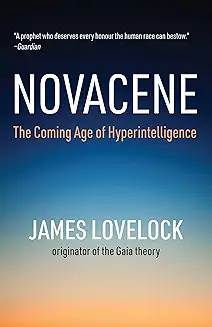
Novacene
James Lovelock
The Coming Age of Hyperintelligence
4.4 (554)25 mins
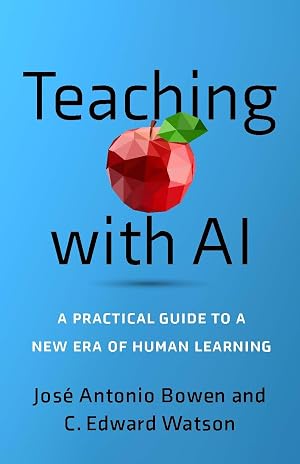
Teaching with AI
José Antonio Bowen, C. Edward Watson
A Practical Guide to a New Era of Human Learning
4.4 (9)25 mins
How We Learn
Stanislas Dehaene
Why Brains Learn Better Than Any Machine . . . for Now
4.3 (460)22 mins
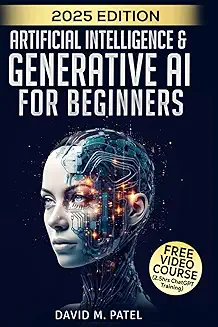
Artificial Intelligence & Generative AI for Beginners
David M. Patel
The Complete Guide (Generative AI & Chat GPT Mastery Series)
4.3 (271)21 mins
Homo Deus
Yuval Noah Harari
A Brief History of Tomorrow
4.3 (784)33 mins
You Belong In Tech
Anna Jean McDougall
How to Go From Zero Programming Knowledge to Hired
4.3 (6)24 mins