
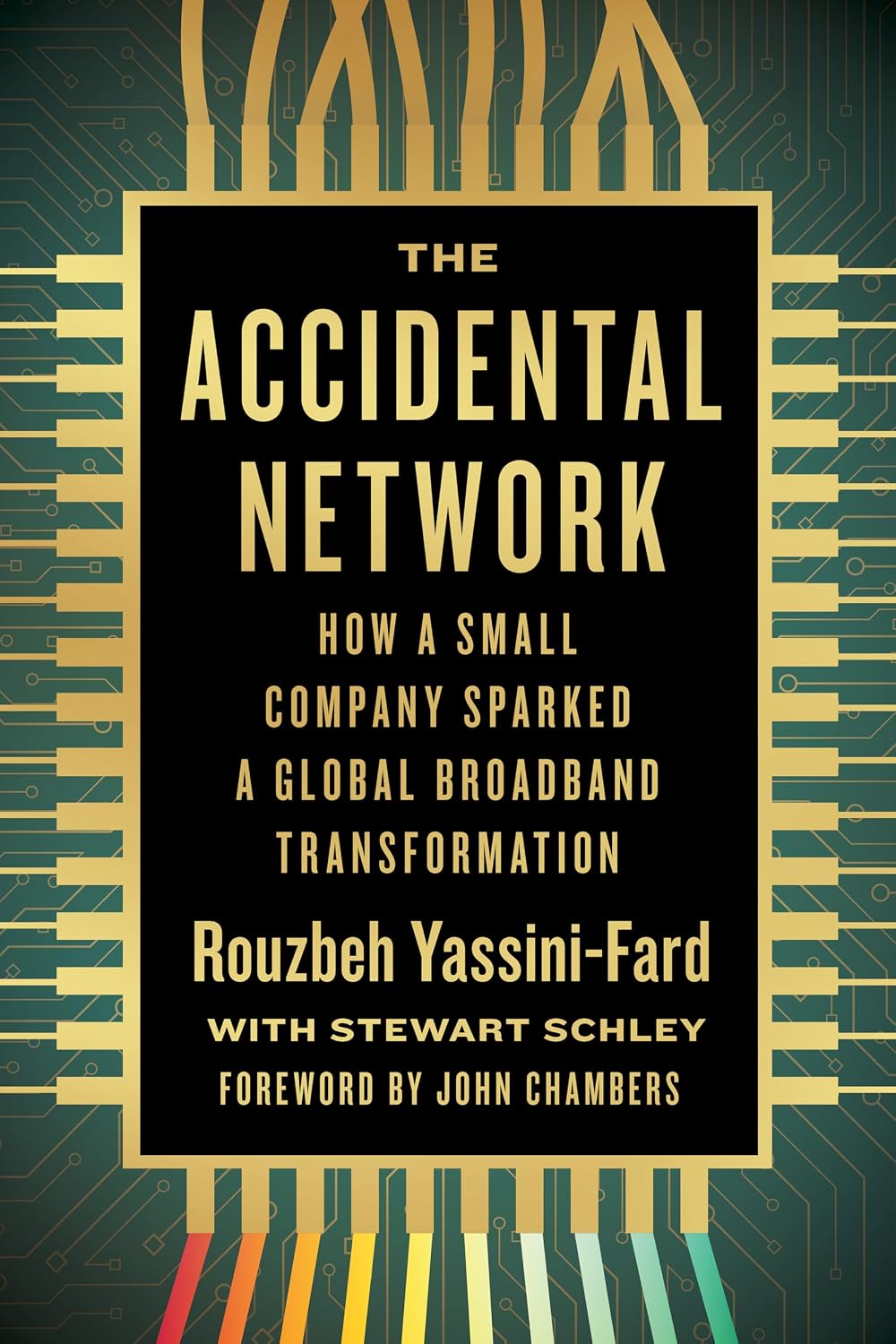
The Accidental Network Summary
By Rouzbeh Yassini-Fard & Stewart Schley
How a Small Company Sparked a Global Broadband Transformation
Summary preview
The Accidental Network is a story about invention, stubborn hope, and the strange way big change often arrives. It does not begin with a neat master plan. It begins with curiosity, frustration, and a sense that the tools people had for communication were too limited for what was coming next. At its heart, this book tells how cable television, once built simply to carry clearer pictures into homes, became the foundation for a new kind of network that would reshape daily life. What looked like a side road turned out to be the main road. What seemed accidental was, in another sense, the product of years of vision, argument, engineering, and risk. The book moves through a period when the communications world was split into rigid categories. Telephone companies handled voice. Cable companies delivered television. Computer networks were still separate, narrow, and mostly invisible to ordinary people. Few people imagined these worlds could merge into one broad digital path. Yet the book shows how that merger became possible because a handful of people saw hidden potential inside existing infrastructure. Coaxial cable was not just a tube for entertainment. It could become a two way highway for information. That idea sounds obvious now, but at the time it challenged assumptions, business models, and technical limits all at once. What makes the book especially vivid is that it is not only a history of technology. It is a personal journey through invention and enterprise. Rouzbeh Yassini-Fard & Stewart Schley present the rise of cable broadband as something lived from the inside. The reader sees experiments that failed, meetings that nearly changed everything, skepticism from experts, and the slow, difficult process of turning a concept into equipment, standards, and a market. The energy of the story comes from that tension between possibility and doubt. Again and again, the future feels close enough to touch, yet still blocked by economics, regulation, or the simple fact that many people cannot imagine what they have not yet seen. Running through the whole book is a larger claim about progress. Transformative networks do not emerge from one company or one inventor acting alone. They grow from collisions between dreamers, engineers, investors, operators, policymakers, and customers. They are shaped by accidents, yes, but also by persistence. The result is a lively account of how broadband arrived and why its arrival mattered. By the end, the network is not just a technical system. It is a living platform for connection, commerce, culture, and creativity, built by people who had to believe in it before the world did.
Sign up to continue reading
Get access to full book summaries, audio of the summaries, and many more.
Similar Books
Books with a similar vibe—explore more like this.
Day Trading Attention
Gary Vaynerchuk
Build Brand and Sales in the New Social Media World
4.5 (947)21 mins
Dotcom Secrets
Russell Brunson
The Underground Playbook for Growing Your Company Online with Sales Funnels
4.4 (836)25 mins
Empire of AI
Karen Hao
Dreams and Nightmares in Sam Altman's OpenAI
4.3 (459)19 mins
Problem Hunting
Brian Long
The Tech Startup Textbook
4.2 (18)22 mins
Human/Machine
Daniel Newman and Olivier Blanchard
The Future of our Partnership with Machines
4.0 (350)28 mins
Unworking
Jeremy Myerson & Philip Ross
The Reinvention of the Modern Office
3.8 (5)21 mins

Gilded Rage
Jacob Silverman
Elon Musk and the Radicalization of Silicon Valley
3.8 (6)25 mins

The AI-First Company
Ash Fontana
How to Compete and Win with Artificial Intelligence
3.8 (7)24 mins
Competing in the Age of AI
Marco Iansiti & Karim R. Lakhani
Strategy and Leadership When Algorithms and Networks Run the World
3.6 (49)13 mins

Girl Code
Cara Alwill Leyba
Secrets to Sanity and Success for the Female Entrepreneur
4.9 (4)21 mins