
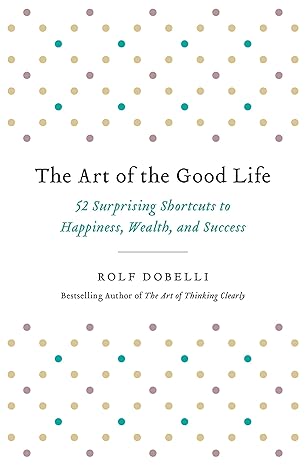
The Art of the Good Life Summary
By Rolf Dobelli
52 Surprising Shortcuts to Happiness, Wealth, and Success
Summary preview
What does it mean to live well? Not brilliantly for a moment, not impressively in the eyes of strangers, but well in the deep, durable sense. That is the question beating at the heart of this book. The answer offered here is not a grand theory, not a moral sermon, and not a perfect recipe. It is something much more useful. It is a practical toolkit for daily life. Rolf Dobelli takes a simple but powerful view. A good life is not built by chasing every pleasure, obeying every feeling, or copying what others admire. It is built by thinking clearly, choosing carefully, and protecting yourself from the many traps that lead smart people into unnecessary suffering. We humans are not naturally equipped for this. Our minds are full of blind spots. We overreact, compare ourselves endlessly, cling to sunk costs, fear loss more than we value gain, and let noise drown out what really matters. So if we want a good life, we cannot rely on instinct alone. We need better mental habits. That is why the book reads like a cabinet of life wisdom. Each short chapter offers one idea, one principle, one lens through which to see the world a little more clearly. Some of these ideas come from psychology, some from philosophy, some from economics, and some from ordinary experience. Together they form a quiet argument. Happiness is less about adding more and more to your life and more about subtracting what is false, noisy, foolish, and self defeating. Often the smartest move is not heroic action but avoidance. Avoid the wrong battles. Avoid needless dependence on status. Avoid people and situations that reliably make you smaller, weaker, and more confused. What makes the book especially engaging is its earthy realism. It does not pretend that life is fair, or that good intentions guarantee good outcomes. It does not flatter you with easy optimism. Instead, it asks you to become sturdier. Accept uncertainty. Respect probability. Know your limits. Stop trying to control what cannot be controlled. Learn where your attention belongs and where it does not. This gives the book a refreshing tone. It is serious without being heavy, wise without being pompous, and practical without being dull. As you move through these ideas, you begin to see that the good life is not a distant prize. It is a way of navigating everyday choices. It appears in the work you accept, the ambitions you prune, the people you trust, the comparisons you refuse, and the inner freedom you protect. Little by little, the book invites you to become less gullible, less reactive, and more deliberate. Not perfect, just saner. And perhaps that is already very close to a good life.
Sign up to continue reading
Get access to full book summaries, audio of the summaries, and many more.
Similar Books
Books with a similar vibe—explore more like this.

Psychological Types
Carl Jung
Collected works from the supreme theorist of the conscious
4.7 (89) mins
Consciousness Explained
Daniel C. Dennett
Redefine Your Understanding of the Mind and Consciousness
4.4 (42) mins
Start Making Sense
Steven J Heine
How Existential Psychology Can Help Us Build Meaningful Lives in Absurd Times
4.3 (12)18 mins
Critical Thinkers
Albert Rutherford
Methods for Clear Thinking and Analysis in Everyday Situations from the Greatest Thinkers in History
4.2 (392)30 mins
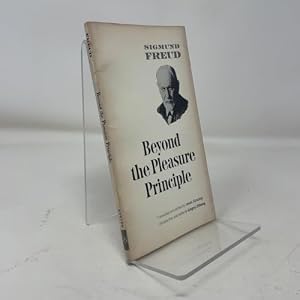
Beyond the Pleasure Principle
Sigmund Freud
Delve Into Unconscious Desires
3.9 (20) mins
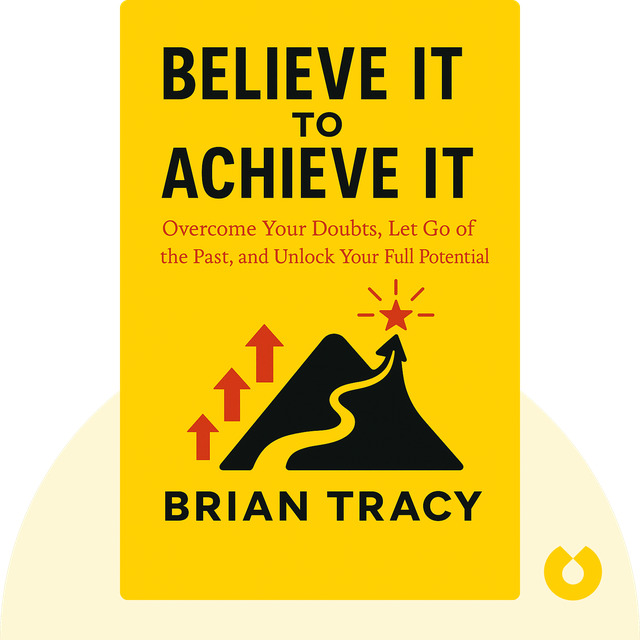
Believe It to Achieve It
Brian Tracy, Christina Stein
Overcome Your Doubts, Let Go of the Past, and Unlock Your Full Potential
4.8 (32) mins

Othello
William Shakespeare
Love, Betrayal, and the Fall of a Hero
4.8 (14) mins
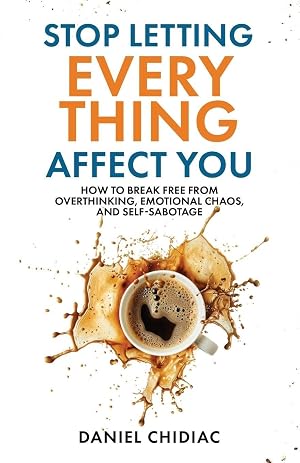
Stop Letting Everything Affect You
Daniel Chidiac
Break Free from Overthinking, Emotional Chaos, and Self-Sabotage
4.8 (12) mins
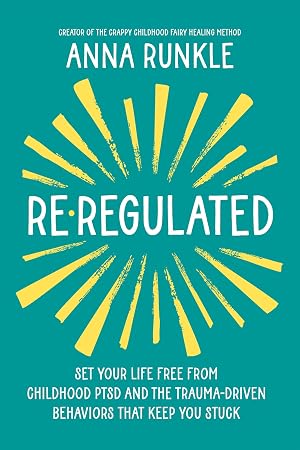
Re-Regulated
Anna Runkle
Set Your Life Free from Childhood PTSD
4.8 (10) mins
A Handbook for New Stoics
Massimo Pigliucci and Gregory Lopez
How to Thrive in a World Out of Your Control
4.7 (884)29 mins