
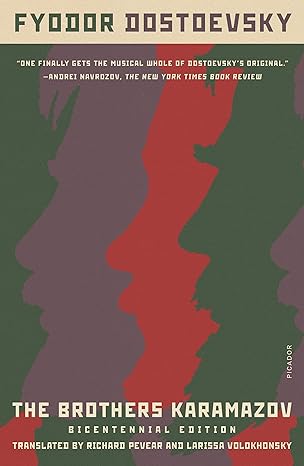
The Brothers Karamazov Summary
By Fyodor Dostoyevsky
A Tragic Murder Mystery on the Burden of Free Will and Morality
Summary preview
There are books that tell a story, and there are books that open a wound in the human heart and ask you to look inside without turning away. The Brothers Karamazov belongs to the second kind. It gives us a murder, a scandalous father, three sons who seem to carry three different souls, and a world full of hunger, shame, prayer, doubt, desire, and longing. Yet the true subject is larger than any crime. It is the question of what a human being is when no one is watching, when suffering comes, when God seems silent, when love is offered, and when freedom begins to feel like a burden too heavy to bear. At the center stands the Karamazov family, though to call it a family already feels too kind. Fyodor Pavlovich Karamazov is a greedy, vulgar, laughing old man, a father in name who has done almost nothing a father should do. Around him gather his sons. Dmitri burns with passion and honor and shame all mixed together. Ivan lives by the mind, sharp and proud, and cannot stop asking whether a world built on innocent suffering deserves acceptance. Alyosha is gentle, openhearted, and full of living faith, though not a faith without tears. There is also the shadowed figure of Smerdyakov, the servant born in humiliation, quiet and watchful, carrying hidden poison in his soul. The story begins with a quarrel over money and over a woman, and from there it grows into something vast. The father and Dmitri become rivals for Grushenka, that irresistible woman who plays with hearts yet has a wounded heart of her own. Old debts fester. Jealousy swells. Suspicion hangs over every conversation. The whole town seems to lean forward, waiting for disaster. But the novel never hurries like a mere thriller. It pauses to ask what children owe their parents, what guilt means, whether one man may be responsible for another man’s sin, and whether a person may go on living after betraying the best thing in himself. That is why Fyodor Dostoyevsky gives us not only scenes of noise and violence but also parables, confessions, drunken speeches, spiritual counsel, and arguments that feel like battles of the soul. For instance, one brother can hardly forgive the suffering of children, while another elder teaches that each of us is somehow guilty before all and for all. These are not decorations around the plot. They are the deep current carrying everything onward. So come close. Listen to laughter that hides rot, to prayers that rise from despair, to reason that cuts like a knife, and to love that keeps insisting on life. Fyodor Dostoyevsky does not offer comfort cheaply. He offers something harder and better, a fierce compassion that sees the darkness clearly and still refuses to surrender the possibility of redemption.
Sign up to continue reading
Get access to full book summaries, audio of the summaries, and many more.
Similar Books
Books with a similar vibe—explore more like this.
The Righteous Mind
Jonathan Haidt
Why Good People Are Divided by Politics and Religion
4.4 (673)35 mins
The Screwtape Letters
C.S. Lewis
Letters from a Senior to a Junior Devil
4.8 (47) mins

Othello
William Shakespeare
Love, Betrayal, and the Fall of a Hero
4.8 (14) mins
We Have Always Lived in the Castle
Shirley Jackson
Enter a Disturbing Labyrinth of Family Secrets and Dark Neurosis
4.8 (5) mins
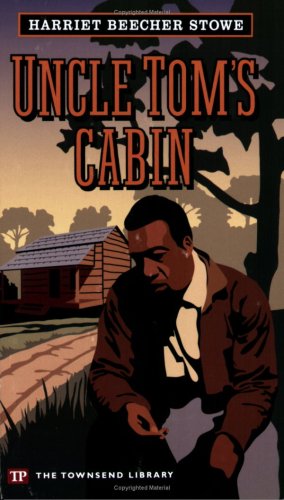
Uncle Tom's Cabin
Harriet Beecher Stowe
The Problem of Slavery and Its Treatment of Human Beings
4.7 (41)25 mins
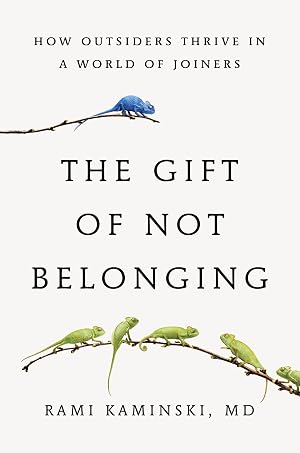
The Gift of Not Belonging
Rami Kaminski
How Outsiders Thrive in a World of Joiners
4.7 (89) mins

Once Upon a Stranger
Gillian Sandstrom
The Science of How Small Talk Can Add Up to a Big Life
4.7 (21) mins
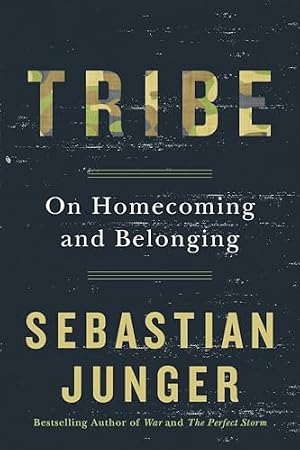
Tribe
Sebastian Junger
On Homecoming and Belonging
4.7 (17) mins

The Seven Circles
Chelsey Luger & Thosh Collins
Indigenous Teachings for Living Well
4.7 (13) mins
My Grandmother's Hands
Resmaa Menakem
Racialized Trauma and the Pathway to Mending Our Hearts and Bodies
4.6 (167)30 mins