
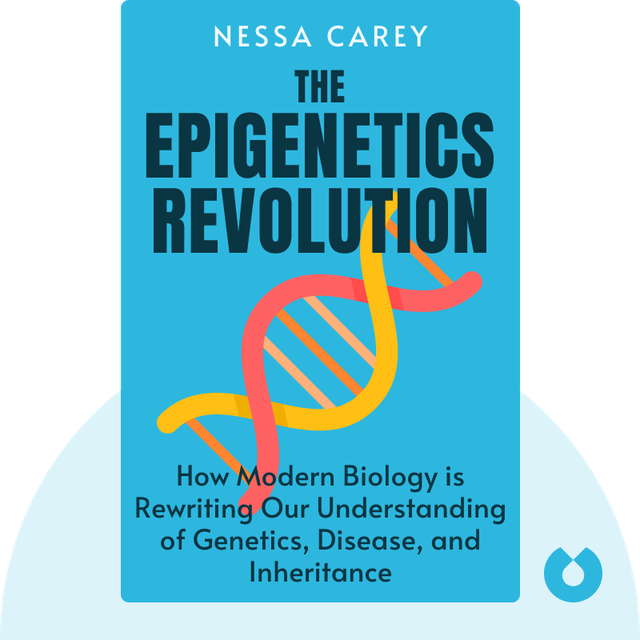
The Epigenetics Revolution Summary
By Nessa Carey
How Modern Biology is Rewriting Our Understanding of Genetics, Disease, and Inheritance
Summary preview
Most of us grew up with a simple picture of biology. We inherit our genes, those genes act like a fixed instruction manual, and much of who we are follows from that script. The great excitement of this book is that life is far more dynamic, surprising, and hopeful than that. The real story is not only about the genes you carry, but about how cells decide which genes to use, when to use them, and how loudly to express them. That extra layer of control is epigenetics, and once you see it, you start to understand everything differently, from embryos to ageing, from cancer to memory, from famine in one generation to health in the next. Nessa Carey opens the subject in a way that feels less like a lecture and more like someone pulling back a curtain. Every cell in your body contains essentially the same DNA, yet a brain cell behaves nothing like a liver cell, and a muscle cell is not remotely like a skin cell. The mystery is not just what genes exist, but how some are switched on while others are silenced. Epigenetics is the machinery of those switches. It includes chemical tags added to DNA, modifications placed on the proteins that package DNA, and whole systems that help cells remember their identity over time. Without these processes, the body would be chaos. With them, a single fertilized egg can become a whole human being. What makes the book so engaging is that it never treats this science as abstract. It is always tied to lived experience. Why do identical twins become less alike as they age. How can nutrition during pregnancy shape a child for decades. Why can a healthy cell turn cancerous without a change in the DNA sequence itself. Why do some diseases seem to involve memory gone wrong at the level of the cell. Again and again, the answer lies in patterns of gene activity that can shift, stabilize, break down, or be reset. The book also carries a quiet warning. Epigenetics has sometimes been hyped as if it explains everything, or as if our bodies are infinitely rewritable by willpower and lifestyle tips. That is not the message here. The message is more interesting and more careful. Biology is flexible, but not magical. Cells respond to signals, environments, and chance, yet they do so through mechanisms that are real, physical, and often stubbornly difficult to control. This makes the field exciting because it offers new ways to think about disease and treatment, while also demanding humility. As the story unfolds, you are taken from the basics of cellular memory to the strange dance of development, then into the damaged landscapes of cancer and chronic illness, and finally toward medicine, inheritance, and the possibility of changing epigenetic states on purpose. It is a revolution not because genes have been replaced, but because our understanding of what genes need in order to matter has deepened so dramatically.
Sign up to continue reading
Get access to full book summaries, audio of the summaries, and many more.
Similar Books
Books with a similar vibe—explore more like this.

The Song of Roland
Anonymous
Enter a World of Medieval Heroism, Where Honor Reigns Supreme
4.9 (3)20 mins
Livewired
David Eagleman
The inside story of the Ever-changing brain
4.8 (544)28 mins
Why We Sleep
Matthew Walker
Unlocking the Power of Sleep and Dreams
4.8 (1560)17 mins

Utilitarianism
John Stuart Mill
Explore a Timeless Ethics Classic
4.8 (46)24 mins

Alice in Wonderland
Lewis Carroll
Follow Alice down a rabbit hole of whimsical, witty absurdity.
4.8 (5)24 mins
Every Living Thing
Jason Roberts
The Great and Deadly Race to Know All Life
4.8 (7)22 mins
The God Equation
Michio Kaku
The Quest for a Theory of Everything
4.7 (409)28 mins
The Extended Mind
Annie Murphy Paul
The Power of Thinking Outside the Brain
4.7 (971)30 mins
The Neuroscience of You
Chantel Prat
How every brain is different and how to understand yours
4.7 (679)20 mins
The Knowledge Illusion
Steven Sloman & Philip Fernbach
Why We Never Think Alone
4.7 (39)30 mins