
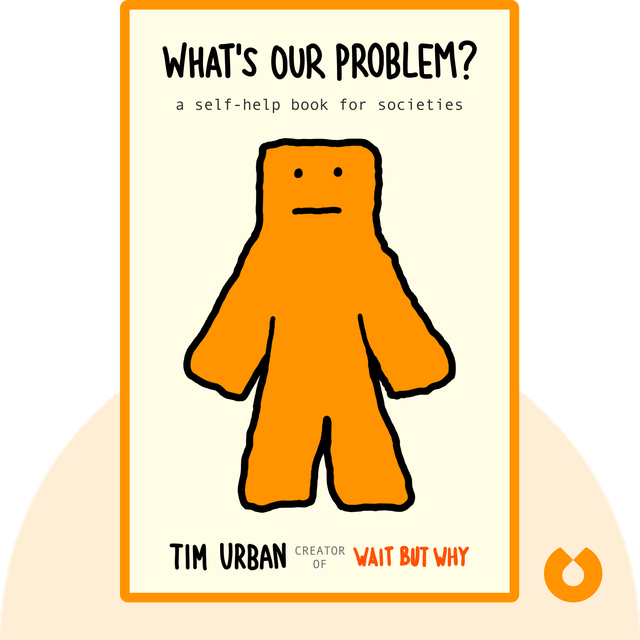
What's Our Problem? Summary
By Tim Urban
A Self-Help Book for Societies
Summary preview
What is our problem. That is the giant question sitting at the center of this book, and it is not asked in a neat, calm room. It is asked in the middle of a noisy fight, with people yelling from opposite sides, each sure they are the sane one and the other side has lost its mind. The book begins with a feeling many people know well. You look around at politics, media, the internet, and everyday conversation, and everything feels broken. Smart people say ridiculous things. Kind people turn cruel. Discussions become tribal battles. Institutions that are supposed to help us think clearly often make us dumber, angrier, and more certain. The puzzle is not just that people disagree. Humans have always disagreed. The puzzle is why so many of us seem unable to think well about the disagreement itself. The big promise here is that before we can fix politics, culture, or public life, we need to understand the machinery inside our own heads. Tim Urban does not treat our collective mess as just a policy problem. He treats it as a human operating system problem. Beneath all the headlines and hot takes lies a deeper conflict between two forces inside every person. One part of the mind wants truth, nuance, patience, and reality. Another part wants belonging, status, certainty, and emotional safety. When the second part grabs the wheel, whole societies can drift away from wisdom and toward fear, conformity, and extremism. So the book sets out to build a map. It gives us language for parts of ourselves we often do not notice. It shows how social pressure can overpower independent thought. It traces how bad thinking scales from one mind to millions, especially in an age where algorithms reward outrage and performance. And it tries to explain how decent people can become servants of nonsense without realizing it. This is one reason the book feels so alive. It is not wagging a finger at villains out there. It is asking you to inspect the strange little civilization inside your own skull. Along the way, the book mixes psychology, history, politics, moral philosophy, internet culture, and plain old common sense. It is serious, but it is also playful, visual, and full of memorable metaphors. The style says, basically, let us slow down, zoom out, and stop pretending that shouting louder counts as thinking. The goal is not to make you pick a team more aggressively. The goal is to help you become the kind of person who can resist team madness in the first place. By the time you move through the book, the question changes shape. What is our problem becomes a set of linked questions. Why do humans so often trade truth for tribe. Why do our institutions amplify our worst instincts. What does healthy thinking look like. And how do we build a culture where more people can live from their higher mind instead of their fearful one. The book is, in the...
Sign up to continue reading
Get access to full book summaries, audio of the summaries, and many more.
Similar Books
Books with a similar vibe—explore more like this.
The Battle for Your Brain
Nita A. Farahany
Defending the Right to Think Freely in the Age of Neurotechnology
4.2 (449)18 mins
Nineteen Eighty-Four (1984)
George Orwell
A Dystopian Classic on the Dangers of Totalitarianism
4.9 (697)17 mins

Othello
William Shakespeare
Love, Betrayal, and the Fall of a Hero
4.8 (14)22 mins
We Have Always Lived in the Castle
Shirley Jackson
Enter a Disturbing Labyrinth of Family Secrets and Dark Neurosis
4.8 (5)14 mins
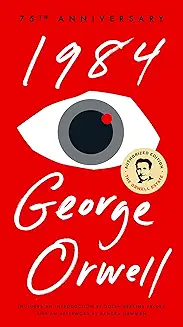
1984
George Orwell
A Dystopian Classic on the Dangers of Totalitarianism
4.7 (1738)16 mins
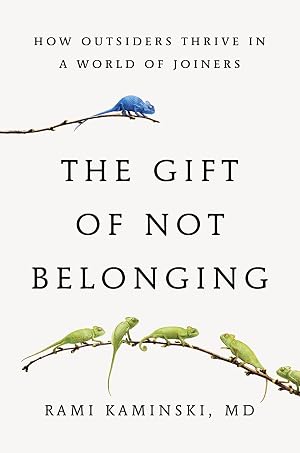
The Gift of Not Belonging
Rami Kaminski
How Outsiders Thrive in a World of Joiners
4.7 (89)22 mins

Once Upon a Stranger
Gillian Sandstrom
The Science of How Small Talk Can Add Up to a Big Life
4.7 (21)22 mins

The Chemistry Book
Derek B Lowe
From Gunpowder to Graphene, 250 Milestones in the History of Chemistry
4.7 (50)38 mins

Tribe
Sebastian Junger
On Homecoming and Belonging
4.7 (17)31 mins

The Emperor's New Mind
Roger Penrose
Concerning Computers, Minds, and the Laws of Physics
4.7 (64)29 mins