

The Emperor's New Mind Summary
By Roger Penrose
Concerning Computers, Minds, and the Laws of Physics
Summary preview
What kind of thing is a mind. That is the quiet but stubborn question that sits beneath every page of this book. Roger Penrose begins with a challenge to a very popular modern dream, the dream that the brain is really just a kind of computer and that thought itself can, in principle, be captured by rules, symbols, and machinery. If that were true, then a machine that followed the right program could genuinely understand, discover, feel, and perhaps even be conscious in the same way that we are. But I ask you to slow down before accepting that picture. There is something about human understanding, especially mathematical understanding, that seems to reach beyond mere rule following. We do not only calculate. We see. That simple word, see, does a lot of work here. The book moves across mathematics, physics, cosmology, computer science, artificial intelligence, and neuroscience, not as separate islands but as parts of one deep puzzle. The aim is not to show off those subjects for their own sake. It is to use them to ask whether present day science has really explained mentality, or whether a crucial piece is still missing. I suggest that it is missing, and not just a small piece. If the mind is not algorithmic, then our current picture of nature may also be incomplete, because the mind is part of nature too. So the argument unfolds in two broad directions at once. First, there is a careful attack on the strong claim that minds are simply computers. Here ideas from mathematical logic, especially Gödel’s incompleteness theorem, become central. They are used to press a remarkable point. Human mathematicians can often recognize the truth of statements that no fixed formal system can prove from within itself. If that is right, then understanding cannot be identical with the mechanical operation of any one algorithm. Second, there is a more daring proposal. If ordinary computation is not enough, then where should we look. The answer offered here points toward physics, and in particular toward the strange and unresolved foundations of quantum theory. Consciousness, I suggest, may depend on physical processes that are neither classical nor computational in the usual sense. To make that idea even thinkable, the book first tours the landscape of modern science, from Turing machines and complexity to relativity, quantum measurement, black holes, and the structure of time. What emerges is not a neat finished doctrine but an invitation to rethink several comfortable assumptions at once. Machines may become astonishingly capable, yet capability is not the same as understanding. Brains are physical objects, yet physics itself may still be unfinished. Mathematics feels timeless and objective, yet our access to it comes through acts of insight that remain mysterious. The whole enterprise has the excitement of an expedition. We are not merely asking how clever computers can become. We are asking what reality must be like if conscious understanding truly exists.
Sign up to continue reading
Get access to full book summaries, audio of the summaries, and many more.
Similar Books
Books with a similar vibe—explore more like this.
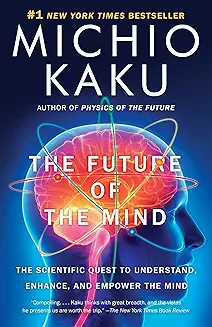
The Future of the Mind
Michio Kaku
The Scientific Quest to Understand, Enhance, and Empower the Mind
4.5 (602)34 mins
What's Our Problem?
Tim Urban
A Self-Help Book for Societies
4.5 (158)23 mins
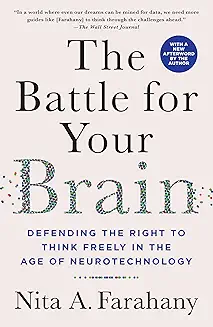
The Battle for Your Brain
Nita A. Farahany
Defending the Right to Think Freely in the Age of Neurotechnology
4.2 (449)18 mins
The Shallows
Nicholas Carr
What the Internet Is Doing to Our Brains
4.2 (357)34 mins
The Distracted Mind
Adam Gazzaley and Larry D. Rosen
Ancient Brains in a High-Tech World
4.2 (26)29 mins
Nineteen Eighty-Four (1984)
George Orwell
A Dystopian Classic on the Dangers of Totalitarianism
4.9 (697)17 mins
This Is How They Tell Me the World Ends
Nicole Perlroth
The Cyberweapons Arms Race
4.8 (64)33 mins
Widen the Window
Elizabeth A. Stanley
Training Your Brain and Body to Thrive During Stress and Recover from Trauma
4.8 (158)27 mins
The Screwtape Letters
C.S. Lewis
Letters from a Senior to a Junior Devil
4.8 (47)31 mins
Believe It to Achieve It
Brian Tracy, Christina Stein
Overcome Your Doubts, Let Go of the Past, and Unlock Your Full Potential
4.8 (32)22 mins