
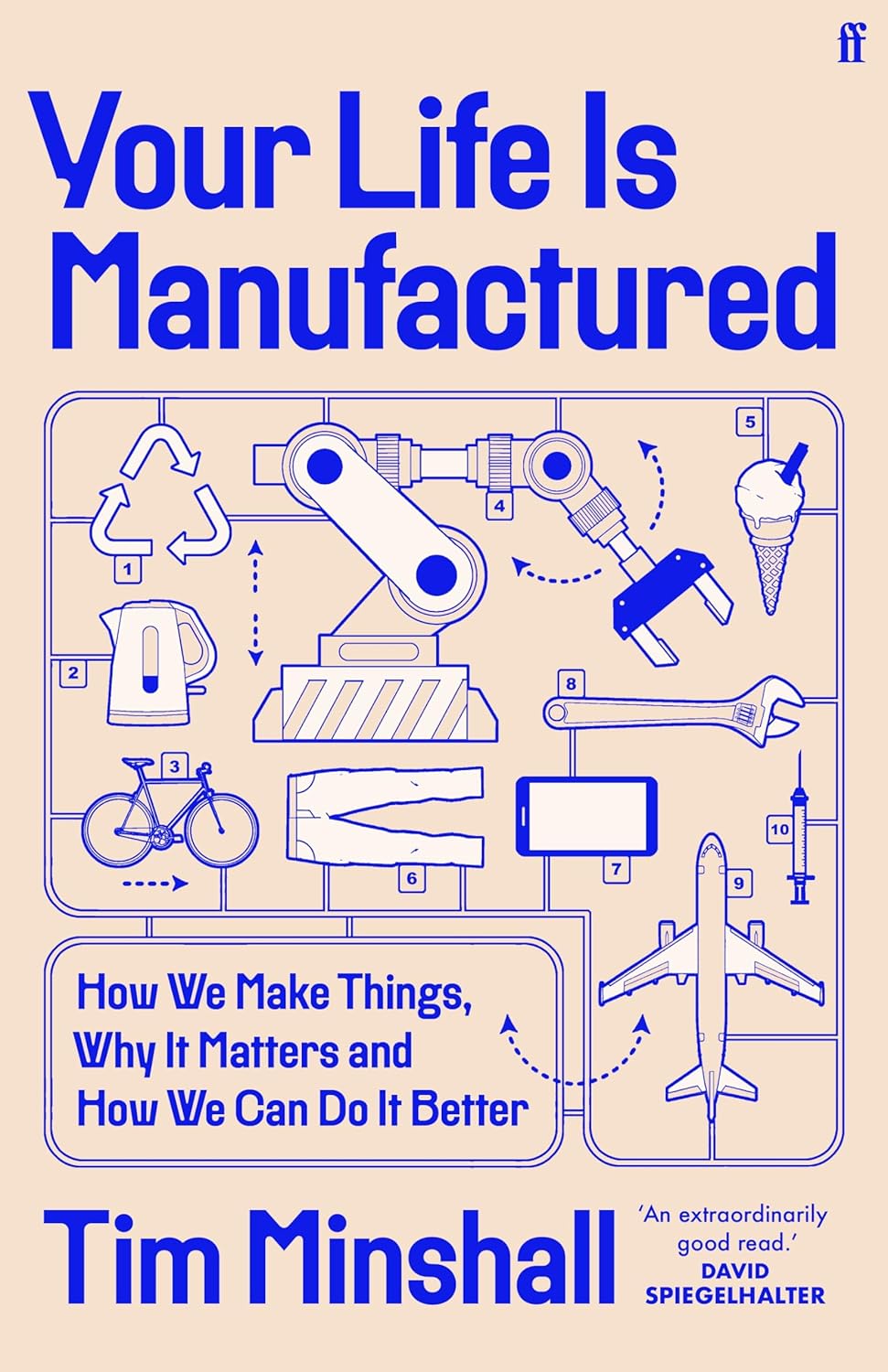
Your Life Is Manufactured Summary
By Tim Minshall
How We Make Things, Why It Matters, and How We Can Do Better
Summary preview
Look around you for a moment. The chair you sit on, the phone in your hand, the glass in your window, the food in your cupboard, the medicine in your bathroom, the fabric on your skin. Almost everything that supports your daily life has been made, moved, assembled, packed, tested, and delivered through systems so vast and so ordinary that we barely notice them. That quiet invisibility is the starting point of this book. It asks you to see manufacturing not as a dull background activity, but as one of the great shaping forces of modern life. The central idea is simple and powerful. Your life is manufactured. Not only in the obvious sense that things are produced in factories, but in the deeper sense that whole ways of living are made possible by manufacturing networks, design choices, supply chains, business models, labor systems, and political decisions. What you can buy, how quickly it reaches you, what it costs, how long it lasts, who gets paid, who carries the environmental burden, and what kind of future we are building together are all tied up with how things are made. Tim Minshall takes you behind the curtain of everyday objects and shows you that production is never just about machines stamping out parts. It is a human story, a technological story, and a moral story. It is about invention and scale, but also about fragility. It is about astonishing capability, but also about waste, pollution, inequality, and risk. A modern factory can look sleek and precise, yet behind one simple product there may be mines, farms, shipping routes, software systems, warehouse workers, contract manufacturers, marketers, repair shops, and landfills spread across the planet. What makes the journey engaging is that it moves from the familiar to the surprising. A cheap T shirt, a loaf of bread, a vaccine, a smartphone, or a ventilator become windows into a much bigger world. You begin to see that manufacturing is not a side issue for specialists. It touches climate change, national resilience, public health, economic development, innovation, and the quality of ordinary life. When something goes right, manufacturing can lift living standards and spread useful technology. When something goes wrong, shortages, bottlenecks, and hidden dependencies suddenly become visible. The book also carries a practical hopefulness. It does not ask you to admire industry blindly or reject it completely. Instead, it invites you to become more aware, more curious, and more responsible. If we understand how things are made, we are better placed to decide what should be made, how it should be made, where it should be made, and for whom. That is the thread running through everything that follows. The making of things has made the modern world, and the choices we make about manufacturing now will help decide what sort of world comes next.
Sign up to continue reading
Get access to full book summaries, audio of the summaries, and many more.
Similar Books
Books with a similar vibe—explore more like this.

Read Write Own
Chris Dixon
Building the Next Era of the Internet
4.4 (472)15 mins
Subscribed
Tien Tzuo with Gabe Weisert
Why the Subscription Model Will Be Your Company's Future – and What to Do About It
4.3 (32) mins
Brave New Words
Salman Khan
How AI Will Revolutionize Education (and Why That's a Good Thing)
4.1 (382)23 mins
Fintech Wars
James Da Costa
Tech Titans, Chaotic Crypto and the Future of Money
3.9 (13)25 mins
This Is How They Tell Me the World Ends
Nicole Perlroth
The Cyberweapons Arms Race
4.8 (64)33 mins
The Fixer
Bradley Tusk
Saving Startups from Death by Politics
4.8 (5) mins
Zero to One
Peter Thiel with Blake Masters
Notes on Startups, or How to Build The Future
4.6 (1405)45 mins

Cobalt Red
Siddharth Kara
How the Blood of the Congo Powers Our Lives
4.6 (4) mins

What Is Intelligence?
Blaise Aguera y Arcas
Lessons from AI About Evolution, Computing, and Minds
4.6 (16) mins
Thinking in Systems
Donella H. Meadows
A Primer
4.5 (1784)36 mins