
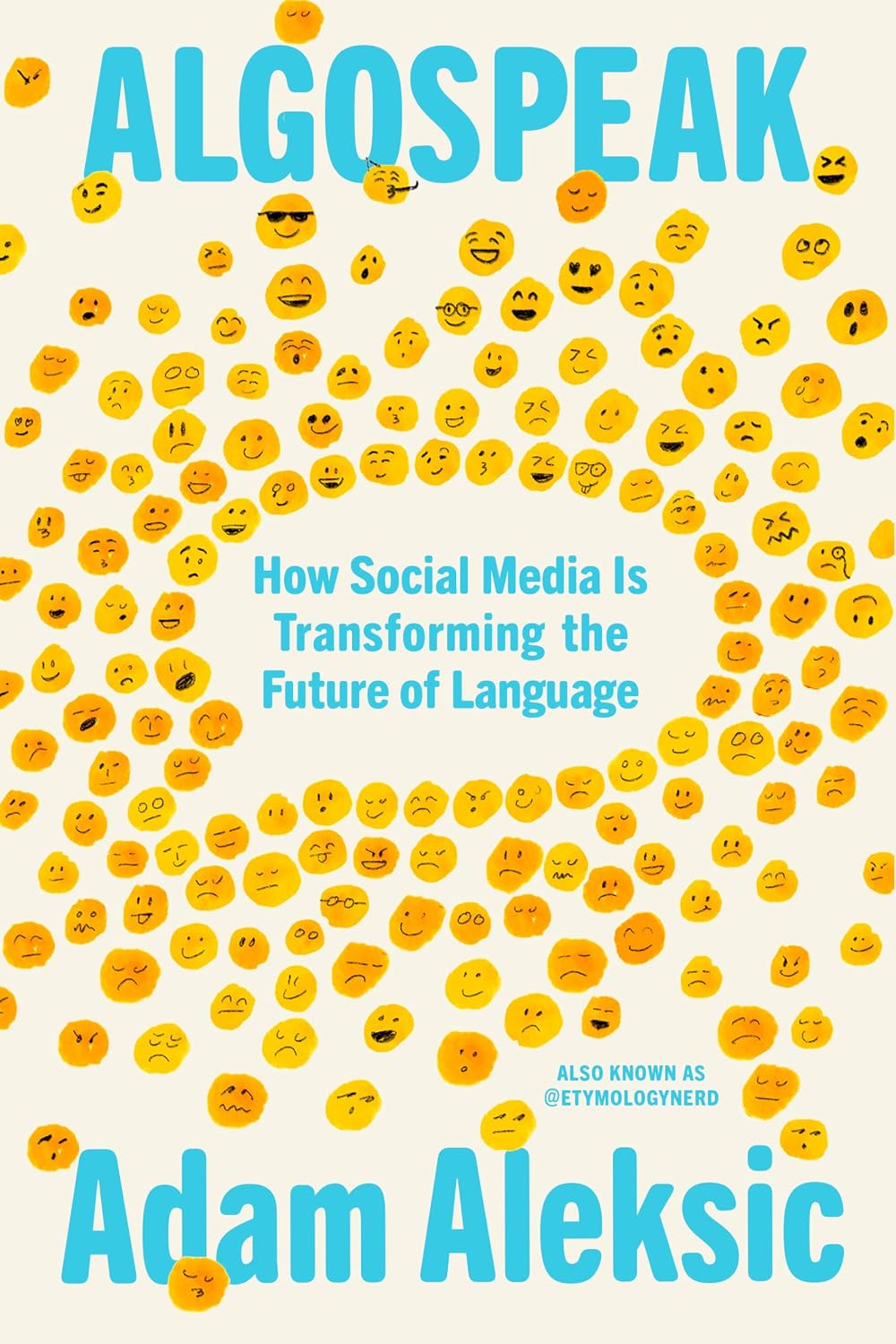
Algospeak Summary
By Adam Aleksic
How Social Media Is Transforming the Future of Language
Summary preview
Language is not just something we use. It is something that uses us right back. That is the pulse running through Algospeak, a book about how the internet, and especially the platforms we live on every day, are quietly changing the way we talk, joke, flirt, fight, confess, and think. The core idea is simple and strange at the same time. We are no longer only speaking to other people. We are also speaking around machines. We shape our words so an algorithm will let them pass, boost them, monetize them, or at least not bury them. And once that happens often enough, those altered words stop feeling temporary. They become part of everyday language. Adam Aleksic takes that weird modern fact and opens it up from every angle. He looks at the words born out of moderation systems and ranking systems, the code words people invent to dodge censorship, the softened language used to discuss sex, death, violence, politics, mental health, and identity. He also shows how online speech is not some fake version of language sitting apart from real life. It spills outward. Terms from TikTok, YouTube, Reddit, Twitch, group chats, and memes move into schools, offices, families, and newsrooms. The internet is not merely a place where language gets displayed. It is now one of the main places where language gets made. What makes the book vivid is that it does not treat this as a dry story about vocabulary lists. It is a human story about pressure. When people say unalive instead of die, or seggs instead of sex, or use euphemisms, numbers, spellings, and inside jokes to talk about taboo topics, they are doing more than being clever. They are responding to invisible systems of reward and punishment. They are adapting to moderation rules that are often inconsistent, opaque, and global. They are also participating in a culture where virality favors brevity, performance, irony, and remixing. At the same time, the book is not simply nostalgic or alarmist. It does not say the internet is ruining language. Quite the opposite. It argues that language has always evolved under social pressure, and digital platforms are just a new pressure with unusually powerful reach. Slang, taboo avoidance, coded speech, community signals, and semantic drift are all old linguistic processes. What is new is the speed, the scale, and the fact that software now sits inside the conversation as an unseen listener. So the book becomes a tour through modern speech itself. It asks what happens when our audience includes not only friends and strangers but recommendation engines, automated filters, advertisers, and moderators. It asks how those conditions reshape meaning and identity. And it invites you to hear ordinary internet language with fresh ears, as evidence of a much bigger transformation happening in plain sight.
Sign up to continue reading
Get access to full book summaries, audio of the summaries, and many more.
Similar Books
Books with a similar vibe—explore more like this.
Understanding Media
Marshall McLuhan
The Extensions of Man
4.3 (13) mins
It's Complicated
danah boyd
The Social Lives of Networked Teens
4.2 (10) mins
Nineteen Eighty-Four (1984)
George Orwell
A Dystopian Classic on the Dangers of Totalitarianism
4.9 (697)17 mins
1984
George Orwell
A Dystopian Classic on the Dangers of Totalitarianism
4.7 (1738)16 mins
Once Upon a Stranger
Gillian Sandstrom
The Science of How Small Talk Can Add Up to a Big Life
4.7 (21) mins

The Chemistry Book
Derek B Lowe
From Gunpowder to Graphene, 250 Milestones in the History of Chemistry
4.7 (50) mins

Why Taiwan Matters
Kerry Brown
A Short History of a Small Island That Will Dictate Our Future
4.7 (13)27 mins

Habits of a Peacemaker
Steven T. Collis
10 Habits to Turn Toxic Conversations Into Healthy Dialogues
4.7 (9)22 mins
The Mother Tongue
Bill Bryson
English and How It Got That Way
4.6 (743)22 mins

The Code Breaker
Walter Isaacson
Jennifer Doudna, Gene Editing, and the Future of the Human Race
4.6 (1893)43 mins